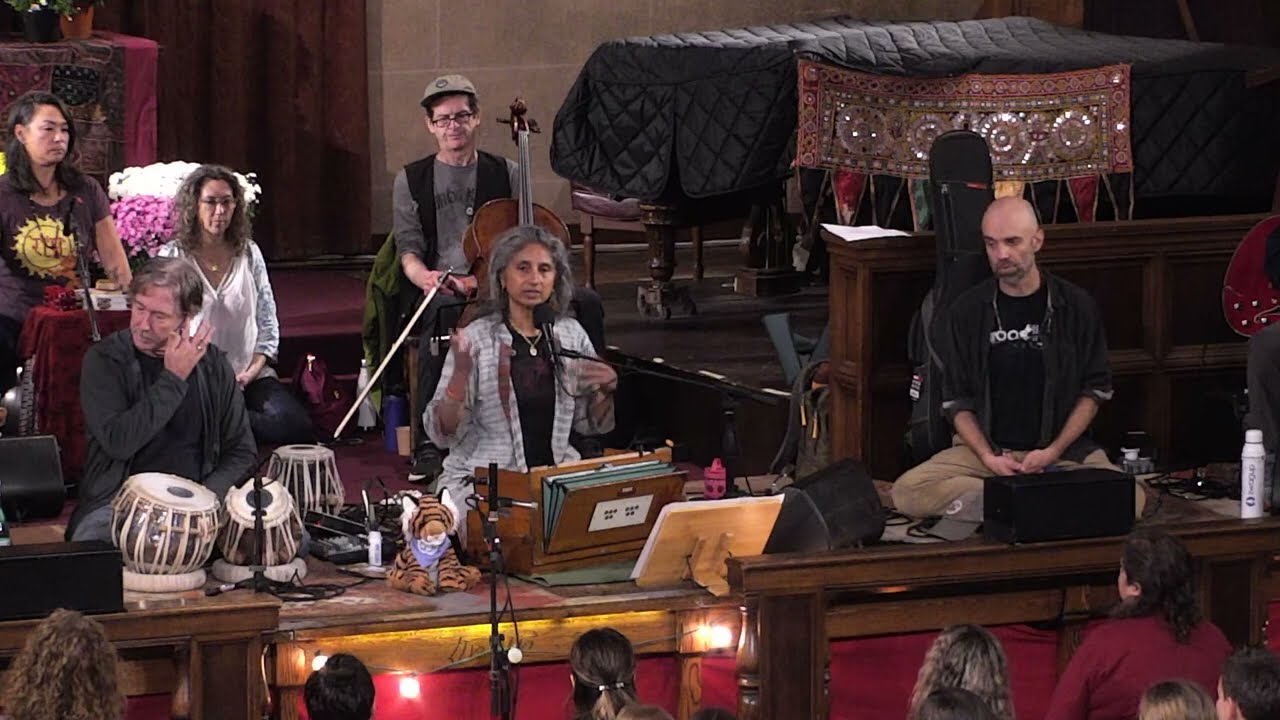
In one minute, Satsang delivers the essential kernel of kirtan practice: the repetitive invocation of divine names as a vehicle for transcendence. This brief performance from the Agamani Utsab 2026 celebration in Deoghar captures the core mechanics of bhakti devotion—the idea that chanting the names of Krishna and Radha, again and again, dissolves the boundary between the singer and the sacred.
How Does Repetition of Divine Names Open a Spiritual Path?
The kirtan unfolds through a classic structure: Chhaadore Man (Release, O Mind) begins the sequence, inviting the listener to abandon worldly attachment through the practice of ajapa nama—the spontaneous, unceasing recitation of divine names. The opening verses suggest that liberation comes not through force or intellect, but through surrendering the mind to the resonance of sacred sound.
As the chant progresses, the focus narrows to two names: Radha and Krishna, repeated in intensifying cycles. "Radha bol, Radha bol" (Speak Radha, Speak Radha) anchors attention on the feminine divine principle, while Krishna and Govinda enter as complementary masculine energies. This interplay reflects a foundational teaching in Bengali Vaishnavism and the broader Satsang lineage: that devotion flourishes in the dialogue between complementary divine aspects, not in isolation.
The musical accompaniment—the harmonic drone underlying the vocal repetition—serves a specific function within this practice. Rather than mere embellishment, the drone creates a sonic container in which the chanter's voice can dissolve. Over time, the boundary between the singer and the sound becomes permeable; the individual self, repeatedly invoking the divine name, begins to recognize itself within that invocation. This is the promise of kirtan: not intellectual understanding of divinity, but direct experiential resonance with it.
The brevity of this recording is itself instructive. Kirtan need not be lengthy to be potent. A single minute of sincere, focused chanting can transmit the entire philosophy: that the divine name is not separate from the divine itself, that repetition is not mere habit but a form of active listening, and that the mind released from its usual preoccupations becomes an instrument of grace.
Where to go from here
For deeper immersion in the practices and philosophy underlying this kirtan, explore the full teachings of Satsang and the broader Anukul Chandra tradition that shapes their approach to devotional music. The Agamani Utsab gatherings, held annually in Deoghar, offer extended satsangs, longer kirtan sessions, and direct transmission from experienced practitioners.