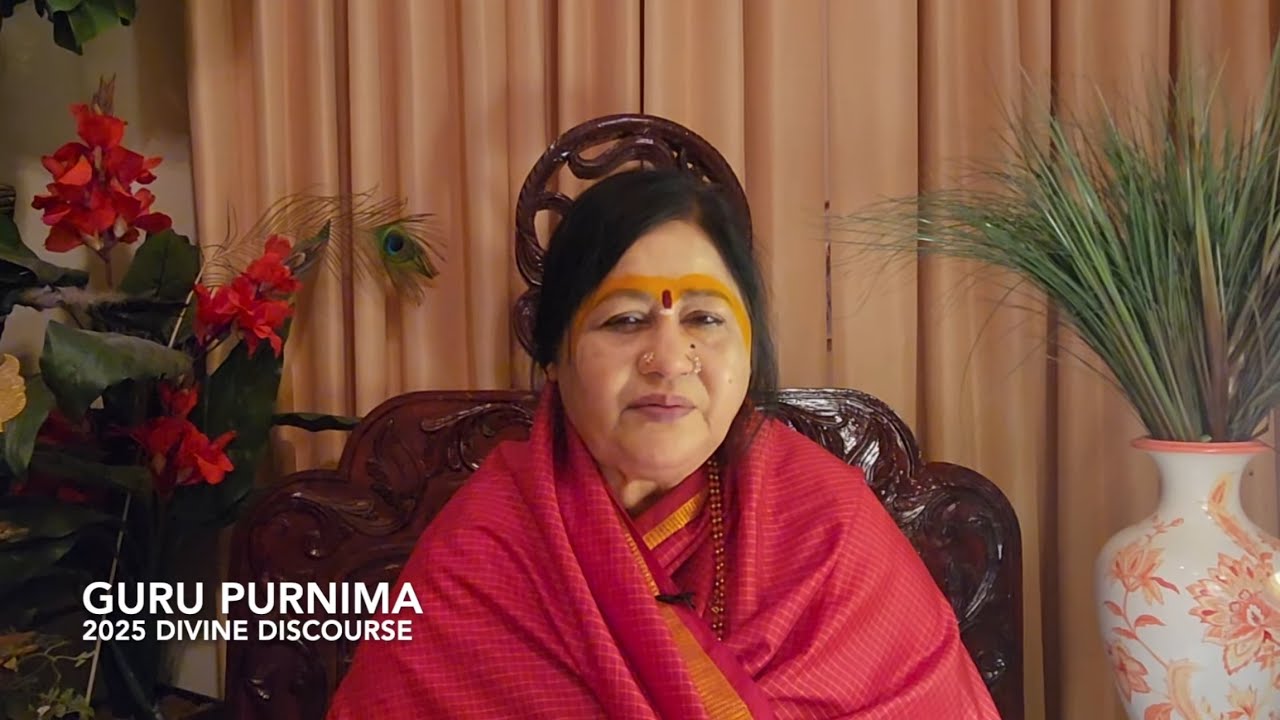
Sri Karunamayi Amma's teaching explores the Sri Lalita Sahasranama—the thousand names of the Divine Mother—as a profound spiritual practice that purifies the mind, elevates consciousness, and grants liberation. The discourse emphasizes that each of the thousand names carries divine power; chanting them with sincerity, devotion, and understanding of the Mother's eternal compassion activates transformative grace within the practitioner and extends protection to all humanity.
What is the Sri Lalita Sahasranama?
The Sri Lalita Sahasranama is a sacred Hindu scripture containing one thousand names of the Divine Mother, known as Lalita Devi, Bhavani, and the Mother of the Universe. According to Sri Karunamayi Amma's teaching, Lalita is not merely a deity to be worshipped from a distance; rather, she represents the primordial feminine energy that encompasses all creation and consciousness. The practice of Sahasranama (literally "thousand names") is a methodical way to invoke different facets of the Divine Mother's infinite qualities—her compassion, power, creativity, protection, and absolute knowledge.
In the Vedic and Tantric traditions, names are not arbitrary labels but vibrational embodiments of divine attributes. When a devotee chants "Sri Lalita Bhavani Devi" or recites the full sequence of thousand names, they are not simply reciting syllables; they are engaging with concentrated forms of divine presence. Amma explains that the Sri Chakra—the geometric yantra or sacred diagram associated with Lalita—serves as a visual map of the same divine energies that the names invoke.
Why is Name-Remembrance (Namas-Smaran) Considered Purifying?
One of Amma's central teachings is that remembrance of the Divine Mother's names purifies both the individual mind and the surrounding environment. This is not metaphorical purification but a literal energetic cleansing. When a person chants the Sahasranama with devotion and understanding, they invoke the Mother's presence into their being. According to the discourse, each name corresponds to a specific divine virtue or power—compassion, wisdom, strength, nourishment, protection, and liberation.
Amma emphasizes that the purification occurs on multiple levels:
- Mental purification: The chanting draws the mind away from worldly preoccupations and attachs it to the Divine Mother. This mental anchoring dissolves negative thoughts, ego, and attachment to material outcomes.
- Energetic purification: The vibration of Sanskrit syllables—especially the seed mantras (bija mantras) embedded in the names—activates dormant spiritual channels (nadis) in the subtle body. Amma notes that these vibrations are not abstract concepts but tangible forces that can be felt by a sincere practitioner.
- Environmental purification: When chanted regularly, the Sahasranama sanctifies the space where practice occurs and radiates protective blessings to all beings in that vicinity.
Amma stresses that this purification is not conditional on caste, gender, or status. Any human being—regardless of their background—can chant the Sahasranama and receive the Mother's blessings. The Mother sees all with equal compassion and grants liberation to whoever sincerely calls upon her.
How Should the Lalita Sahasranama Be Practiced?
Sri Karunamayi Amma offers practical guidance for engaging with this sacred practice. While the full recitation of one thousand names is the complete practice, Amma explains that consistency and sincerity matter far more than sheer volume. A person chanting just a few names with genuine devotion will receive more benefit than someone mechanically reciting the entire Sahasranama without understanding or feeling.
The key elements of authentic practice, according to Amma, include:
- Understanding: Rather than treating the names as mere sounds, the practitioner should contemplate the meaning of each name. For example, "Jaganmata" (Mother of the Universe) invokes recognition of the Divine Mother as the source and sustainer of all existence.
- Devotion (Bhakti): The chanting should arise from the heart, not the intellect alone. Amma teaches that genuine devotion requires humility—acknowledging one's limitations and the infinite grace of the Mother.
- Repetition: The Sahasranama should be chanted regularly, ideally as a daily or frequent practice. Amma notes that spiritual discipline (sadhana) creates a groove in consciousness through which grace naturally flows.
- Mantra integration: Amma situates the Sahasranama within a larger context of mantra practice. She compares it to other great mantras such as the Gayatri Mantra, the Maha Mrityunjaya Mantra, the Panchaakshara (Om Namah Shivaya), and the Ashtakshara (Om Namo Narayana). Each mantra serves a specific purpose, but the Sahasranama uniquely offers a comprehensive portal to the Mother's entire nature.
Importantly, Amma teaches that the practice should be approached with the understanding that the Mother is not separate from the practitioner. She exists both as the transcendent source beyond all names and forms, and as the immanent presence within the heart of every being.
What are the Spiritual Benefits of Chanting?
Amma outlines several specific benefits that arise from sincere engagement with the Sahasranama. These benefits extend across physical, mental, emotional, and spiritual domains:
Spiritual elevation and liberation: The primary goal of Hindu spiritual practice is moksha (liberation)—freedom from the cycle of birth and death. Amma teaches that chanting the Sahasranama with sincere devotion and understanding accelerates one's progress toward this ultimate liberation. Each name carries the imprint of the Mother's absolute consciousness; through repeated invocation, the practitioner gradually aligns their individual consciousness with this infinite source.
Mental clarity and peace: The practice stills the restless mind and dissolves the clouds of ignorance that obscure clear seeing. As the mind becomes clearer, the practitioner naturally experiences greater inner peace and equanimity in the face of life's challenges.
Purification of karma: Amma teaches that sincere chanting purges past karmic impressions (samskaras) from the subtle body. By invoking the Mother's grace through her divine names, the practitioner is relieved of old patterns and conditioning that would otherwise perpetuate suffering across lifetimes.
Divine protection: The Mother's names carry her protective power. A person who chants the Sahasranama regularly experiences a palpable sense of being watched over and guided by a benevolent force. Amma emphasizes that this protection extends not only to the individual but to their family and all those they encounter.
Fulfillment of righteous desires: While the ultimate aim is liberation, Amma acknowledges that sincere practitioners may have legitimate worldly needs—health, wisdom, prosperity, and the ability to serve others. The Mother's thousand names address every conceivable need. Chanting with sincere intent, the devotee can call upon the specific aspect of the Mother that corresponds to their deepest prayer.
Can the Sahasranama Benefit Humanity at Large?
A distinctive aspect of Amma's teaching is her emphasis on the collective benefit of this practice. She stresses that when devotees chant the Sahasranama, the benefits are not confined to the individual practitioner. The divine vibrations radiate outward and bless all beings, whether they are consciously aware of it or not. In this sense, Sahasranama chanting becomes an act of universal service and compassion.
Amma teaches that the Mother is infinitely concerned with the welfare of all her children. When a devotee invokes her through the thousand names with sincere intent to uplift humanity, the Mother's grace flows through that individual to touch countless lives. This is why Amma encourages not only personal practice but also collective chanting, where families and communities gather to recite the Sahasranama together.
Furthermore, Amma points out that in times of collective suffering, disease, or ignorance, the Sahasranama serves as a healing balm for the entire world. The very act of remembering the Mother's divine names in a spirit of devotion raises the vibrational frequency of the planet and invokes her compassionate intervention in human affairs.
How Do the Divine Names Address Different Aspects of Life?
The thousand names of Lalita Devi are not random; each name encapsulates a distinct divine quality or function. Amma's discourse touches on several categories:
- Names invoking the Mother as the Source of Creation: Names like "Jaganmata" (Mother of the Universe) and "Hiranyagarbha Rupini" (the form containing the cosmic egg) emphasize the Mother's role as the primordial creative force from which all existence emerges.
- Names invoking Wisdom and Knowledge: The Mother is "Sarvatmana Pavitrarupini" (pure in all aspects), representing supreme knowledge and the ability to discriminate between the eternal and the temporal.
- Names invoking Protection and Compassion: Many names emphasize the Mother's role as protector and nurturer—she shields her devotees from harm and bestows unconditional love.
- Names invoking Transcendence: Names that emphasize the Mother's transcendence beyond all form, time, and space remind the practitioner that she is simultaneously immanent and utterly beyond conceptual understanding.
By systematically engaging with these different categories of names, the devotee cultivates a comprehensive understanding of the Divine Mother and, by extension, of the nature of ultimate reality itself.
Where to Go From Here
For those interested in beginning or deepening a Sahasranama practice, Sri Karunamayi Amma's teaching suggests starting with regular, consistent chanting—even if it is just a few names daily—with genuine devotion and an effort to understand their meaning. Many practitioners find it helpful to use a written text of the Sahasranama (traditionally found in the Lalita Upanishad or other Tantric scriptures) and to gradually expand their practice over time. Group chanting with other devotees amplifies both the personal benefit and the blessing extended to the world. Most importantly, the practice should be approached not as a mechanical ritual but as a living conversation with the Divine Mother, invoking her presence and grace in response to the sincere yearning of the human heart.