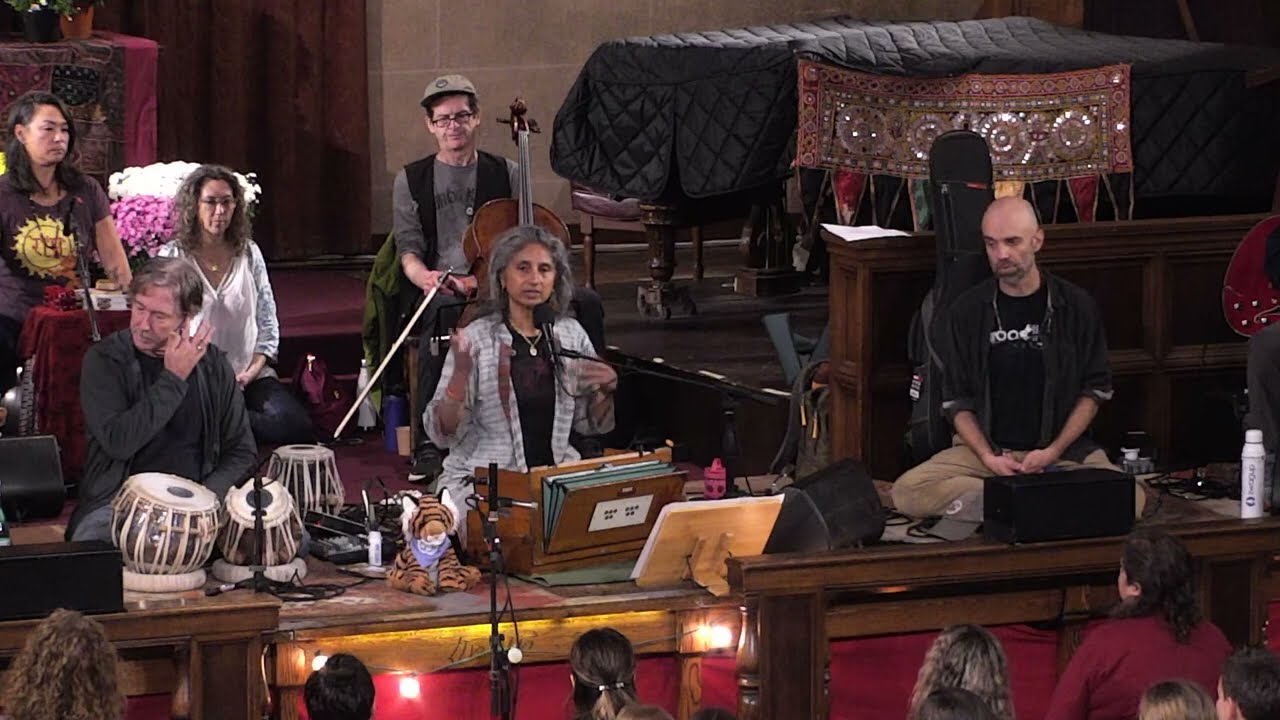
The Bhairavi Prarthana is a Sanskrit chant that invokes Linga Bhairavi, the divine feminine consort of Shiva who embodies the paradoxical qualities of yoga, bliss, fierceness, and compassion. This devotional verse, chanted during Navratri, serves both as a philosophical meditation on the multidimensional nature of the divine feminine and as a sonic technology to activate these qualities within practitioners. The chant honors Bhairavi not as a gentle archetype alone, but as a formidable spiritual force—one whose power lies in her ability to simultaneously nurture, destroy limitation, and guide seekers toward their deepest potential.
Who is Linga Bhairavi in Hindu and Tantric Tradition?
Linga Bhairavi occupies a unique position in Hindu and Tantric cosmology. She is understood as the divine consort of Shiva, the supreme consciousness in Shaivite philosophy. Unlike simplified depictions of the divine feminine as purely nurturing or maternal, Bhairavi embodies a spectrum of qualities that reflect the full range of the divine: she is simultaneously blissful and fierce, gentle and destructive, compassionate and uncompromising.
The name "Bhairavi" derives from "Bhairava," which means "terrible" or "fearsome" in Sanskrit. In Tantric traditions, this ferocity is not malevolent but rather represents the capacity to transcend limitation, burn away ignorance, and protect seekers from their own delusion. Bhairavi is not a deity of destruction for its own sake, but rather the force that dissolves what is false so that only truth can remain. Her relationship with Shiva—and by extension, with consciousness itself—reveals the principle that the highest spiritual power contains within it both the capacity to create and to dissolve, to comfort and to challenge.
In the context of Navratri, the nine-night festival celebrating the divine feminine in her various manifestations, Bhairavi holds particular significance. She represents one of the most direct and powerful forms of Shakti (divine feminine energy), one that demands absolute surrender and offers rapid transformation to those who approach her with sincerity and devotion.
What Does the Bhairavi Prarthana Chant Honor?
The Bhairavi Prarthana, as a devotional invocation, honors the multiple dimensions of Linga Bhairavi's nature. The chant extols her qualities systematically, recognizing her as the embodiment of yoga—the state of union or integration between individual consciousness and cosmic consciousness. This is not yoga in the modern sense of physical postures alone, but rather the ancient understanding of yoga as complete merger with the divine.
The verse simultaneously acknowledges her blissful nature. In Sanskrit philosophical traditions, "ananda" (bliss) is not mere happiness but rather the fundamental state of consciousness when it is free from fragmentation and delusion. Bhairavi is invoked as the source and embodiment of this ananda, the bliss that arises from complete alignment with truth.
The chant also honors her fierceness and her compassion—qualities that appear contradictory until one understands the deeper principle at work. Bhairavi's fierceness is the expression of her compassion; she burns away what limits and binds a seeker because she is fundamentally devoted to their liberation. Her power to destroy is inseparable from her love, much as a surgeon's scalpel appears violent but serves healing. This paradoxical understanding—that true compassion sometimes requires ferocity—is central to Tantric and Shaivite philosophy and represents a mature engagement with the divine beyond simplistic notions of gentleness.
The Role of Chant as Spiritual Technology
In Hindu and Yogic traditions, Sanskrit chants are not merely expressions of devotion; they are understood as sonic technologies that produce specific effects within the body and consciousness of the practitioner. The Bhairavi Prarthana, when chanted with attention and understanding, serves multiple functions simultaneously.
First, the chant functions as a method of attunement. By vocalizing the qualities and names of Bhairavi, the practitioner attunes their own consciousness to those same frequencies. The sounds themselves are believed to carry imprints of spiritual realization; they are not arbitrary but rather constructed through centuries of yogic understanding to activate specific states within the nervous system and energy body of the chanter.
Second, the chant serves as a direct invocation. In Hindu devotional practice, invoking a deity is not merely requesting a favor from a distant being; rather, it is recognizing and activating those divine qualities within one's own nature. When one chants "Bhairavi," one is not calling from far away but rather awakening the Bhairavi principle that exists within oneself—the capacity for fierce wisdom, compassionate strength, and yogic union.
Third, the chant functions within the context of Navratri as a means of honoring and strengthening one's relationship with the divine feminine across her various manifestations. Each night of Navratri emphasizes different aspects of Shakti; the Bhairavi Prarthana specifically activates that dimension of power which transforms through intensity and directs consciousness toward liberation rather than mere comfort.
How Does Fierceness and Compassion Coexist in Spiritual Practice?
A fundamental misunderstanding in contemporary spirituality is the assumption that spiritual advancement produces an increasingly gentle and passive being. The image of the spiritual master as a figure who accepts all suffering with a smile, never challenges, and never says "no" reflects a domestication of spirituality rather than its true depth. The Bhairavi Prarthana points toward a very different understanding.
Fierceness in the spiritual context means unwillingness to compromise with limitation, refusal to accept mediocrity in one's own practice or understanding, and the willingness to disrupt comfortable delusions in oneself and others. A truly compassionate spiritual force is one that will burn away what prevents liberation, much as a forest fire clears the undergrowth so new growth can emerge. Bhairavi represents this principle: she cares for the deepest wellbeing of the seeker so completely that she will not permit them to settle for anything less than their highest potential.
In this understanding, compassion and fierceness are not opposites but rather expressions of the same underlying principle: complete commitment to truth and liberation. A parent who allows a child to play with fire is not truly compassionate; true compassion sometimes requires the "no," the boundary, the destruction of false comfort. Bhairavi, as the embodiment of this principle, is worshipped precisely because she represents a love so complete that it will transform you utterly.
Where to Go From Here
The Bhairavi Prarthana offers an entry point into deeper engagement with Tantric philosophy and the full spectrum of the divine feminine. For those interested in exploring this further, consistent practice of the chant itself—whether sung or listened to with full attention—can produce direct experience of the qualities being invoked.
Beyond the chant, practitioners might deepen their understanding through study of Tantric philosophy, particularly texts that address the relationship between Shiva and Shakti and the principle that divine power is inseparable from compassion. The festival of Navratri itself provides a structured container for this work, with each night offering an opportunity to engage with different aspects of Shakti and one's own capacity to embody those qualities.
The broader principle revealed through the Bhairavi Prarthana is that spirituality is not about becoming passive or otherworldly, but rather about developing the capacity to be fully human—to contain within oneself the full spectrum of qualities necessary for both one's own liberation and genuine service to others. In honoring Bhairavi, one honors the possibility of becoming fierce in one's integrity, compassionate in one's strength, and blissful in one's surrender to what is true.