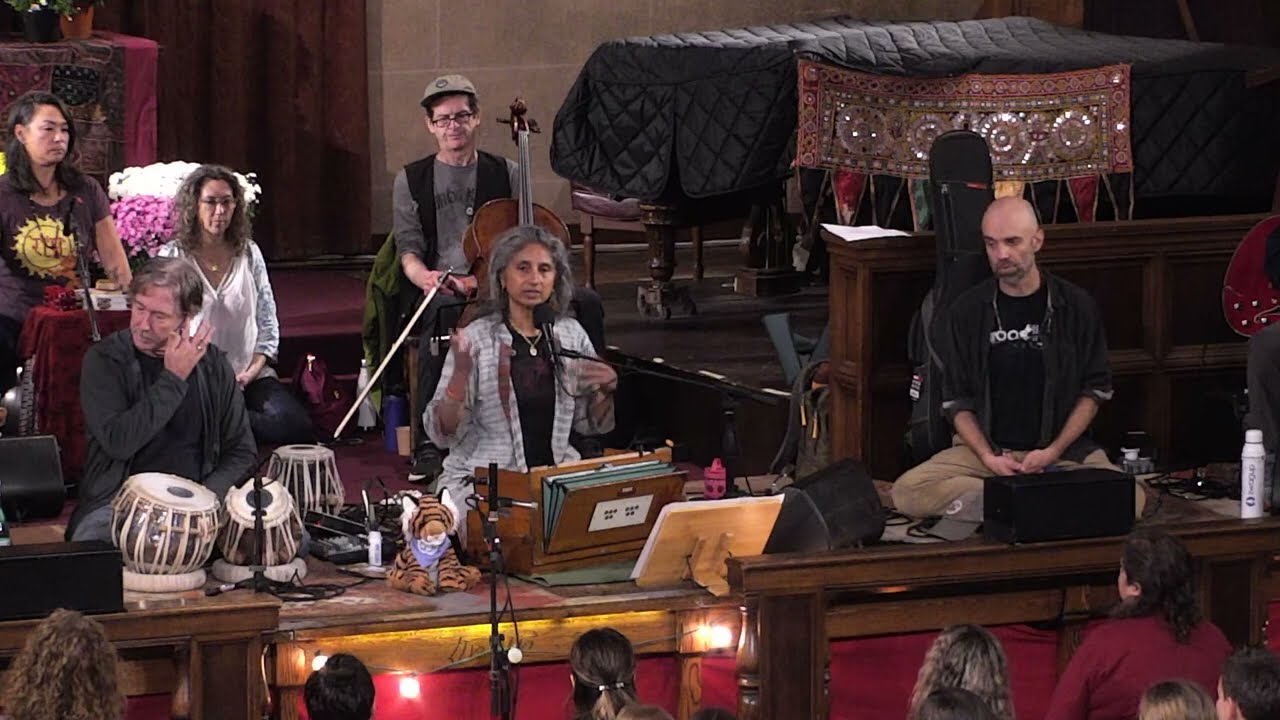
In this 5-minute live performance, kirtan artists Jai Uttal and Krishna Das unite to honor Ram Dass, the pioneering spiritual teacher whose work bridged Eastern wisdom and Western consciousness. The event, "Remembering Ram Dass," celebrates his profound influence on a generation of seekers through sacred song and collective devotion. Though brief, the gathering captures the spirit of Ram Dass's teaching: that love is the ultimate vehicle for transformation, and that group practice amplifies individual awakening.
Who Was Ram Dass and Why Does His Legacy Matter?
Ram Dass—born Richard Alpert, former Harvard psychology professor—became a bridge between Eastern spiritual traditions and Western seekers in the 1960s and beyond. After his transformative journey to India and meeting with his guru Neem Karoli Baba, he returned to America with a message: that spirituality could be practical, accessible, and rooted in the direct experience of love and service. He authored "Be Here Now," one of the most influential spiritual texts in the West, and founded the Seva Foundation, dedicating his life to alleviating suffering through conscious action.
Ram Dass taught that enlightenment was not a distant goal reserved for renunciates, but available to householders—to anyone willing to serve, love, and remember their true nature. His influence extended across generations, touching not only traditional spiritual communities but also psychologists, activists, and everyday people seeking meaning in their lives.
Why Kirtan as a Form of Remembrance?
Kirtan—the practice of singing sacred names and mantras in call-and-response form—was central to Ram Dass's teaching and life. He understood that chanting the names of the Divine is itself a path of devotion and purification. When seekers gather to sing together, they create a field of collective intention and love that transcends the individual voice.
By bringing together Krishna Das and Jai Uttal, two master singers deeply influenced by Ram Dass's work, the event channels his core teaching: that community and love are inseparable from spiritual practice. The gathering itself becomes the teaching. In sitting together, singing together, and remembering together, participants embody the very essence of Ram Dass's life—the marriage of inner devotion with outer service and presence.
The Significance of Multiple Teachers Coming Together
Both Krishna Das and Jai Uttal represent different but complementary expressions of Ram Dass's legacy. Krishna Das, who spent years in India and maintains deep roots in traditional devotional practice, brings an intensity and purity of focus to mantra singing. Jai Uttal, known for blending world music traditions with sacred chanting, brings inclusivity and the message that spiritual practice speaks all languages.
The fact that these two artists—who rarely share the same stage—came together for this tribute underscores Ram Dass's unifying power. He was not the kind of teacher who created orthodoxy or separation among his students. Rather, he created a family bound by love, service, and the commitment to remember what truly matters. When his students gather, they do so not as competing factions but as co-inheritors of a shared vision.
Ram Dass's Teaching on Transformation
The event's title—"Remembering Ram Dass"—carries intentional weight. In Sanskrit and in devotional practice, "remembrance" (smarana) is itself a spiritual practice. To remember Ram Dass is not merely sentimental; it is to align with his consciousness, his values, and his mission. Ram Dass often spoke of "serving the divine through service to others," and of the heart's capacity to expand infinitely when opened to love.
He did not only touch a generation—as the description states—he fundamentally shifted how Western seekers could imagine their spiritual path. Before Ram Dass, enlightenment felt foreign, Eastern, perhaps impossible for ordinary Americans. He made it intimate and real. He showed that a person could be a scholar and a devotee, a psychologist and a mystic, an American and a servant of universal consciousness.
What Kirtan Participants Experience in Collective Singing
When practitioners gather to sing mantras and sacred names, several dimensions of experience unfold simultaneously. On the surface, there is the auditory experience—melody, rhythm, the pleasure of unified voices. Beneath that is the psychological effect: chanting produces measurable shifts in nervous system regulation, reducing stress and creating states of calm and openness.
But kirtan also works at the level of intention and consciousness. Participants are not merely singing words; they are invoking presence, remembering the sacred, and strengthening their capacity to hold love in awareness. In Ram Dass's teaching, this practice is inseparable from the goal of awakening: the more you remember the Divine, the more you become aware of yourself as an expression of that same Divine love.
A gathering like this one, even if brief, leaves traces in the nervous systems and hearts of those present. They leave carrying the vibration of the names that were sung, the memory of unified breath and voice, and the felt sense of belonging to a lineage of love that stretches from Neem Karoli Baba through Ram Dass and into the future through all the seekers who continue to practice.
The Continuing Relevance of Ram Dass's Message
In the years since this tribute was recorded, Ram Dass's teachings have only grown more relevant. In a time of fragmentation, isolation, and existential uncertainty, his message rings clear: you are not separate from the whole. The path of the heart is available to everyone. Service, love, and conscious practice are the means by which we transform not only ourselves but the world around us.
Events like "Remembering Ram Dass" serve as lighthouses—points of convergence where people can reconnect with what truly matters and strengthen their commitment to the path of awakening. They remind us that we are not alone in this journey; we are held within a vast web of practitioners, teachers, and seekers all moving toward the same light.
Where to Go from Here
If you are moved by the legacy of Ram Dass, consider deepening your engagement with his teachings through several avenues. Read "Be Here Now" if you have not already—it remains a portal into his consciousness. Explore the Ram Dass archives, which contain hours of recorded teachings, many available freely online. If you have access to kirtan gatherings in your community, attend them not as passive listeners but as active participants—this is how the tradition is kept alive.
You might also consider the practical dimensions of Ram Dass's work: How can you serve those around you? Where in your life can you practice conscious presence? How might you cultivate the kind of open-hearted love that he exemplified? The greatest tribute to Ram Dass is not nostalgia or reverence at a distance, but embodiment—becoming, in your own way, a vehicle for the love and awakening he spent his life transmitting.