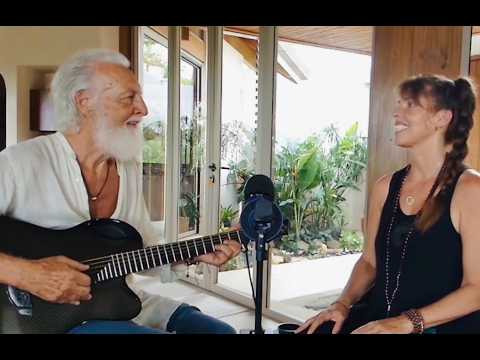
"Rain of Blessings / Ra Ma Da Sa" is a live musical interpretation of a classic Kundalini yoga mantra that channels healing energy through sacred sound. The performance by Miten and Deva Premal combines the ancient Ra Ma Da Sa mantra—associated with physical and spiritual healing—with contemporary musical production, creating a bridge between traditional dharma practice and modern devotional music. The piece demonstrates how traditional Sanskrit chants can be reanimated through live performance, making their healing vibrations accessible to contemporary listeners while honoring the mantra's roots in yogic tradition.
What is the Ra Ma Da Sa Mantra?
The Ra Ma Da Sa mantra is a foundational healing chant from the Kundalini yoga tradition, traditionally used to invoke healing energies and blessings. The mantra translates roughly to "Sun, Moon, Healing Energy, and Infinity"—each syllable carries vibrational significance within the yogic framework. Ra represents the sun and solar energy; Ma, the moon and nurturing feminine principle; Da, the earth and grounding; and Sa, infinity and the infinite self.
This particular mantra is often employed in yoga and meditation practices specifically for invoking healing—both physical and emotional. Practitioners use it to direct healing energy toward the self or others, making it a cornerstone of compassionate spiritual practice. The mantra's structure and Sanskrit phonetics are designed to activate and balance the energy centers (chakras) within the body, creating what practitioners describe as a resonance that extends beyond mere sound into consciousness itself.
How Does Sacred Sound Create Healing Vibration?
In Hindu, Buddhist, and yogic traditions, the concept of nada yoga—the yoga of sound—suggests that specific frequencies and phonetic patterns produce measurable effects on consciousness and the physical body. The Ra Ma Da Sa mantra, when chanted or sung with intention, is believed to emit vibrations that facilitate healing on multiple levels. This isn't metaphorical within these traditions; practitioners report tangible shifts in physical sensation, emotional release, and spiritual clarity when engaging deeply with sacred mantras.
The live performance format of this piece amplifies this effect. When Miten's acoustic guitar and vocal delivery are combined with Deva Premal's harmonics, the resulting musical environment creates a more immersive sound bath than solo recitation might. The addition of production elements—strings, layering, and careful mixing—extends the mantra's reach while preserving its essential vibrational signature. This approach makes the healing dimensions of the mantra accessible to listeners who may not have a formal yoga practice but are seeking spiritual resonance or wellness support.
What Role Does Intention Play in Mantra Singing?
One critical aspect of mantra practice that distinguishes it from mere singing is the role of sankalpa, or intention. When practitioners engage with mantras like Ra Ma Da Sa, the internal focus—the specific healing goal or blessing being invoked—shapes the efficacy of the practice. Singing "Rain of Blessings" is not simply a musical performance; it is an act of directed consciousness, calling forth healing for oneself and others.
Miten and Deva Premal's approach to this live recording appears grounded in this principle. The title "Rain of Blessings" itself suggests a metaphor of abundance and flow—blessings falling like rain on those who receive the sound. This framing invites listeners to open to receiving the mantra's benefits rather than remaining passive observers. The musical presentation becomes a vehicle for spiritual intention, allowing the composers and performers to channel and transmit healing energy through their voices and instruments.
Why Record and Release Mantras as Contemporary Music?
Traditionally, mantras were transmitted orally within lineages, teacher to student, within the context of formal practice. Recording and releasing mantras as official music videos and streaming content represents a deliberate choice to democratize access to these sacred tools. By placing the Ra Ma Da Sa mantra within a contemporary album framework ("The Jungle Sessions"), artists like Miten and Deva Premal acknowledge that healing and spiritual practice need not be confined to ashrams, temples, or yoga studios.
The production choices—cinematography, editing, instrumentation—serve a specific purpose: they create an aesthetic and emotional context that contemporary listeners find meaningful. A person scrolling through a music streaming service may not be searching for "Kundalini yoga healing chants," but encountering "Rain of Blessings" in that space plants a seed. The music becomes a gateway to deeper practice or spiritual curiosity. This democratization does not dilute the mantra's power; rather, it extends the opportunity for healing to a broader population.
What Makes This Performance Distinct?
The live recording format carries particular significance. Unlike studio recordings where every element is meticulously layered and edited, a live performance captures spontaneity, embodied presence, and the real-time convergence of multiple musicians' consciousness. When Miten and Deva Premal sing together—their voices interwoven, responding to the acoustic guitar and live instrumentation—listeners receive not just a song but a moment of genuine spiritual collaboration. The acoustic guitar is particularly important; its organic, resonant quality anchors the mantra in natural sound rather than purely electronic production.
The album context ("The Jungle Sessions") also suggests an unconventional setting—these mantras are not being performed in a traditional meditation hall but in a jungle environment. This framing suggests that sacred sound transcends location; healing vibrations emerge wherever sincere practitioners gather and sing, whether in nature's embrace or in any other setting. The cinematography and direction (Nicolas Do and Robert Bruce) further this vision, creating a visual experience that honors both the natural world and the mantra's spiritual depth.
How Can Listeners Engage With This Mantra?
For those new to mantra practice, approaching "Rain of Blessings / Ra Ma Da Sa" can be as simple as listening with openness and noticing any subtle shifts in your internal state—a sense of calm, expansion, or gentle energy. More engaged practitioners might use the recording as a meditation focus, allowing the mantra to anchor their attention while the music provides a container for that awareness. Some may sing along, either audibly or silently, amplifying their participation in the healing intention.
The Gayatri Sangha App and other resources offered by Deva Premal & Miten provide structured guidance for working with mantras over time. For sustained practice, returning to this recording regularly—perhaps daily—creates a cumulative effect. The mantra begins to integrate into one's nervous system and energetic body, becoming less a novelty and more a living resource for healing and blessing.
Where to go from here
To deepen your engagement with the Ra Ma Da Sa mantra and similar healing practices, explore Miten and Deva Premal's broader catalog, particularly their foundational work on Kundalini yoga chants and devotional music. The Gayatri Sangha App offers structured learning and community connection for practitioners. If you're interested in the theoretical foundation of mantra and sacred sound, consider studying texts on nada yoga and the phonetic science of Sanskrit. For those drawn to live performance and community practice, seek out kirtan (call-and-response chanting) groups in your area or attend online sangha gatherings. The "Rain of Blessings" recording is best understood not as a one-time listening experience but as an invitation to ongoing spiritual relationship with healing sound.