The Profound Challenge of Loving Another
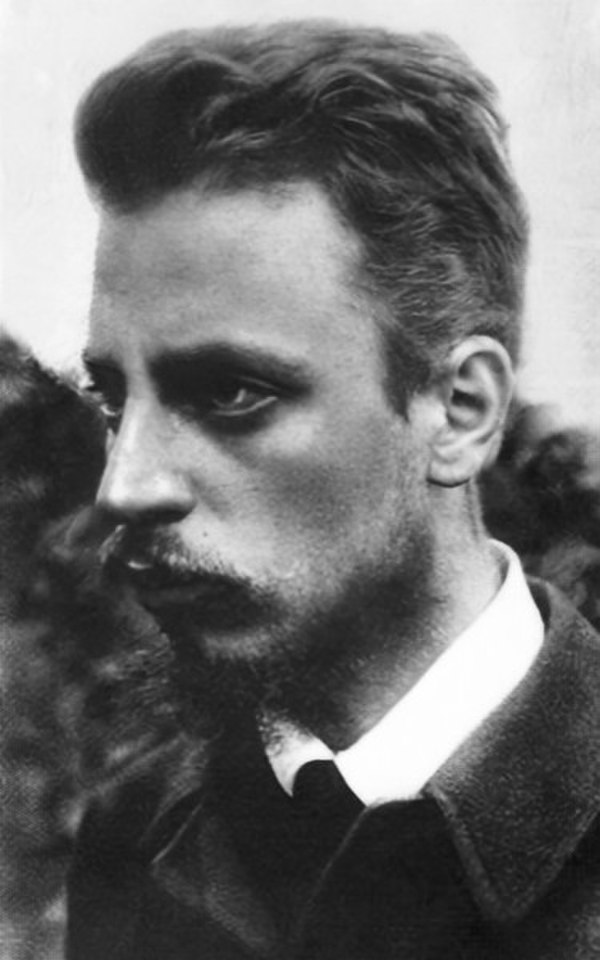
Rainer Maria Rilke's assertion that "For one human being to love another; that is perhaps the most difficult of all our tasks" invites us to reflect on the intricate and often daunting nature of love. He suggests that love is not merely a feeling or an instinctive reaction but rather a profound undertaking that requires our utmost effort and commitment. This perspective elevates love to a status of ultimate significance, positioning it as the culmination of all our endeavors and the true measure of our existence.
In a world that often prioritizes achievement and productivity, Rilke's words serve as a poignant reminder of the deeper work that lies beneath the surface of our daily lives. Love, in this context, becomes the ultimate test of our character and our capacity for connection. It is a task that demands not only vulnerability but also mastery over our own fears and insecurities, suggesting that all other pursuits may be mere preparation for this profound act of giving and receiving love.
The image / the metaphor
Rilke's quote is rich with imagery that evokes the weight and gravity of love. The phrase "the most difficult of all our tasks" conjures a sense of labor, as if love is a craft that requires skill, patience, and dedication. The use of "ultimate" and "last test" implies that love is not just a phase in life but rather the final frontier of our human experience, where we confront our deepest selves and the essence of our relationships with others.
Delving deeper into the metaphor, we can see that Rilke positions love as a transformative journey. It is not merely about the joy of connection but also about the challenges that arise when two individuals attempt to bridge their inner worlds. This journey requires a willingness to engage with the complexities of another person, to navigate the terrain of their fears, desires, and vulnerabilities. In this sense, love becomes a sacred endeavor, one that demands our full presence and engagement.
In the speaker's tradition
Rilke's exploration of love resonates deeply within the tradition of mysticism, where the journey toward union with the divine often parallels the journey toward authentic human connection. Concepts such as *kenosis*, the self-emptying love exemplified in mystical traditions, echo Rilke's assertion that true love requires us to let go of our ego and embrace the other fully. This selflessness is not merely an act of sacrifice but a profound act of creation, where love becomes a force that transcends individual limitations.
In his *Letters to a Young Poet*, Rilke emphasizes the necessity of solitude and introspection as prerequisites for genuine love. This mirrors the Buddhist concept of *sunyata*, or emptiness, which teaches that to love another fully, one must first understand the nature of self and the illusion of separateness. By cultivating an awareness of our interconnectedness, we can approach love not as a possession but as a shared journey toward wholeness.
Living the teaching
Consider a modern scenario where this teaching resonates: a couple navigating the complexities of their relationship. Each partner brings their own history, fears, and expectations, often leading to misunderstandings and conflict. In such moments, Rilke's insight reminds us that the work of love is not simply about finding harmony but about engaging with the discomfort and challenges that arise. It is in these moments of struggle that the true depth of love is tested, revealing the necessity of patience, empathy, and a willingness to grow together.
Another application of this teaching can be found in the realm of friendship. Imagine a situation where a friend is going through a difficult time, perhaps grappling with loss or disappointment. Rilke's perspective encourages us to be present, to listen deeply, and to offer support without the expectation of reciprocation. This act of love, grounded in authenticity and compassion, becomes a testament to our capacity to connect with another's pain and joy, illustrating that love is indeed a profound task that requires our full engagement.
A reflection
As we contemplate Rilke's assertion about the difficulty of love, we are invited to ask ourselves: What does it mean for me to truly love another? This question encourages us to reflect on our own experiences of love, the challenges we face, and the ways in which we can deepen our connections with others. In embracing this inquiry, we open ourselves to the transformative power of love, recognizing it as both a challenge and a profound gift that shapes our lives.




Join the BrightStar Community
Stay connected with daily inspiration, event announcements, and community wisdom