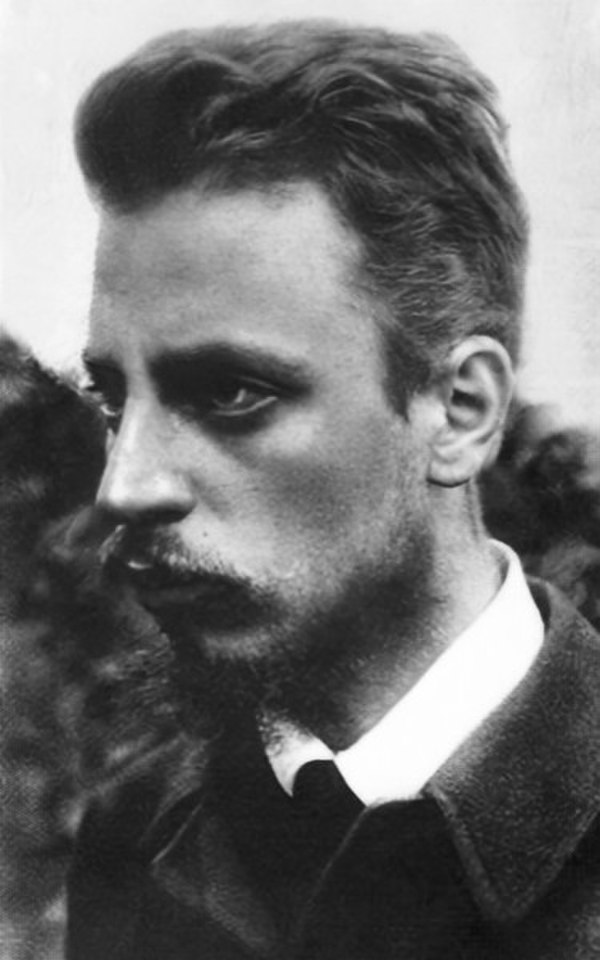
Embracing the Simple: A Journey Through Rilke's Wisdom
Rainer Maria Rilke invites us to celebrate the world in its simplicity, urging us to direct our praise towards the tangible and the familiar rather than the ineffable mysteries that often elude our understanding. In this quote, he suggests that the essence of existence is found not in grand abstractions but in the everyday experiences that have been shaped and passed down through generations. This perspective matters deeply, as it encourages us to cultivate gratitude and awareness for the world around us, fostering a connection to both our heritage and the present moment.
Rilke's call to "praise the world" resonates with the human experience, reminding us that our lives are enriched by the ordinary. By focusing on the "simple things," we are invited to recognize the beauty in the mundane, the rituals that connect us to our ancestors, and the shared experiences that bind us as a community. This approach not only grounds us in reality but also opens a pathway to deeper understanding and appreciation of our existence, allowing us to find meaning in the seemingly trivial aspects of life.
The image / the metaphor
At the heart of Rilke's quote lies a rich tapestry of imagery that evokes a sense of reverence for the world. The phrase "praise the world to the angel" conjures an image of a celestial being, perhaps representing the divine or the higher aspects of our consciousness, listening intently as we articulate our appreciation for the tangible. The verbs "praise" and "show" suggest an active engagement with our surroundings, a deliberate act of recognition that transforms the ordinary into something sacred. This invitation to share our experiences with the angel implies a deep connection between the earthly and the divine, where the simple acts of living become a form of worship.
Diving deeper into the metaphor, we can see that Rilke is not merely advocating for a superficial acknowledgment of the world but rather a profound appreciation that acknowledges the layers of history and tradition embedded within our experiences. The "simple things, shaped from generation to generation" highlight the continuity of human experience, where each moment is imbued with the wisdom of those who came before us. This perspective encourages us to see the world as a living tapestry, woven from the threads of countless lives, each contributing to the richness of our shared existence.
In the speaker's tradition
Rainer Maria Rilke's work is deeply rooted in the mystical tradition, where the interplay between the material and the spiritual is a central theme. Concepts such as dharma, which emphasizes the importance of living in accordance with one's true nature, resonate with Rilke's call to appreciate the world around us. Similarly, the idea of kenosis, or self-emptying, invites us to let go of our preconceived notions and embrace the simplicity of existence. In this light, Rilke's quote serves as a reminder that true understanding often arises from a place of humility and openness to the world as it is.
In his "Duino Elegies," Rilke explores the tension between the finite and the infinite, the known and the unknowable. This duality is reflected in his encouragement to praise the world rather than the "unsayable." By focusing on the tangible, we can cultivate a deeper sense of connection to the divine, recognizing that the sacred is often found in the everyday. This perspective aligns with the teachings of various mystical traditions, where the ordinary is seen as a gateway to the extraordinary, inviting us to engage with the world in a way that transcends mere existence.
Living the teaching
Consider a modern scenario where this teaching can be applied: a family gathering around the dinner table. In the hustle and bustle of life, it is easy to overlook the significance of sharing a meal with loved ones. Yet, as we gather, we can take a moment to praise the simple act of coming together, acknowledging the generations of tradition that have shaped our culinary practices and familial bonds. By expressing gratitude for the food, the company, and the shared stories, we transform an ordinary meal into a sacred ritual, deepening our connection to one another and to our heritage.
Another application of Rilke's teaching can be found in the context of a difficult moment in a relationship. When faced with conflict, it is often tempting to focus on the unsayable emotions that swirl beneath the surface. However, by shifting our attention to the simple, everyday gestures of love and care—such as a warm embrace or a shared laugh—we can ground ourselves in the reality of our connection. This practice of recognizing and praising the small, meaningful moments can help to bridge the gap of misunderstanding, fostering a deeper appreciation for the relationship itself and the traditions that have shaped it.
A reflection
As we contemplate Rilke's invitation to praise the world, we are left with a profound question to ponder: How can we cultivate a deeper appreciation for the simple things in our lives? In what ways can we honor the traditions that have shaped our experiences and connect with the world around us? By reflecting on these questions, we open ourselves to the possibility of finding beauty and meaning in the everyday, allowing the sacred to emerge from the ordinary.



Join the BrightStar Community
Stay connected with daily inspiration, event announcements, and community wisdom