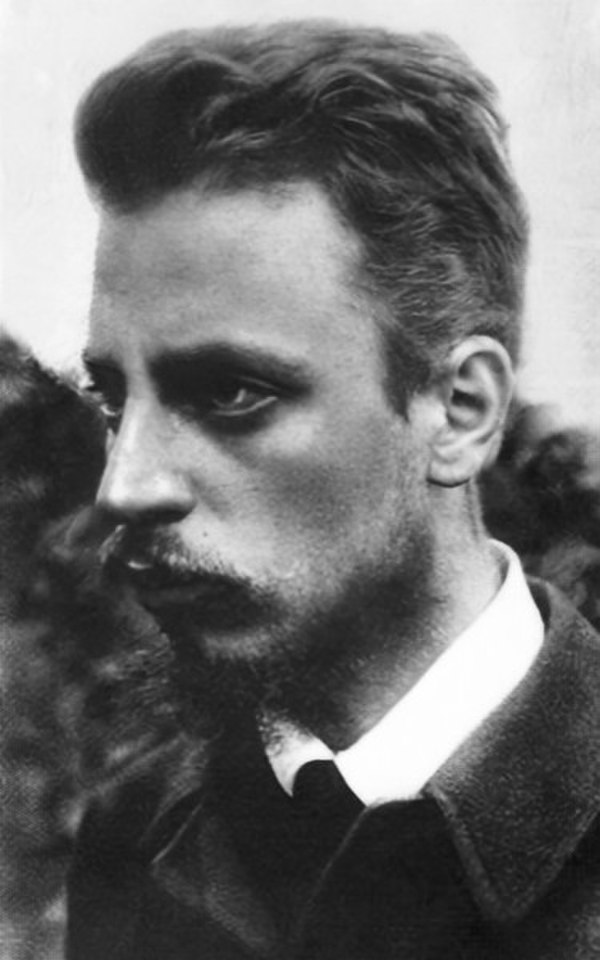
The Weight of Witness: Embracing Loss in Rilke's Call to Speak
Rainer Maria Rilke's poignant declaration, "Speak and bear witness. More than ever the things we can live with are falling away," invites us to engage deeply with the transient nature of existence. In a world where familiar comforts and certainties dissolve, Rilke urges us to articulate our experiences and observations. This call to witness is not merely an act of speaking; it is an invitation to confront the impermanence that surrounds us and to find meaning in the act of expression itself. The stakes are high, as our ability to articulate our truths becomes a lifeline in times of profound change.
Rilke's words resonate with a profound urgency, reflecting a reality where the familiar is increasingly elusive. In this context, the act of speaking becomes a sacred duty, a means of anchoring ourselves amidst the chaos of loss. To bear witness is to acknowledge the fragility of our existence and the beauty that can emerge from it. This duality of loss and expression is central to our human experience, and Rilke's call serves as a reminder that even in the face of dissolution, our voices can carry the weight of truth and connection.
The image / the metaphor
The imagery in Rilke's quote is rich and evocative, encapsulating the tension between speech and silence, presence and absence. The verbs "speak" and "bear witness" suggest an active engagement with the world, a refusal to retreat into silence even as the familiar crumbles. The phrase "the things we can live with are falling away" conjures a sense of loss that is both personal and collective, inviting us to reflect on what we hold dear and what we are willing to let go. This interplay between speaking and witnessing becomes a metaphor for our journey through life, where the act of articulating our experiences can serve as a bridge over the chasms of uncertainty.
Diving deeper into the metaphor, we find that to "speak" is not merely to vocalize thoughts but to give voice to the unspoken truths that reside within us. It is an invitation to share our vulnerabilities and insights, to connect with others through the shared experience of loss and transformation. In this sense, witnessing becomes a form of communion, a way to honor the transient nature of life while simultaneously affirming our existence. Rilke's call to speak is thus a profound acknowledgment of the power of language to shape our understanding of reality, even as we navigate the shifting sands of our lives.
In the speaker's tradition
Rainer Maria Rilke's work is deeply rooted in the tradition of mysticism, where the exploration of the self and the divine often intertwine. Concepts such as kenosis—the idea of self-emptying—resonate with Rilke's call to witness. In the act of speaking, we are invited to empty ourselves of preconceived notions and to allow our authentic selves to emerge. This aligns with the mystical understanding that true expression arises from a place of deep introspection and surrender, where we let go of our attachments to the familiar and embrace the unknown.
Rilke's exploration of these themes can be likened to the teachings found in the *Bhagavad Gita*, where the importance of duty and selfless action is emphasized. Just as Arjuna is called to fulfill his dharma despite the chaos of battle, Rilke encourages us to bear witness to our own lives, to articulate our truths even when faced with uncertainty. Both texts highlight the necessity of engaging with the world authentically, reminding us that our voices can serve as instruments of clarity and connection in a time of upheaval.
Living the teaching
In our modern lives, Rilke's teaching can manifest in various ways, particularly in moments of personal loss or societal upheaval. Consider a scenario where a loved one passes away, leaving behind a void that feels insurmountable. In such times, the act of speaking—whether through sharing memories, writing in a journal, or participating in a support group—becomes a vital means of processing grief. By articulating our feelings and experiences, we not only honor the memory of those we have lost but also create space for healing and connection with others who share similar experiences.
Another application of this teaching can be found in the realm of relationships. Imagine a difficult conversation with a partner, where unspoken tensions linger beneath the surface. Rilke's call to "speak and bear witness" encourages us to confront these challenges openly, to articulate our feelings and needs with honesty. This act of vulnerability can pave the way for deeper understanding and intimacy, transforming moments of conflict into opportunities for growth. In both scenarios, the act of speaking becomes a powerful tool for navigating the complexities of human experience, allowing us to witness not only our own truths but also the truths of those around us.
A reflection
As we contemplate Rilke's profound invitation to speak and bear witness, we are left with a contemplative question: What truths within me long to be expressed, and how might I find the courage to articulate them? This inquiry invites us to explore the depths of our own experiences, to consider the ways in which our voices can contribute to the collective narrative of humanity. In a world where so much is falling away, may we find strength in our ability to witness, to speak, and to connect through the shared fabric of our existence.



Join the BrightStar Community
Stay connected with daily inspiration, event announcements, and community wisdom