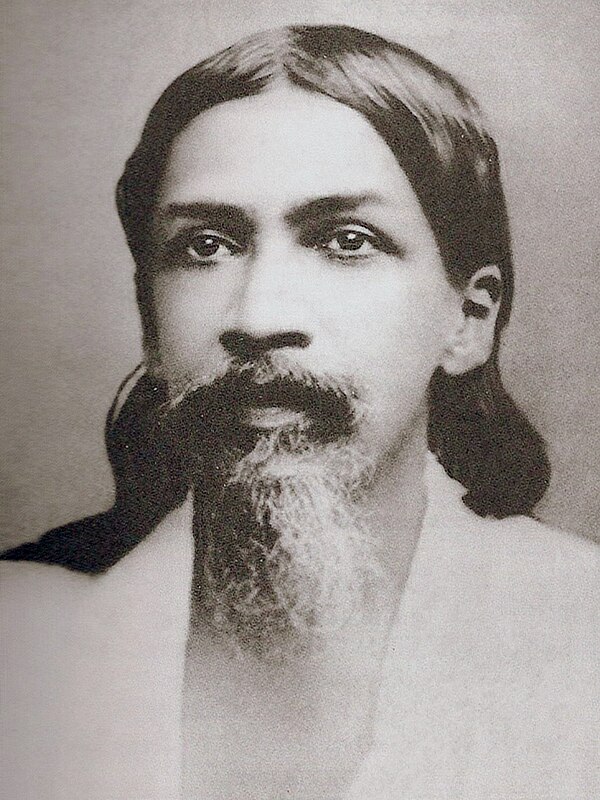
The True Mastery of Service
In the profound words of Sri Aurobindo, "The master of the house is the one who has learned to serve everyone." This statement encapsulates a transformative understanding of leadership and authority, suggesting that true mastery lies not in dominance or control, but in the capacity to serve others selflessly. In a world often driven by competition and self-interest, this perspective invites us to reconsider our definitions of success and fulfillment, urging us to cultivate compassion and wisdom in our interactions.
To serve is to engage with the world from a place of humility and generosity, recognizing the interconnectedness of all beings. Sri Aurobindo's insight challenges us to reflect on our roles within our families, communities, and workplaces. It beckons us to explore how our actions can contribute to the greater good, fostering a sense of unity and shared purpose. This teaching is not merely an ethical guideline; it is a profound spiritual practice that can lead to deeper fulfillment and understanding of our place in the cosmos.
The image / the metaphor
The imagery in Sri Aurobindo's quote evokes a sense of a household, a space where relationships are nurtured and responsibilities are shared. The term "master of the house" traditionally connotes authority and control, yet Aurobindo subverts this expectation by redefining mastery as an act of service. The verbs "learned" and "serve" suggest a journey of growth and transformation, emphasizing that mastery is not an innate trait but a cultivated skill that requires dedication and practice.
Delving deeper into the metaphor, we can envision the house as a microcosm of society, where each individual plays a vital role. The master, in this sense, is not a tyrant but a steward, one who understands that true strength lies in uplifting others. This perspective invites us to reimagine our relationships, seeing them as opportunities for mutual support and collaboration rather than competition. It is a call to embrace vulnerability and to recognize that our greatest power emerges when we serve with love and intention.
In the speaker's tradition
Sri Aurobindo's teachings are deeply rooted in the Vedantic tradition, which emphasizes the interconnectedness of all existence and the importance of dharma, or righteous duty. In this context, service becomes a manifestation of one's dharma, a way to align personal actions with the greater cosmic order. Concepts such as kenosis, or self-emptying, resonate with Aurobindo's message, highlighting the necessity of relinquishing the ego to serve others authentically. This selfless service, or seva, is a pathway to spiritual awakening and realization.
In his work "The Integral Yoga," Aurobindo elaborates on the transformative power of selfless action. He draws parallels between the act of serving others and the spiritual practice of bhakti, or devotion, where love for the divine is expressed through service to humanity. This connection underscores the idea that serving others is not merely an ethical obligation but a sacred practice that can lead to profound spiritual insights and a deeper understanding of the self.
Living the teaching
Consider a modern scenario where this teaching can be applied: a workplace environment where competition often overshadows collaboration. Imagine a team member who, rather than seeking personal recognition, actively supports colleagues by sharing knowledge and resources. This act of service not only fosters a sense of community but also enhances the overall productivity and morale of the team. By embodying the spirit of Aurobindo's quote, individuals can transform their workspaces into nurturing environments that prioritize collective success over individual ambition.
In personal relationships, the teaching of service can manifest in moments of conflict or misunderstanding. When faced with a disagreement, one might choose to approach the situation with a mindset of service, seeking to understand the other person's perspective rather than insisting on being right. This shift in approach can lead to deeper connections and resolutions that honor both parties' needs. By practicing this form of compassionate engagement, we not only embody the essence of Aurobindo's wisdom but also cultivate a more harmonious existence.
A reflection
As we contemplate the depth of Sri Aurobindo's words, we are invited to ask ourselves: In what ways can I embody the role of a servant in my daily life? This question encourages us to reflect on our interactions and consider how we can contribute to the well-being of those around us. By embracing this inquiry, we open ourselves to the transformative power of service, allowing it to guide our actions and deepen our connections with others.






Join the BrightStar Community
Stay connected with daily inspiration, event announcements, and community wisdom