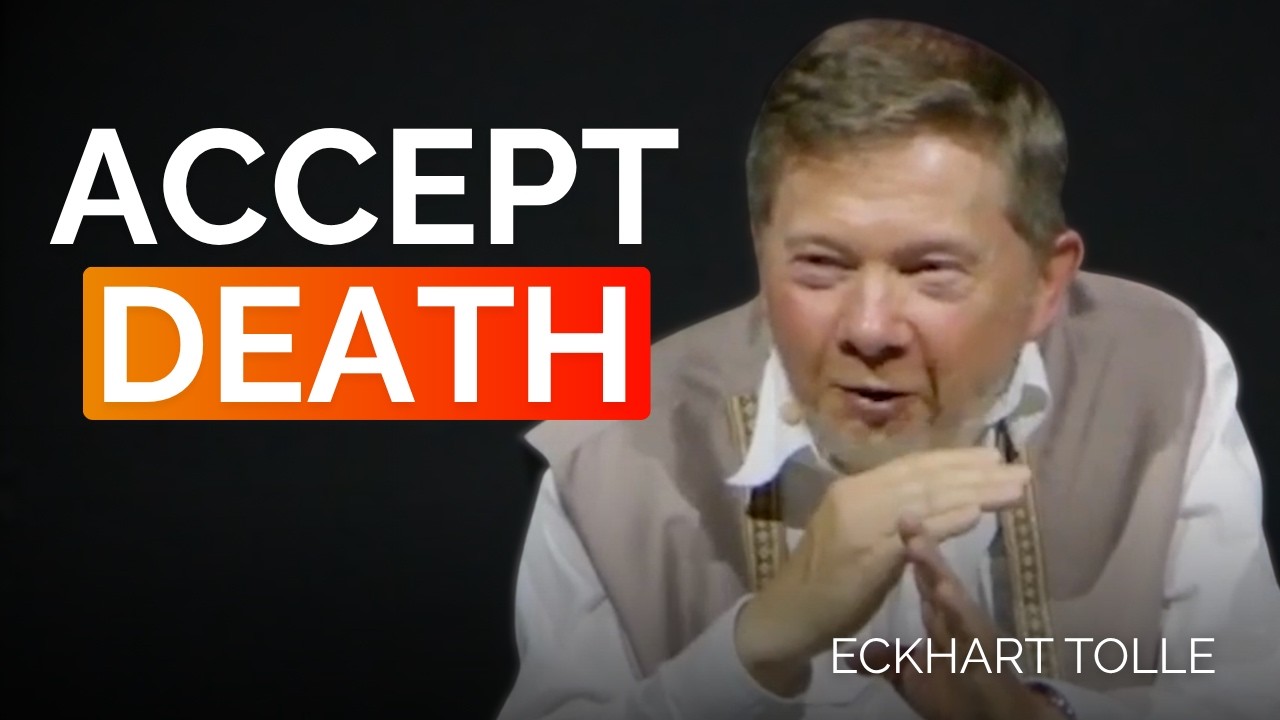
On February 28, ten years before this talk, don Miguel Ruiz survived a massive heart attack. Rather than viewing it as a near-death trauma, he frames the experience as a gateway to his most important teaching: how to surrender to death, let go of the physical body, and recognize that what we truly are—consciousness, life force itself—cannot die. He teaches that the fear of death stems from attachment to the body and illusion of separation, and that recognizing our fundamental unity with all existence dissolves the terror of mortality.
How Did a Heart Attack Become a Teaching Moment?
Don Miguel Ruiz's heart attack struck at 4 a.m. on February 28, roughly a decade before this talk. He felt intense chest pain and immediately recognized what was happening. Rather than panic, his first response was practical: he called 911 and walked downstairs to meet the ambulance in the living room. When his mother asked what was wrong, he calmly told her, "Don't worry, it's just a heart attack." His equanimity in that moment wasn't denial—it was clarity. He knew he was dying, and he was prepared to use that knowledge as his final teaching.
Once in intensive care, surrounded by tubes and machines, Ruiz made a deliberate choice about how to spend what he believed would be his last hours. He arranged his legal affairs, ensured his loved ones were informed, and waited for opportunities to share what he had learned. The heart attack, in his view, was not a setback or tragedy—it was an opportunity to embody and transmit the deepest wisdom he had spent decades teaching.
What Does It Mean When the Physical Body Dies?
When Ruiz's middle son Jose rushed into the intensive care room, he was devastated. Seeing his father in a hospital bed with medical tubes, close to death, Jose broke down crying: "Father, please don't die. It's not time. I'm not ready." Ruiz's response was not comforting in the conventional sense. Instead, he told his son to leave the room, collect himself, and return when he was emotionally stable. Jose was shocked, but he left and came back composed.
Once Jose returned, Ruiz delivered the core of his teaching about death and identity. He explained that what will die is only the physical body. "I will not die," he said. "I still live in the memory of everybody who loves me and everybody who knows me and through my books to many many people who don't even know my physical body." Ruiz pointed out that what his son knows as "father" is not the physical form lying in the hospital bed. It is an image in Jose's mind—a perception built from interactions, words, and the son's own interpretation.
This distinction is crucial. We do not actually know anyone as they truly are; we only know the image we have constructed in our minds. "You have no idea what I have in my mind, not even in your dream. Well, it's exactly the same thing. You see anybody around you and you have no idea what they have in their mind." When the physical body dies, the image in the mind does not automatically die with it. It persists in memory, in the influence of his books, in stories and teachings shared. The relationship continues in dreams and imagination.
How Does Consciousness Persist After Death?
Ruiz taught his son a radical reframing of what death means in practical terms. If Jose dreams of his father after his physical death, the dream will feel as real as waking conversation. In the dream, Ruiz can appear, speak, and interact. Jose would not know whether his father is "really" there or whether it is only his imagination. In fact, Ruiz suggests, there is no difference. The distinction between an image in the mind and a "real" presence dissolves when we recognize that all perception is mediated through consciousness.
This is not wishful thinking or fantasy. Ruiz is describing the actual mechanics of how we experience any other person. "When you're dreaming, just talk to me and I will answer you. Because even that I am just an image of what you perceive, in the end, we are exactly the same thing. There is no difference between you and I, and there is no difference between everybody else and myself."
Ruiz shared that he himself still speaks with his own father in dreams, and his father answers. These are not conversations with a ghost or supernatural being; they are conversations in which Ruiz is speaking to the image of his father that exists in his own mind—which is, in Ruiz's view, the same as speaking to his father directly, because the separation between self and other is illusory.
Why Do We Suffer When Loved Ones Die?
Ruiz identified the root of death-related suffering: attachment and the fear of not seeing loved ones again. "Not because you're dead, because they will not see you again." The pain of grief is not actually caused by the beloved's death—it is caused by the fear of abandonment, of missing their presence.
He offered a compassionate observation about those dying from chronic illness. "Just imagine all that people who are condemned to die and they're suffering a lung disease with a lot of pain and they not go because everybody have a big attachment on them and they're so afraid to die. That can be changed if we have awareness." People cling to life not because life is inherently precious, but because others are attached to them and they do not want to cause pain. This creates prolonged suffering on both sides—the dying person in physical agony, the family in emotional anguish. If the family understood death differently, if they could celebrate the end of suffering rather than mourn the loss of form, the dying could release their hold more peacefully.
What Is the Difference Between Death and Defeat?
Ruiz made a philosophical distinction that recasts mortality entirely. "Everything that is created has an end. But the one who create is immortal. And the one who create is life itself. I am life. You are life. And everything that you perceive is alive because life is the force that is moving matter. And we are exactly the same force."
The implication is radical: there is no separation between the individual and the universal life force. Death is not the end of "I" in any ultimate sense. What ends is a particular form, a particular expression of the eternal force of life. The body returns to matter; the life animating it returns to the universal field from which all forms arise.
When Ruiz said to his son, "We conquer death. Leaving my physical body doesn't mean that I was defeated by death. No the opposite. I let go my physical body," he was describing a shift from resistance to surrender. Most people experience death as something that happens to them, an external force stealing their existence. Ruiz reframed it as a choice—a letting go that is an act of power, not defeat. "That's what make me feel so excited because my body will feel when I live and that will be the last thing that my body will remember me life."
How Should We Celebrate the Death of Others?
Ruiz repeatedly used the word "celebration" to describe the proper response to death. When Jose first came to his bedside in tears, Ruiz told him, "This is the way you're going to celebrate the death of your father. Get out of the room, fix yourself." Later he emphasized: "This is for celebration, not for crying." And: "The way you're going to celebrate the death of your father because it is a celebration."
This is not callousness. Ruiz acknowledged that he had pain in his chest. He was not denying the physical reality of heart attack or the emotional response of loved ones. But he was asking his son to shift from identifying with the emotional drama to recognizing the metaphysical reality. A father is not his body. The continuation of the father's presence in the son's mind, memory, and dreams—and in the teachings he has left behind—is the real inheritance. To honor that inheritance, the son should not remain trapped in grief but should move toward understanding, toward joy at the release from suffering, toward recognition of unity.
What Happens When We Accept That We Are All One?
At the end of his teaching to Jose, Ruiz said, "Now you know that we all are only one living being. And the force of moves everybody is exactly the same force. Now as you can see we conquer death." This is the crux. If there is truly no separation between persons—if we are all expressions of a single life force—then death of any individual form does not separate us. The other continues to exist as part of the one being that contains all consciousness.
Jose grasped this. He said to his father: "Whatever is in the mind of your image, in my dream, in my imagination is really my own. I am myself." He realized that the conversation he was having with his father, and any future conversations in dreams, would be conversations with himself—which meant they would also be conversations with the universal consciousness expressing itself in both father and son.
Ruiz confirmed Jose's understanding: "Yes you got it. It's wonderful." This recognition is the antidote to existential terror. If the boundary between self and other is ultimately illusory, if all minds are expressions of a single awareness, then no one ever truly dies and no one is ever truly alone. The physical separation is real, but it does not constitute a break in fundamental unity.
How Did Recovery Change Ruiz's Life After the Heart Attack?
Ruiz's recovery from the initial heart attack was not immediate. The physical damage was severe. It took a full year of rehabilitation before he received clearance from doctors to resume his teaching work. During that time, he confronted not only mortality but the question of whether his body could still function as an instrument for his purpose.
When he was told he would need bypass surgery, he approached it with the same equanimity he had brought to the initial crisis. "The surgery is great because I will not have the fear of heart attack. It's a great experience." He saw the surgery not as a defeat but as an opportunity to renew his physical capacity.
After recovery and surgery, he resumed traveling and teaching. He went to Costa Rica and other places to continue sharing his work. But the near-death experience had fundamentally altered his relationship to his body and his mission. He was no longer teaching from intellectual understanding alone; he was teaching from direct, embodied knowledge of death's approach and the peace that comes from accepting it.
What Is the Key to Changing Your Experience of Reality?
In the final portion of the transcript, Ruiz pointed to the mechanism of transformation: "The key to change your world is to change what you believe you are, which means what you believe you are." Our perception of reality is not objective; it is generated by belief. We create a world in our minds, and that mental world is the world we actually inhabit. The physical world exists, but the meaning we assign to it, the identity we claim within it, and the story we tell about it are all products of belief.
If someone believes they are a temporary, isolated ego that will cease to exist at death, they will live in fear and grasping. If someone believes they are an eternal expression of universal life—capable of dying in form but never in essence—they will live with freedom and gratitude. The external facts of mortality remain the same; the internal experience transforms completely.
Where to go from here
For readers seeking to deepen this work, Ruiz's primary written text is The Four Agreements, which outlines the practical disciplines he teaches. However, this talk offers something that books alone cannot: a living example of someone embodying the teaching at the threshold of death. The value is not in intellectual agreement with Ruiz's philosophy but in the willingness to examine one's own beliefs about identity, mortality, and the boundaries between self and other.
The questions to carry forward are personal: Who am I if not this body? What will remain of me after my physical death? How would my relationships transform if I truly believed that separation is illusory? What would it mean to celebrate the death of someone I love? These are not abstract metaphysical puzzles; they are invitations to lived understanding. Ruiz's heart attack gave him the occasion to move from teaching about death to speaking from its threshold—and in doing so, to offer others the possibility of the same shift in perspective.