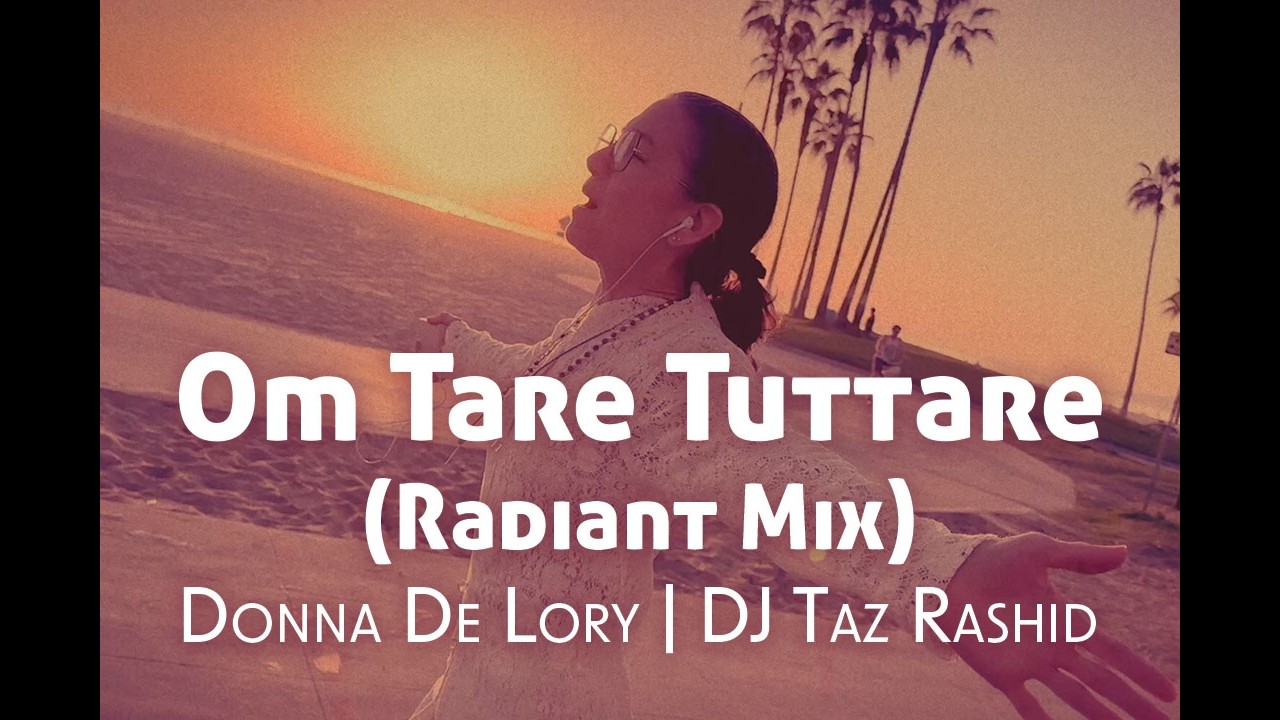
This is a contemporary remix of the Gayatri Mantra, one of Hinduism's most revered and oldest sacred chants, performed by kirtan artist Donna De Lory and reimagined by producer Carmen Rizzo. The remix version appears on "Universal Light Remixes from The Unchanging and Bonus Tracks," blending classical Vedic sound with modern dance and electronic production to make this ancient invocation accessible to contemporary spiritual practitioners and listeners unfamiliar with traditional Sanskrit chanting.
What Is the Gayatri Mantra?
The Gayatri Mantra is one of the oldest and most sacred Sanskrit chants in the Hindu tradition, appearing in the Rigveda, one of the four foundational Vedic texts. The mantra is a 24-syllable invocation addressing Savitri, the solar deity, asking for enlightenment and guidance. It translates roughly as: "We meditate on the transcendent glory of Savitri (the sun, or divine light); may it inspire our intellect."
This mantra is not merely a song or prayer—it is considered a direct invocation of divine illumination. For thousands of years, it has been recited by yogis, Sanskrit scholars, and spiritual practitioners as a means of connecting to the source of all light and consciousness. The mantra's power is thought to lie not only in its meaning but in the vibrational frequency of its Sanskrit syllables.
How Does Remixing Serve a Sacred Chant?
By pairing the Gayatri Mantra with Carmen Rizzo's contemporary remix production, this version addresses a key tension in modern spiritual practice: how to honor ancient traditions while meeting people where they are. Traditional Sanskrit chanting can feel inaccessible—linguistically unfamiliar, culturally distant, or sonically challenging for those without training. A remix version softens these barriers by wrapping the mantra in beats, production textures, and harmonic elements that feel familiar to modern listeners.
The remix does not dilute the mantra's intention; instead, it serves as a delivery vehicle. Donna De Lory's clear, trained vocal presentation of the Sanskrit ensures that the phonetic integrity of the chant remains intact, while the production elements create an inviting sonic environment. Someone encountering the Gayatri Mantra for the first time through a remix might be more likely to sit with it, repeat it, and eventually explore its traditional forms.
Who Is Donna De Lory?
Donna De Lory is a classically trained kirtan artist and Sanskrit chant vocalist who has dedicated decades to the practice and transmission of Hindu devotional music and sacred mantras. Her work bridges guru traditions with contemporary expression—she performs in concert halls, teaches chanting workshops, and has released multiple albums exploring classical mantras through modern sonic contexts. De Lory's approach emphasizes the authenticity of Sanskrit pronunciation while remaining open to musical innovation.
Her album "Universal Light Remixes from The Unchanging and Bonus Tracks" reflects this philosophy: taking established chants and devotional pieces and recontextualizing them through remix and contemporary production. This allows practitioners at different stages of their spiritual journey to engage with the material—some may use the remix as an introduction, others as a meditation aid, and still others as devotional music for yoga or contemplative practice.
Why Might Listeners Use This Mantra?
People typically approach the Gayatri Mantra for several reasons. Some use it as a formal daily practice, reciting it during morning or evening meditation. Others integrate it into yoga sessions, where chanting serves as both a warm-up and a spiritual anchoring. Many find that repeating the mantra—whether aloud or silently—helps focus the mind, settle anxiety, or create a sense of connection to something larger than the individual self.
The mantra is also associated with the element of light itself—both the literal light of the sun (Savitri) and metaphorical inner illumination or wisdom. In times of confusion, darkness, or spiritual seeking, the Gayatri Mantra functions as a verbal and sonic pointing toward clarity and inner radiance.
The remix format makes this accessible during activities where traditional chanting might feel awkward: working out, driving, household tasks, or simply as background practice. Some listeners may play it repeatedly to familiarize themselves with the Sanskrit sounds and eventually memorize the mantra, creating a foundation for deeper formal practice.
Understanding Mantra as Sound and Meaning
In the Hindu and yogic traditions, mantra operates on two levels: the literal meaning of the words and the vibrational or energetic effect of the sound itself. The Gayatri Mantra's Sanskrit syllables are believed to resonate with specific frequencies that align consciousness toward clarity and divine awareness, independent of whether the chanter understands the literal translation.
This is why accurate pronunciation matters—the Gayatri Mantra has a precise phonetic structure, passed down through oral transmission for millennia. Donna De Lory's training in Sanskrit ensures that even within a modern remix context, the syllables are rendered correctly. A listener might not know the translation, but their nervous system is still engaging with the intended vibrational pattern.
At the same time, understanding the mantra's meaning deepens practice. Knowing that one is invoking the divine light of Savitri, requesting inspiration for wisdom and intellect, transforms the practice from rote repetition into conscious intention. Both layers—sound and meaning—work together in authentic mantra practice.
The Role of Contemporary Production in Spiritual Music
Carmen Rizzo's remix production serves a practical and a symbolic function. Practically, it makes the chant more listenable for people accustomed to modern music production—clear mix, engaging rhythm, accessible sonic texture. Symbolically, it affirms that ancient wisdom is not a museum piece but a living, evolving tradition that can inhabit new forms.
Spiritual traditions that refuse all modernization risk becoming irrelevant to younger generations or to people from cultures where these traditions are foreign. Conversely, traditions that lose all connection to their source risk becoming hollow. The remix model—where the core mantra remains unchanged while its presentation shifts—offers a middle path: fidelity to content, flexibility in form.
Where to Go From Here
If this remix sparks interest in the Gayatri Mantra, consider exploring the mantra in its traditional forms. Learn the Sanskrit pronunciation (ideally from a qualified teacher or through recordings by practitioners like Donna De Lory). Research its history in the Vedas and the Upanishads. Experiment with different contexts: chant it during meditation, at sunrise, before challenging work or decisions.
You might also explore other sacred mantras in both remix and traditional formats, building a personal practice that combines ancient wisdom with contemporary accessibility. Many kirtan artists and yoga teachers offer recordings and workshops in mantra practice—seek out teachers whose work resonates with you.
Finally, consider the mantra's core request: enlightenment, clarity, and the light of wisdom. Whether through a contemporary remix or a traditional chant in a yoga temple, the Gayatri Mantra continues to serve practitioners seeking to align their minds and hearts with universal illumination.