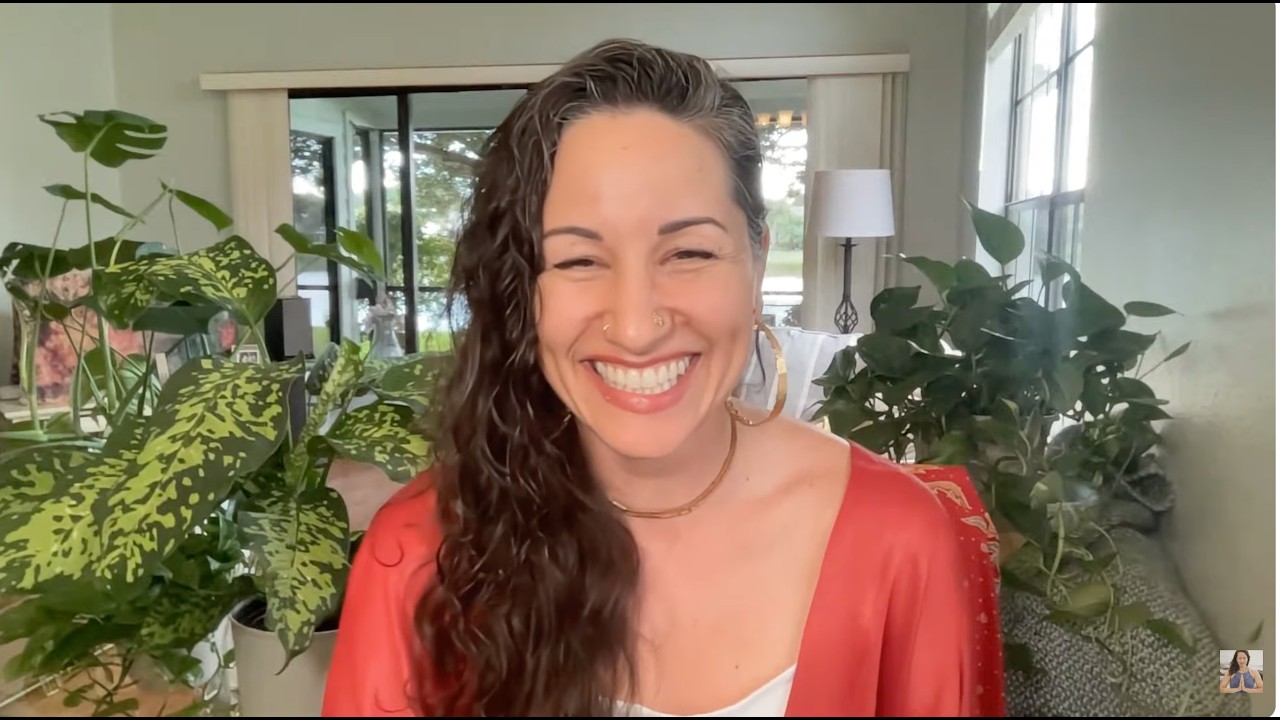
Isha Kriya is a 15-minute guided meditation practice designed to harness the power of breath, thought, and awareness to enhance your ability to use your mind and body effectively. The practice is accessible to beginners, requires no special equipment or location, and delivers measurable benefits for health and wellbeing through a simple but powerful process that can be practiced anywhere—at home, in the office, or outdoors.
What Is Isha Kriya and How Does It Work?
Isha Kriya is a guided meditation practice that operates on a fundamental principle: your wellbeing and capacity depend on how effectively you use your breath, your thoughts, and your awareness. Rather than adding something external to your system, the practice teaches you to recalibrate and optimize the tools you already possess. The meditation is structured as a 15-minute process that can be performed anywhere, making it practical for modern life regardless of your environment or schedule.
The practice is deliberately simple in its instructions yet profound in its effects. This combination makes it particularly valuable for beginners who are new to meditation but also for experienced practitioners seeking a reliable, efficient technique. The simplicity is not a limitation—it is by design. When meditation instructions are clear and uncomplicated, you can focus your attention on the actual experience rather than struggling to remember complex steps.
At its core, Isha Kriya teaches you to direct three fundamental capacities: your breath, your thought patterns, and your awareness. By learning to coordinate these three elements, you unlock a more efficient relationship with your own mind and body. This is not mystical or abstract—it is a practical recalibration of resources you use every moment anyway.
How Do You Practice Isha Kriya?
The instruction phase of Isha Kriya is intentionally brief, typically lasting around four minutes. This allows you to understand the mechanics of the practice without overthinking it. The guided meditation itself then takes approximately 12-15 minutes, depending on the version you choose.
The practice begins with positioning your body in a way that allows for natural, unobstructed breathing. You will be guided to use specific patterns of breath and awareness to anchor your attention and settle your system. The meditation does not require you to empty your mind or achieve any particular mental state—instead, it gives your mind and body a specific task that naturally quiets mental chatter and allows deeper processes to unfold.
What makes Isha Kriya distinct from many other meditation practices is its emphasis on using thought and awareness actively rather than trying to suppress or eliminate them. You are given a structure—a way to direct your attention—and this structure creates internal coherence. When the mind and breath are coordinated through a clear practice, the body's own healing and organizing intelligence begins to operate more efficiently.
You can practice Isha Kriya in any setting. The practice does not require a special meditation cushion, altar, or quiet room, though a calm environment certainly helps. Whether you are at home, in an office, or in a park, the same practice applies. This accessibility removes common barriers to meditation practice and makes it realistic to maintain consistency.
What Are The Health and Wellbeing Benefits?
The benefits of Isha Kriya emerge from the improved coordination of breath, thought, and awareness. When these three elements are working together efficiently, several shifts occur in your physiology and psychology.
Enhanced mental clarity: Many practitioners report that after regular Isha Kriya practice, their ability to think clearly and make decisions improves noticeably. This is not because you are adding anything foreign to your system, but because mental noise—the constant low-level chatter and distraction—becomes quieter. With that noise reduced, the signal of your own intelligence becomes clearer.
Improved physical wellbeing: Breath and nervous system function are intimately connected. By using breath consciously and intentionally in Isha Kriya, you activate the parasympathetic nervous system, which is your body's relaxation and recovery mechanism. This shift alone can reduce stress-related tension, lower blood pressure, and improve sleep quality. The practice teaches your body how to transition from the stress state (sympathetic activation) to the rest state (parasympathetic activation) on demand.
Better emotional regulation: As your awareness expands and your mind becomes more stable through the practice, emotional reactivity typically decreases. You develop more space between stimulus and response, allowing you to meet life's challenges with greater equilibrium rather than being automatically swept away by emotional states.
Increased energy and vitality: One counterintuitive benefit of meditation is that by spending 15 minutes in a state of deep rest and internal coordination, your overall energy throughout the day increases. This is because the practice reverses the chronic tension and fragmentation that normally drain your vitality. When your system is coherent and organized, energy flows more freely.
Better body-mind coordination: The practice specifically enhances your ability to use your mind and body together. This has practical benefits—improved posture, better athletic performance, reduced pain and tension—because you are no longer fighting yourself internally. Your attention and your physical being are aligned.
Why Is Simplicity Important in Meditation Practice?
Isha Kriya demonstrates a principle that many meditation traditions understand: the most powerful practices are often the simplest. Complex instructions create multiple points of failure and distraction. When a meditation practice is simple, you can perform it from memory, you can teach it to others easily, and most importantly, you can focus entirely on the actual experience rather than on remembering the steps.
Simplicity also makes a practice sustainable. A complicated practice that requires perfect conditions, special equipment, or extensive preparation will eventually be abandoned. A simple practice that you can do anywhere, anytime, becomes part of your life. Consistency is more valuable than intensity in meditation. Fifteen minutes daily will transform your wellbeing far more than occasional longer sessions.
The simplicity of Isha Kriya is also accessible to beginners. If you have never meditated, you do not need to adopt unusual beliefs, learn complex philosophy, or prepare yourself psychologically. You simply follow the instructions, pay attention to what happens within you, and notice the benefits. This empirical approach—try it and see what changes—removes the need for faith or belief. The practice validates itself through direct experience.
Can Anyone Practice Isha Kriya?
Yes. Isha Kriya is designed for universality. There are no age, fitness, religious, or belief requirements. The practice works with your natural physiology and psychology, not against them. Whether you are 18 or 80, athletic or sedentary, spiritual or secular, the fundamental mechanics of breath, thought, and awareness apply to you.
The practice is particularly valuable for those with busy lives who think they "don't have time" for meditation. Fifteen minutes is realistic even for working professionals with demanding schedules. And because the benefits begin to accumulate immediately—most people notice some shift even after the first session—you have immediate incentive to continue.
What Should You Expect During Your First Practice?
Your first experience with Isha Kriya may vary. Some people report feeling deeply relaxed and peaceful immediately. Others notice a subtle sense of internal settling or clarity. Some feel energized. These differences are normal and all represent the practice working—your system is being brought into better coherence.
Some practitioners notice physical sensations: tingling, warmth, gentle movements, or a sense of vibration. Others experience mental quietness or emotional softness. You may find that thoughts slow down, or you may find that you observe your thoughts without being caught by them. All of these are natural responses to bringing your breath, thought, and awareness into coordination.
What matters is not the experience itself, but what you notice changing in your daily life with consistent practice. Do you feel more rested? Is your mind clearer? Are you less reactive? Are you sleeping better? These functional improvements in your life are the actual benefits of the practice.
Where to Go From Here
To begin with Isha Kriya, find the guided video and practice along with the instruction. Set a realistic intention to practice for at least one week, ideally at the same time each day. Notice what shifts within you—not just during the meditation, but in your daily life. Pay attention to your sleep quality, your mental clarity, your emotional stability, and your energy levels. These are the metrics of whether the practice is working for you.
After establishing a basic practice, you may explore other guided meditations from the same tradition, such as Chit Shakti Meditation or Shambhavi Mudra, each of which addresses different aspects of wellbeing. But for most people, consistent practice of Isha Kriya alone will produce noticeable benefits within weeks.
The practice is meant to be simple enough that you can maintain it for life. Unlike many wellness interventions that fade over time, meditation becomes increasingly valuable as you continue. The benefits deepen, your stability grows, and your capacity to live with health and wellbeing expands.