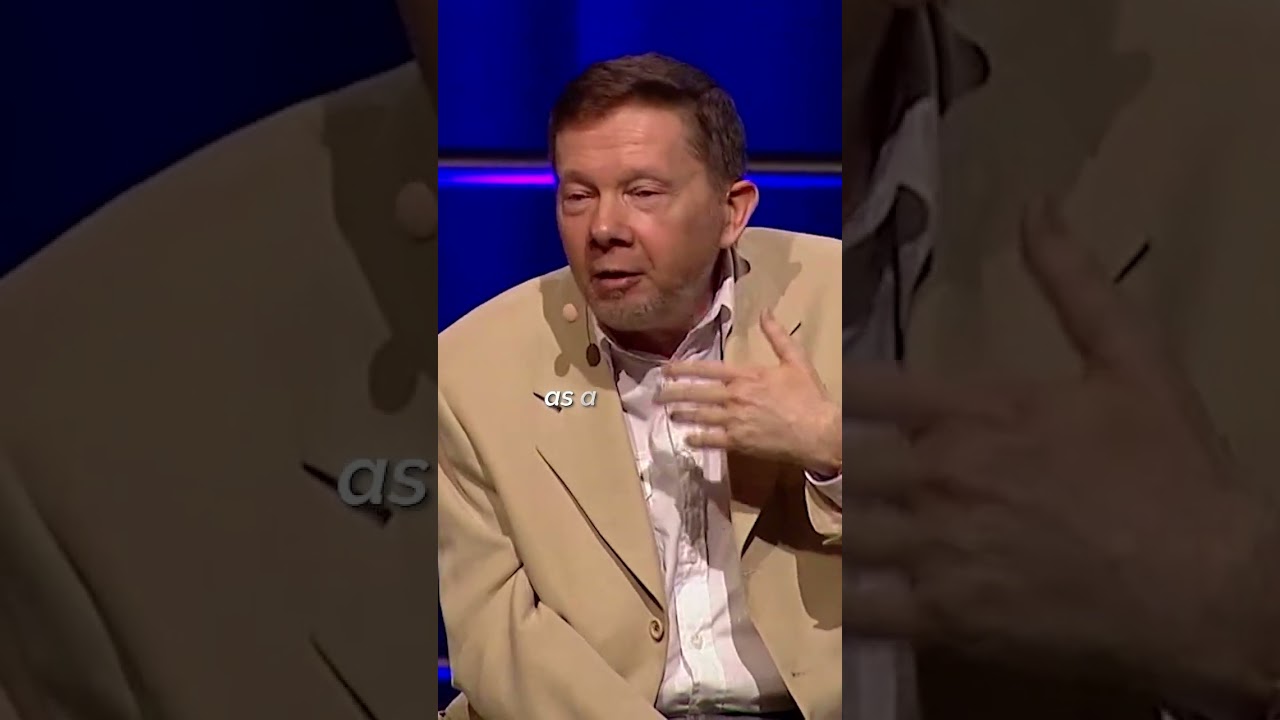
In this talk, Sadhguru addresses the fundamental question of why we exist by reframing human purpose within a larger cosmic context. Rather than presenting purpose as something humans must discover or create, he argues that nothing in the universe—from planets to stars to solar systems—occurs randomly. The organizing principle underlying all existence is geometric perfection, which allows the cosmos to function perpetually. He bridges both Darwinian evolutionary theory and the ancient Indian understanding of evolution, showing that human life is not separate from cosmic order but deeply embedded within it.
Is Our Existence Random or Designed?
A common assumption in modern thought is that the universe operates mechanically, without inherent order or purpose. Sadhguru directly challenges this, stating that nothing in the universe has happened "haphazardly." This is not a religious claim about a creator, but an observation about the nature of physical reality itself. The planets remain in stable orbits, stars maintain their luminosity for billions of years, and solar systems persist across cosmic timescales—none of this occurs by accident.
The key to understanding this stability is recognizing that the universe is fundamentally geometric. Geometry is not merely a human mathematical abstraction; it is the actual fabric organizing matter and energy. From the spiral of galaxies to the structure of atoms, from the proportions of DNA to the orbits of celestial bodies, geometric patterns repeat at every scale. This geometric perfection is not ornamental—it is functional. It is the mechanism by which the universe sustains itself across time.
What Does Cosmic Geometry Have to Do with Human Purpose?
If the universe operates according to geometric principles, then human beings, as part of that universe, are also embedded within these same patterns. We are not observers of order standing outside it; we are expressions of it. This fundamentally shifts how we think about purpose. Purpose is not something external we must search for, nor is it something to be imposed on us. Rather, it emerges from alignment with the geometric nature of existence itself.
Sadhguru's approach suggests that understanding our purpose requires understanding the nature of the cosmos we inhabit. When we recognize that we are not separate from the universal order—that the same geometric principles that organize galaxies also organize our bodies and consciousness—a different relationship to existence becomes possible. Instead of asking "What should I do?" as though purpose is a choice we make, we might ask "What am I?" and allow purpose to unfold naturally from that understanding.
How Does Evolution Fit Into This Understanding of Purpose?
Sadhguru addresses both Darwinian evolution and the evolutionary framework found in ancient Indian philosophical systems. Darwinian evolution, as commonly understood, describes how organisms adapt and change over time through natural selection. This is accurate as far as it goes, but it does not address the question of why evolution occurs or what its trajectory is.
The ancient Indian systems, by contrast, describe evolution not just as random adaptation but as a directional unfolding toward greater complexity and consciousness. This is not contradictory to Darwinian theory; rather, it contextualizes it within a larger framework. Evolution, in this view, is not merely about survival and reproduction—it is about the universe becoming progressively more conscious of itself through the emergence of increasingly complex life forms.
Humans represent a particular stage in this evolutionary arc. We are not the final form, nor are we separate from the process. Our purpose, in this context, is intimately connected to where we stand in the evolutionary ladder and what potential lies before us. The fact that consciousness has evolved to a point where it can ask questions about purpose—that we can reflect on existence itself—is itself significant. It suggests that evolution toward greater awareness is not accidental.
What Makes the Universe's Perfection Perpetual?
Sadhguru emphasizes that the "fundamental nature of creation" that "allows it to function perpetually" is geometric perfection. This is a profound statement: the universe does not require an external force or maintenance to keep running. It sustains itself because its architecture is geometrically sound.
In human systems, when something is poorly designed, it requires constant intervention and repair. A bridge with a flawed design needs maintenance; a poorly constructed machine breaks down. But the universe has been running for billions of years without external maintenance. This durability itself is evidence of perfect design—not in the sense of a designer imposing design from outside, but in the sense that the structure of reality is fundamentally sound.
This has practical implications for how we understand ourselves. If we are part of a system governed by geometric perfection, then harmony and sustainability in human life may also require alignment with geometric and structural principles—whether in how we organize our bodies, our social systems, or our consciousness. Disorder, disease, and suffering may arise precisely when we operate against these principles rather than with them.
Why Does Understanding Cosmic Order Matter for Daily Life?
Sadhguru's framing of purpose is not abstract or irrelevant to practical existence. If humans are embedded within a cosmos organized by geometric principles and evolutionary direction, then our purpose is not something we invent or impose. Instead, it becomes a matter of recognizing and aligning with what already is.
This shifts the psychological burden many people carry. Instead of feeling obligated to create meaning or constantly searching for purpose, we can begin to align ourselves with the order already present in existence. This alignment—whether through yoga, meditation, or conscious living—becomes the pathway to purpose. We are not trying to become something other than what we are; we are becoming fully what we already are as part of this ordered universe.
The practical application is that living with purpose is not about achieving external goals or accomplishments. It is about progressively aligning our consciousness, our body, and our behavior with the geometric and evolutionary principles that organize the cosmos. When this alignment occurs, purposefulness emerges naturally—not as strain or forced effort, but as a natural expression of being in harmony with existence itself.
Where to go from here
Sadhguru's answer to "Why are we here?" invites deeper exploration into the nature of cosmic order and human consciousness. The question naturally leads to investigating traditional systems—both Eastern and Western—that have grappled with the relationship between human life and universal principles. Reading or studying the Upanishads, exploring the Samkhya philosophy of ancient India, or even examining contemporary physics literature on cosmology can deepen understanding of how the universe functions.
Practically, this perspective suggests that yoga and meditation practices are not mere wellness techniques, but tools for aligning consciousness with cosmic order. If the universe is organized geometrically, then yoga—which literally means "union"—becomes a methodology for harmonizing individual consciousness with universal consciousness. Similarly, examining how we organize our daily lives, relationships, and work in terms of geometric and structural principles can reveal where misalignment exists.
The deepest engagement with this material, however, comes through direct investigation. Sadhguru repeatedly emphasizes that spiritual understanding is not intellectual but experiential. The questions about purpose and cosmic order ultimately must be answered not through belief or philosophy, but through direct experience of the consciousness that perceives and participates in this ordered universe.