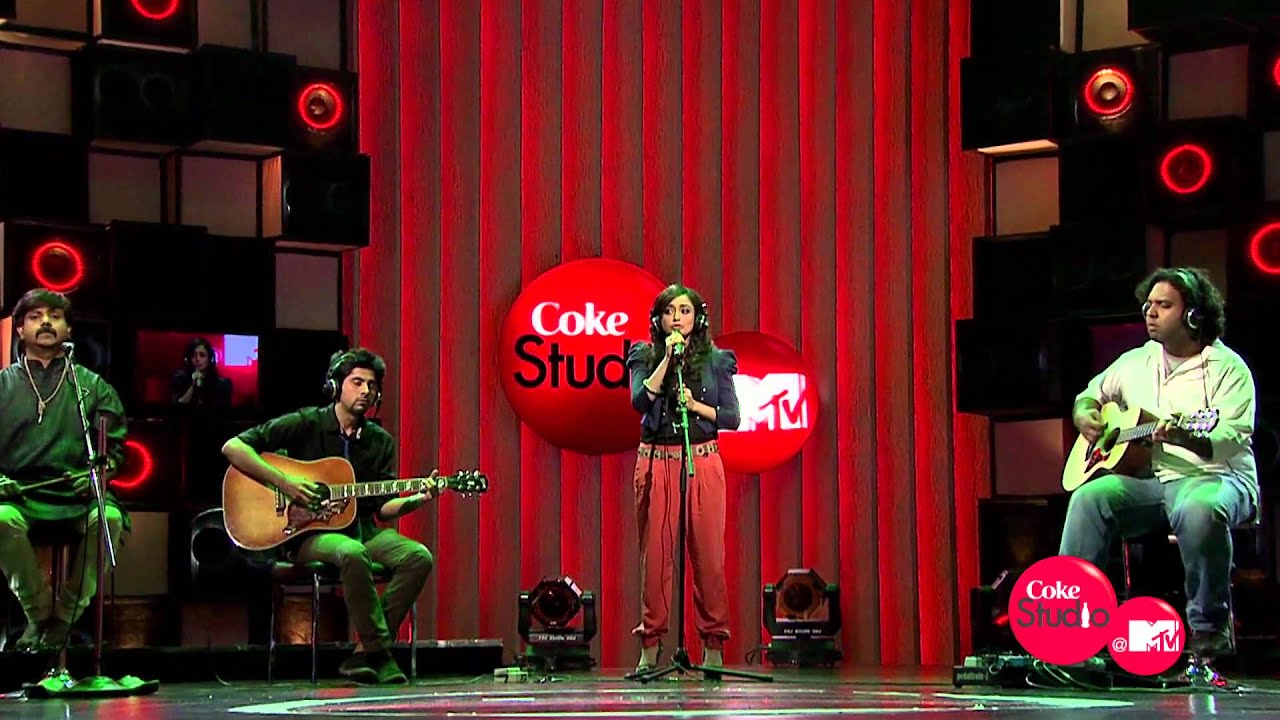
"Train Song" from the film Gully Boy is a hybrid composition that merges classical Hindi poetic traditions with contemporary urban English narrative. Created by Karsh Kale and Midival Punditz, the track uses the metaphor of a train—and a chance encounter at a station—to explore themes of destiny, perseverance, and unexpected human connection. The song's lyrics, penned by Javed Akhtar, Karsh Kale, Gaurav Raina, and Tapan Raj, shift between meditative Hindustani verses about life's rivers and hardship, and a modern English-language narrative about wanderlust and sudden romantic possibility. The production combines electronic instrumentation with folk sensibilities, creating a sonic space where tradition and contemporaneity dialogue.
What is the structure of Train Song's narrative?
Train Song unfolds in two distinct lyrical registers. The opening verses, sung in Hindi, establish a philosophical frame rooted in classical poetic imagery. Lines like "Jeevan, jeevan, dariya dariya" (Life, life, river, river) invoke the metaphor of life as a flowing river—a motif common in Sanskrit and Hindi verse. This opening stanza moves through cycles of challenge and transcendence: "Ek jo paar karo, dusra dariyaa milay" (Cross one, find another river). The lyrics acknowledge hardship without romanticizing it: "Waqt mushkil thha magar jaise bhi ho beet gaya" (Time was difficult, but somehow it passed).
The English-language verses introduce a different temporal and spatial register: a contemporary traveler "runnin' half way around the world" who finds himself at a train station. Rather than abstract philosophical reflection, this narrative is grounded in sensory detail—"Indian summer sky," "unforgettable fire in her eyes"—and presents a moment of sudden interruption. The speaker has been traveling, moving, seeking, when he encounters another searcher: a girl who says, "Hey man, I wanna take that train." The song captures the moment of intersection between two narratives of movement and desire.
How do the lyrics balance tradition with contemporary storytelling?
The composition's strength lies in its refusal to collapse these two registers into one. The Hindi verses employ classical poetic devices—repetition ("Saawan saawan, baghiya baghiya"), natural imagery (flowers blooming on stone), gambling metaphors ("Seedhe patte paday, baazi yeh tu jeet gaya")—that situate the listener within a lineage of devotional and philosophical song. These aren't contemporary confessions; they're meditations on universal experience drawn from Hindustani music and literary traditions.
The English verses, by contrast, are autobiographical and novelistic. They describe specific acts—running, heading toward desire, walking, realizing. The perspective is first-person and grounded in bodily experience and geographic movement. Yet both registers explore similar territory: the navigation of difficulty, the acceptance of what cannot be controlled, and the surprising emergence of connection or meaning. The song suggests that these two ways of knowing—the philosophical and the narrative, the cyclical and the linear—need not contradict each other.
What role does the train metaphor play?
The train serves multiple functions within the song's imaginary. Most directly, it is the literal place of encounter—the station is where the speaker and the girl meet, where two separate journeys intersect. The train, historically, carries associations with migration, displacement, and social mixing in South Asian contexts. In Hindi cinema and literature, trains often mark moments of transformation or meeting.
But the train also functions metaphorically throughout the composition. Life itself is a journey; the song uses directional language—"running," "heading," "heading to the heartland of desire"—to convey the listener's or speaker's perpetual motion. The Hindi verses' river imagery and the English verses' travel narrative both suggest that human experience is fundamentally about movement, crossing over, reaching destinations that themselves become new starting points. The girl's declaration, "I wanna take that train," can be heard as an affirmation of this: she is choosing motion, choice, the open possibility of the journey.
How does the production support the lyrical content?
Produced by Karsh Kale and Midival Punditz, with mixing by Gaurav Raina and mastering by Graeme Durham, the track was recorded at Village Studios in Delhi. The collaboration between Karsh Kale—an electronic musician and producer known for blending Indian classical elements with contemporary production—and Midival Punditz, whose work similarly straddles folk and electronic territories, suggests that the musical architecture mirrors the lyrical one: a meeting of worlds.
Folk and electronic elements do not typically coexist in mainstream pop song. Here, their integration is intentional and thematic. The track's sound world—likely blending acoustic instruments associated with Indian classical or folk traditions with digital processing, synthesizers, and contemporary production techniques—creates a sonic space where both the Hindi verses' philosophical depth and the English verses' contemporary restlessness can exist. Neither dominates; neither cancels the other out.
What is the emotional arc of the song?
The Hindi opening establishes acceptance and resilience in the face of difficulty. The philosophy embedded in these verses is not one of conquering hardship, but of moving through it: time passes, another river comes, even stone can bear flowers. There is a kind of grace in this acceptance—"Aaj duniya bhi tere saathh gun guna thi hai" (Today the whole world sings with you), a recognition that isolation and solidarity alternate.
The English verses shift the emotional register toward hope and disruption. The speaker is alone, traveling, seeking. The moment of encounter with the girl is presented as a rupture in this solitary narrative: "I had every intention of walkin' away / but then I realized, / She's gonna love me today." This is not the quiet acceptance of the opening; it is a sudden recognition that the future is not predetermined, that another person's presence can redirect intention and desire.
The arc, then, moves from philosophical acceptance of life's difficulty and cyclicality, to the vulnerability and possibility of unexpected connection. Both emotional states are honored; the song does not suggest that encountering another person erases the need for philosophical resilience. Rather, it implies that human life contains both—the long view of perseverance and the immediate shock of intimacy.
Where to go from here
Listeners interested in exploring the compositional strategy of "Train Song" might investigate other work by Karsh Kale and Midival Punditz, whose catalogs similarly weave electronic production with Indian classical or folk instrumentation. The film Gully Boy itself offers a thematic parallel: a story about an urban artist drawing on classical Hindi poetic and musical traditions to speak to contemporary life. The tradition of Hindi film songs, particularly those from earlier decades (such as the work of composer S.D. Burman or lyricist Shakeel Badayuni), also employed a kind of code-switching between philosophical reflection and narrative specificity. For those interested in the poetic traditions evoked by the Hindi verses, exploring classical Sanskrit poetry, Bhakti verse, or the work of poets like Kabir or Premchand can deepen understanding of the cultural lineage the song inherits. Finally, examining how contemporary music navigates the tension between "traditional" and "modern" production and lyrical modes—in Indian music and globally—offers insight into how artists use genre and sonic choice as meaning-making tools.