EveryEvent San Diego

Parcourir tous les Events

Find every event in San Diego

events

Concerts & Live Music
Festivals
Sports & Recreation
Food & Drink
Arts & Culture
Community
Family & Kids
Nightlife
Comedy
Theater
Destinations populaires
BaliSedonaLos AngelesCosta RicaNew YorkSan FranciscoAustinMiamiJoshua TreeTulum
Voir toutes les catégoriesVoir toutes les destinations

Explorer toutes les fonctionnalités

Des outils puissants pour développer tes événements

Fonctionnalités de la plateforme

Tarification dynamique intelligente
Catégories de billets
Places assignées
Récupération des paniers abandonnés
Récupération des visiteurs
Dons & Prix variables
Système d'affiliation
Scanner de billets
Codes promo
Questions personnalisées
Partage de billets
Ventes additionnelles & Options
Analyses & Rapports
Séquences d'emails
Liste d'attente / Notifier / Rappeler
Explorer
Discovery HubArtists & PerformersVenuesKnowledge Base
Voir toutes les fonctionnalitésÀ propos
TarifsBlog
Language
Saved events
Parcourir tous les événements

events

Concerts & Live MusicFestivalsSports & RecreationFood & DrinkArts & CultureCommunityFamily & KidsNightlife

Destinations populaires

BaliSedonaLos AngelesCosta RicaNew YorkSan Francisco

Explorer

Discovery HubArtists & PerformersVenuesKnowledge Base

Fonctionnalités de la plateforme

Tarification dynamique intelligenteCatégories de billetsPlaces assignéesRécupération des paniers abandonnésRécupération des visiteursDons & Prix variablesSystème d'affiliationScanner de billetsCodes promoQuestions personnaliséesPartage de billetsVentes additionnelles & OptionsAnalyses & RapportsSéquences d'emailsListe d'attente / Notifier / Rappeler
Voir toutes les fonctionnalitésÀ propos
TarifsBlog
ConnexionS'inscrireOrganisateurs d'événements
  • Browse All Events
  • Concerts & Live Music
  • Festivals
  • Sports & Recreation
  • Food & Drink
  • Arts & Culture
  • Community
  • Family & Kids
  • Nightlife
  • Toutes les catégories →
  • Los Angeles
  • Tijuana
  • Palm Springs
  • Joshua Tree
  • Temecula
  • All Destinations →
  • For Promoters
  • For Artists
  • For Venues
  • For Festivals
  • For Event Spaces
  • For Nonprofits
  • For Bloggers
  • For Speakers
  • Brand Ambassador
  • Case Studies
  • Réseau de 350K+ acheteurs
  • Récupération des paniers abandonnés
  • Tarification dynamique intelligente
  • Catégories de billets
  • Événements récurrents
  • Places assignées
  • Système d'affiliation
  • Liste d'attente / Notifier
  • Scanner de billets
  • Widget intégrable
  • Diffusion d'événements
  • Messagerie
  • Intégrations
  • Rapports
  • Toutes les fonctionnalités →
  • À propos
  • L'écosystème
  • Blog
  • Glossaire
  • Inspiration
  • Centre d'aide
  • Contact
  • Documentation API
  • Ressources de marque
  • Carrières
  • Presse
  • Conditions d'utilisation
  • Politique de confidentialité

Events

  • Browse All Events
  • Concerts & Live Music
  • Festivals
  • Sports & Recreation
  • Food & Drink
  • Arts & Culture
  • Community
  • Family & Kids
  • Nightlife
  • Toutes les catégories →

Getaways

  • Los Angeles
  • Tijuana
  • Palm Springs
  • Joshua Tree
  • Temecula
  • All Destinations →

For Organizers

  • For Promoters
  • For Artists
  • For Venues
  • For Festivals
  • For Event Spaces
  • For Nonprofits
  • For Bloggers
  • For Speakers
  • Brand Ambassador
  • Case Studies

Fonctionnalités

  • Réseau de 350K+ acheteurs
  • Récupération des paniers abandonnés
  • Tarification dynamique intelligente
  • Catégories de billets
  • Événements récurrents
  • Places assignées
  • Système d'affiliation
  • Liste d'attente / Notifier
  • Scanner de billets
  • Widget intégrable
  • Diffusion d'événements
  • Messagerie
  • Intégrations
  • Rapports
  • Toutes les fonctionnalités →

Entreprise

  • À propos
  • L'écosystème
  • Blog
  • Glossaire
  • Inspiration
  • Centre d'aide
  • Contact
  • Documentation API
  • Ressources de marque
  • Carrières
  • Presse
  • Conditions d'utilisation
  • Politique de confidentialité
EveryEvent
© 2026 EveryEvent San Diego. Tous droits réservés.
Inspiration

Acting Without Awareness: Why WeDon't Know We're Performing

don Miguel Ruiz
don Miguel Ruiz
Mar 23, 2021
5 min de lecture
À regarder · 5

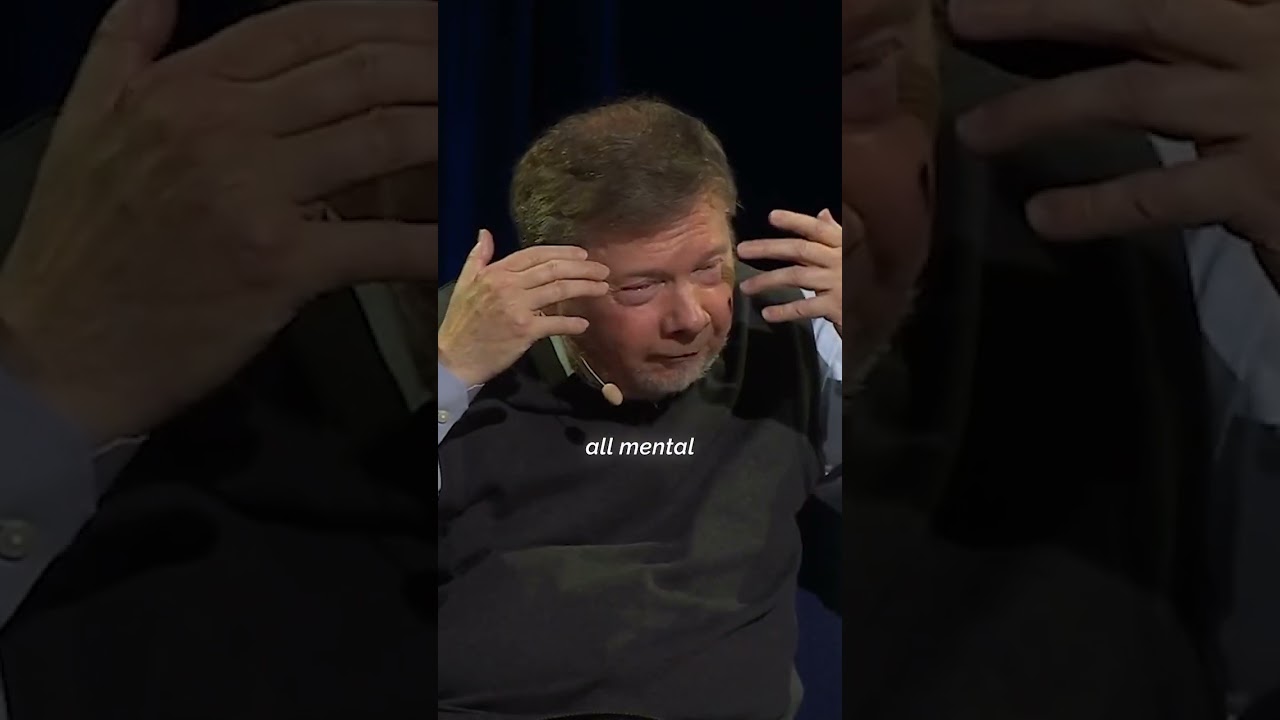
We are all actors performing roles so habitually that we've lost awareness we're performing. From early childhood, we learn to find the "right face," the right posture, the right reaction to fit every situation—and by adulthood, this performance becomes so fast and automatic that we no longer recognize it as performance. The realization that we are acting all the time, that we believe the roles we play, and that we believe the roles others play, forms the foundation of The Actor, a book by don Miguel Ruiz and Barbara Emrys exploring Toltec wisdom and the path toward conscious action and authentic presence.

Lecture · 5 sections

How Early Do We Begin Performing?

According to Ruiz, performance training begins remarkably early in life—so early that most people never recognize it as training. The observation of a toddler learning to throw a tantrum illustrates this point vividly. A small child, told by his mother "You can't do that," doesn't simply react with anger. Instead, he cycles through approximately ten distinct facial expressions and body postures, each one a variation on displeasure, until he lands on the one that feels right—the face that says, "I hate you." His entire body shifts to match the emotion: posture changes, facial musculature rearranges, the physical presence transforms. By the time the performance is complete, the child has enacted it so fully that he even ends up on the floor.

What appears to be a spontaneous outburst is actually a directed performance, but the toddler is not cynically aware of this. He is simply discovering, in real time, which facial expressions, which body language, which emotional presentation fits the situation. He tries variations; he tests the effect. This is the raw process of learning to act.

Why Does Acting Become Invisible?

The critical insight is what happens as we mature. By adulthood, this process—which the toddler must laboriously cycle through, trying different faces and postures—becomes instantaneous. The trained adult doesn't go through ten variations anymore. We move directly from stimulus to the perfect response without conscious deliberation. This speed is the problem: we become so efficient at performing that we lose all awareness we are performing at all.

As Ruiz observes, "We're so fast now, we don't know we're acting, we don't know we're performing." The decades of training are invisible to us because we have optimized the performance to the point of automaticity. We are no longer aware of the choice, the deliberation, the "trying on" of responses. We simply react—or rather, we perform the appearance of reacting—with such speed that the distinction between authentic response and learned role collapses.

Nobody, Ruiz suggests, considers "how much training they went through to get to this point of automatic performance." This is the hidden cost of mastery: we have mastered the art of acting so thoroughly that we can no longer see the performance itself.

What Is the Belief Behind Our Roles?

Central to The Actor is the recognition that we do not merely perform our roles—we believe them. When the toddler cycles through facial expressions to find the right one, he is not fully pretending; he is discovering which emotion fits, which identity matches the situation. By the time we are adults, this discovery has hardened into conviction. We do not merely act angry; we believe we are angry. We do not merely perform the role of the responsible employee, the patient parent, the witty friend; we believe we are these things.

This belief extends outward as well. We also believe the roles that other people play. When someone performs confidence, we believe in their confidence. When someone performs authority, we grant them authority. We have become so skilled at reading and accepting performances that we rarely question whether the performance and the performer are one and the same.

Can We Act With Awareness Instead?

The possibility that The Actor opens is the possibility of awareness. If we have become such masterful actors without knowing it, what becomes possible when we recognize our mastery? What changes when we see, clearly, that we have been performing all along?

Ruiz suggests that by recognizing ourselves as actors—by acknowledging "the masters we've become"—we create the opportunity to act with consciousness. We move from unconscious automaticity to deliberate choice. We can then "modify our behavior" and "use our talents consciously." Rather than being puppeteered by our trained responses, we can author our own performances.

More radically, we can "set aside our pretenses and nurture authenticity once again." This is not a call to stop acting—since for Ruiz, acting is fundamental to how we navigate the world. Rather, it is a call to act while knowing we are acting, to perform while retaining awareness of the performance, and to choose which roles serve us and which ones obscure who we actually are beneath the roles.

Where to Go From Here

The realization that we are acting all the time is the doorway into Toltec wisdom as Ruiz and Emrys present it in The Actor. This is not a philosophy of cynicism or inauthenticity—it is a philosophy of awakening to our own mastery and reclaiming agency over the performances we enact daily. The work begins with recognition: noticing the instant when you shift your face to meet someone's expectation, feeling the moment when your posture changes to match a role, catching yourself in the act of performing. Only then does consciousness enter, and with it, the possibility of choice.

Transcript

[0:00] You know, one of the biggest performancee I see, i not the

[0:04] biggest one, is when I see Julius making the first tantrum

[0:12] God, yeah, that was just amazing

[0:14] it was so funny.

[0:17] Because his mother said, his mother said, "You can't do

[0:20] that." And he did about 10 variations on a face until he

[0:27] got to the one that said, I hate you. But he did. And you see

[0:31] that, you know, the whole body, the whole body went from Huh, to

[0:39] a whole reaction to what she said. And it was the face, it

[0:44] was the, you know, the, the posture, but maybe 10 clear

[0:50] versions of another kind of face until he got the one he wanted.

[0:54] And it was just astonishing, because he was maybe two, you

[0:57] know, maybe less than that. He ended on the floor. But Miguel,

[1:03] yeah ended up the floor. But Miguel and I were just sitting

[1:07] there at the dining table, and we saw it and we both had the

[1:10] same reaction, like wow, that was an amazing thing. And this

[1:15] isn't generic. This is like, I'm finding an attitude that fits

[1:20] this situation. And most of us by the time, you know, we're

[1:24] adult, we figured out those things really fast, and we don't

[1:27] have to go through all the steps, and end up on the floor.

[1:31] But we're so fast now, we don't know we're acting, we don't know

[1:35] we're performing. And at that little point in his life, he was

[1:40] just figuring it out. And it was just marvelous to see. Nobody's

[1:45] considering how much training they went through to get to this

[1:51] point of automatic performance.

don Miguel Ruiz
Auteurdon Miguel Ruiz

Mexican author and Toltec spiritual teacher whose 1997 book The Four Agreements has sold more than ten million copies and remained on the New York Times bestseller list for over a…

Voir le profilSite web
Explorer les thèmes
Acting-consciousnessToltec-wisdomSelf-awarenessAutomatic-behaviorIdentity-roles

Des questions ?

Questions fréquemment posées

Through decades of practice, our performance becomes automatic and instantaneous. We no longer cycle through variations like the toddler does; instead, we respond so quickly that we lose awareness we're performing at all. This speed and efficiency of the trained response makes the performance invisible to us.
A simple example is shifting your facial expression and tone when you move from a conversation with a friend to a conversation with your boss. You are consciously or unconsciously choosing a different 'face' and posture to fit the situation—exactly as the toddler does, but so fast you don't realize you're doing it.
It means we don't just perform an emotion or identity; we convince ourselves it's real. When you perform confidence, you begin to believe you are confident. When you perform patience as a parent, you start to believe patience is who you are. The performance and the belief become fused.
No. According to Ruiz, the goal is not to stop acting but to act with awareness. When you know you're performing, you reclaim choice over which roles you enact. You can then perform authentically rather than being unconsciously puppeteered by learned responses.
When you see that your reactions and emotional displays are learned performances rather than fixed truths about who you are, you realize you can modify them. Awareness of the performance is the first step to consciously choosing new roles and behaviors.
Rather than rejecting the roles we play, Toltec wisdom invites us to recognize ourselves as masters of acting who have simply forgotten we're performing. By reclaiming that mastery consciously, we use our talents deliberately and authentically instead of being run by automatic habit.

Continuer la lecture

More from don

Voir tout
Final Judgment: The End of Self-Judgment and Path to Peace
Featured

Final Judgment: The End of Self-Judgment and Path to Peace

The last judgment isn't God condemning you—it's the final moment you judge yourself. Beyond that lies unconditional respect and the peace of…

1 min read
Clean Consciousness Stops Negative Thoughts: Reclaim Your Birthright
Featured

Clean Consciousness Stops Negative Thoughts: Reclaim Your Birthright

A clean consciousness lets you observe and reject negative thoughts instead of believing them. Ruiz explores why taking responsibility for y…

1 min read
Who You Really Are Beyond Surface Identity
Featured

Who You Really Are Beyond Surface Identity

You are not your body, name, or conditioned mind. Eckhart Tolle reveals the distinction between surface identity and deeper being.…

1 min read
Beneath Surface Identity: What Remains Beyond the Ego
Featured

Beneath Surface Identity: What Remains Beyond the Ego

Your name, story, and self-image are surface phenomena. The deeper self lies untouched beneath ego and conditioning.…

1 min read

Continue d’explorer

Poursuis ton chemin

Plus de sagesse et de rassemblements dans tout l’annuaire BrightStar.

Plus d’articles

Parcours toute la bibliothèque d’enseignements, d’entretiens et de guides.

Retour à tous les articles →

Enseignants et artistes

Découvre les lignées, les musiciens et les guides du monde conscient.

Explorer les artistes →

Trouver un événement

Kirtan, retraites, bains sonores, breathwork, festivals — bientôt près de chez toi.

Parcourir les événements →