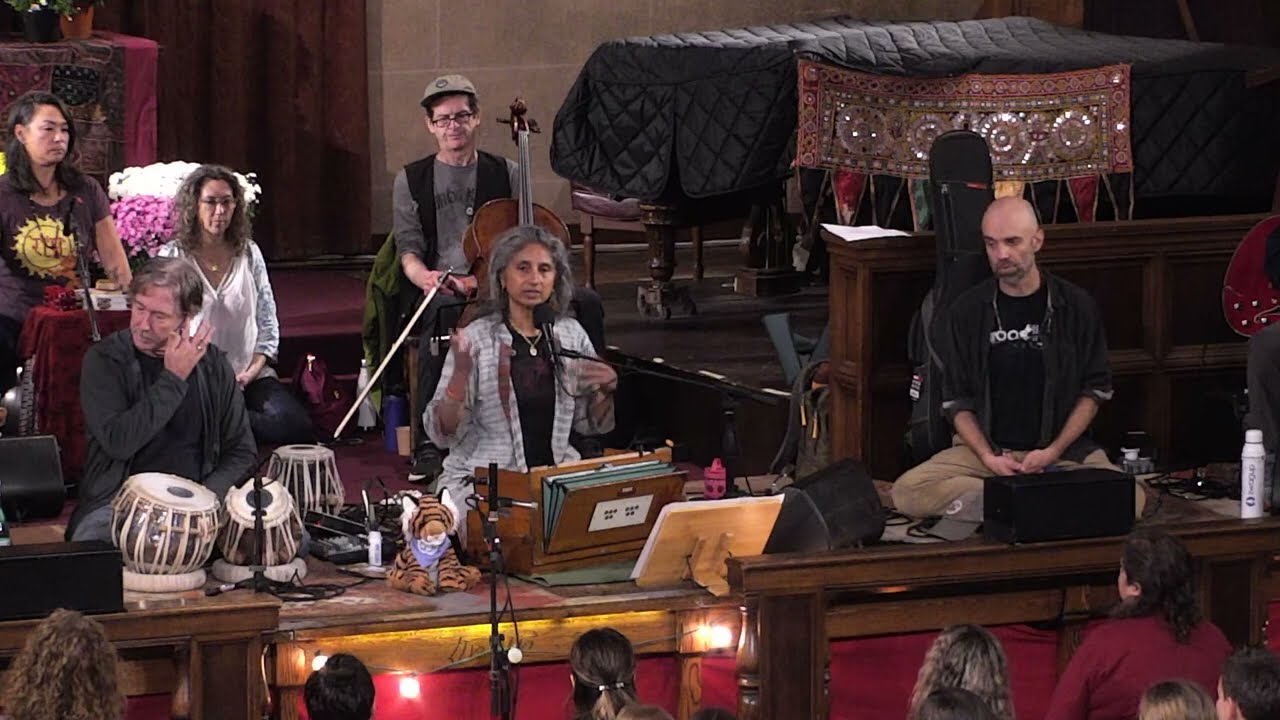
In this brief but resonant moment, a heartfelt poem becomes an offering—a direct expression of devotion and reverence that illustrates how verse, when offered with genuine feeling, can serve as a bridge between the individual heart and something larger than oneself. The encounter demonstrates the power of poetic language not as intellectual exercise but as a sacred medium through which sincere emotion finds form and meets recognition.
What is the role of poetry in spiritual practice?
Poetry has long occupied a central place in contemplative traditions across the world. It is not merely an art form or aesthetic expression, but a direct language of the heart—a way to articulate what ordinary speech cannot reach. When a poem is offered with genuine feeling, it becomes something more than words on a page. It becomes an act of transmission, a moment where the inner state of the speaker meets the receptivity of the listener.
In the context of spiritual life, poetry serves several functions simultaneously. It can express devotion—the heart's longing for the sacred or for the teacher. It can convey insight—a distilled understanding that points beyond conceptual thinking. And it can create an opening—a moment of vulnerability and authenticity that allows real connection to occur. Poetry does not ask to be understood primarily through the intellect; it asks to be received, felt, and recognized.
How does offering work in the guru-student relationship?
The guru-student relationship, foundational to many Eastern spiritual traditions, is built on a specific kind of exchange. The student does not approach the teacher merely to gather information or techniques. Rather, there is an implicit recognition that transformation requires an opening, a willingness to be touched by something beyond one's own defenses and ideas.
Offering is the primary language of this relationship. An offering is not transactional—it is not given with the expectation of return. Instead, it is an expression of gratitude, reverence, and surrender. The student offers not necessarily material things, but attention, presence, effort, and—as in this case—the fruits of their own practice or creativity. When a student offers a poem, they are offering something that carries their authentic feeling. They are saying: here is what my practice has opened in me; here is where my heart stands.
The teacher's recognition of the offering is equally important. It is not mere politeness or encouragement. It is an acknowledgment that something real has occurred—that the student has shown up authentically, and that this showing up itself is the work. This mutual recognition creates a field within which deeper transformation becomes possible.
Why does a heartfelt moment matter in spiritual teaching?
Spiritual teaching is often imagined as the transmission of ideas, techniques, or even energy from teacher to student. But perhaps the most essential transmission is simpler and more fundamental: it is the demonstration that genuine feeling, authentic expression, and sincere devotion are not only possible but valued and recognized.
In a world that often rewards performance, intellectual achievement, and the suppression of vulnerability, a moment in which sincere feeling is offered and received openly becomes profoundly significant. It says: your authentic self matters. Your heart's expression has worth. What you genuinely feel is not a liability but a capacity worth developing.
This kind of moment cannot be manufactured or forced. It arises when conditions allow it—when a student has practiced enough to generate genuine feeling, and when a teacher is present enough to receive it without adding commentary or expectation. Such moments are rare and precious precisely because they require both parties to show up without armor, without pretense.
What is the significance of poetry as offering specifically?
Why poetry rather than prose, or simply spoken words? Poetry has a unique capacity to hold multiple truths at once. It can be personal and universal, concrete and symbolic, rational and emotional all simultaneously. A poem offered in a spiritual context carries the discipline of the poet—the care taken to choose words, to find rhythm and form—but it also carries something that cannot be reduced to technique. It carries the energy of sincere feeling shaped into form.
The poem becomes a container. It holds the practitioner's experience, their opening, their recognition. When someone has spent time in practice—whether that practice is meditation, devotion, or simply the cultivation of awareness—that practice changes what rises in the heart. The poem is evidence of that change. It is not the change itself, but it is proof that something has shifted, something has opened.
To offer such a poem to a teacher is to say: look, this is what your teaching has made possible in me. This is where my practice has brought me. There is no performance in this, no trying to impress. It is simply the honest fruit of engagement with something larger than oneself.
How do moments like this serve the broader community?
While this moment between teacher and student may appear private or intimate, it is actually a teaching for anyone who witnesses it. When people see authentic feeling recognized and honored, something in them opens. They see that their own deeper feeling is not odd, not out of place, not something to hide. They see that in the presence of genuine teaching, the heart's genuine expression finds welcome.
This is especially significant in the context of education—whether in traditional schools or in spiritual learning environments like Isha Home School, where students are learning not only academic subjects but also how to live with awareness and integrity. To see and participate in moments where sincere feeling is honored teaches young people something that no amount of instruction can convey: that authenticity itself is a capacity worth cultivating, and that the heart is a valid and necessary instrument of learning and growth.
Where to go from here
If this moment speaks to you, the invitation is to consider your own relationship with authentic expression. Do you allow yourself to feel deeply about what matters to you? Do you have spaces—whether with a teacher, a community, or simply in solitude—where your genuine feeling can emerge without immediately being edited, judged, or suppressed?
Poetry need not be something you produce or share publicly. But the capacity to let your sincere feeling take form—whether in words, in art, in movement, or in simple presence—is itself a practice. It is a way of saying yes to the life that is actually moving through you, rather than the life you think you should be living.
If you have a teacher or mentor, consider what it might mean to offer something genuine—not to impress, but simply to show up authentically. And if you are in the role of teacher or elder, consider how your recognition of another person's genuine offering might itself become a teaching that ripples far beyond that single moment.