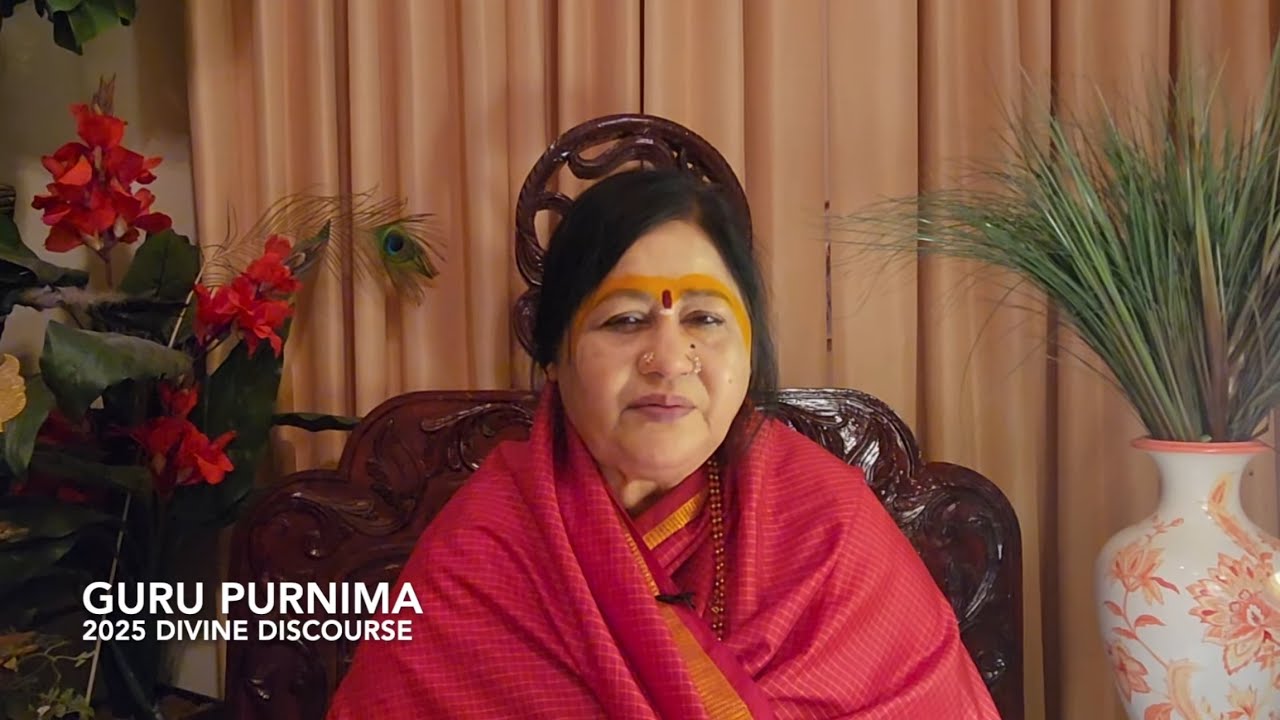
Maha Shivaratri, celebrated annually as the "Great Night of Shiva," is one of Hinduism's most sacred festivals. In this 2022 Divine Discourse, Sri Karunamayi Amma provides comprehensive teachings on Maha Shivaratri's spiritual significance, the proper rituals and observance practices, and the concrete benefits these practices offer to seekers and humanity at large. The teaching covers both the mythological context and practical methods for engaging with this sacred night to deepen one's connection with the divine.
What is Maha Shivaratri and Why Is It Significant?
Maha Shivaratri, literally "the Great Night of Shiva," is an annual Hindu festival dedicated to Lord Shiva, one of the principal deities in the Hindu trinity. This sacred observance falls on the darkest night of the lunar calendar—the new moon day (Amavasya) in the Hindu month of Phalguna, typically occurring in February or March.
The spiritual significance of Maha Shivaratri extends far beyond mere calendar marking. In the Hindu philosophical framework, Shiva represents the ultimate principle of consciousness, the supreme reality (Brahman), and the cosmic force of transformation and dissolution. Unlike many festivals that celebrate divine birth or victory, Maha Shivaratri honors Shiva's essential nature as the transcendent witness and the primordial source from which all creation emanates and ultimately returns.
According to Hindu tradition, Maha Shivaratri commemorates the night when Shiva performed the cosmic dance known as Tandava—a dance representing the creation, preservation, and destruction cycles of the universe. This festival carries profound metaphysical meaning: it marks a time when the boundary between the material and spiritual realms becomes particularly thin, creating optimal conditions for inner transformation and self-realization.
How Is Maha Shivaratri Traditionally Observed?
The observance of Maha Shivaratri involves specific practices designed to align the practitioner's consciousness with Shiva's transcendent nature. Traditional rituals form the foundation of this sacred observance:
- Fasting: Devotees observe a complete or partial fast on Maha Shivaratri. This practice is believed to purify the body and mind, reducing the gross material tendencies that obscure spiritual awareness. Some traditions permit simple foods like milk, yogurt, or fruits, while others maintain complete abstinence from food.
- Abhisheka (ritual bathing of the deity): Devotees perform ritual bathing of Shiva lingam with sacred substances including water, milk, yogurt, honey, and ash. This practice symbolizes the purification of consciousness and the removal of karmic impurities that cloud the mind.
- Chanting of mantras: The recitation of sacred mantras, particularly "Om Namah Shivaya" (which means "I bow to Shiva"), is a central practice. Mantra repetition creates vibrational alignment with Shiva consciousness and purifies the mind of scattered thoughts.
- Meditation and vigil: Devotees maintain wakefulness throughout the night, engaging in meditation, prayer, and spiritual study. This practice counteracts the ignorance and inertia that manifest as sleep and unconsciousness, symbolically awakening the practitioner to their true nature.
- Temple attendance: Many devotees visit Shiva temples to receive darshan (the sacred presence and blessing of the deity) and participate in collective worship, which amplifies the spiritual potency of individual practice.
These practices work synergistically: fasting reduces the physical body's demands and cravings; ritual bathing purifies the outer form; mantra chanting and meditation direct the mind inward; and wakefulness maintains conscious awareness throughout the night when the mind naturally seeks rest and unconsciousness. Together, they create a comprehensive framework for spiritual discipline and inner transformation.
What Are the Deeper Benefits of Maha Shivaratri Practice?
The benefits of sincere Maha Shivaratri observance extend across multiple dimensions of human existence. At the most fundamental level, the practices cultivate discipline and self-control. By consciously restricting food intake, maintaining wakefulness, and directing attention inward, practitioners train their minds and senses to obey the will rather than serve habitual patterns and desires.
Spiritually, Maha Shivaratri observance creates favorable conditions for accelerated spiritual progress. The alignment of cosmic energies during this night—when the moon is dark and the earth's magnetism is at particular strength—facilitates deeper meditation and more direct experience of inner silence and peace. Many spiritual traditions teach that spiritual efforts made on Maha Shivaratri yield results many times more powerful than the same efforts made on ordinary days.
The practice also offers psychological and emotional benefits. The extended period of fasting, meditation, and inward focus naturally settles disturbed emotional states, quiets the constant mental commentary, and provides direct experience of the mind's inherent clarity and peace. Practitioners often report profound shifts in their sense of identity and relationship to their own consciousness after sincere observance.
At the level of collective benefit, sincere Maha Shivaratri practice contributes to planetary and human welfare. The spiritual teaching tradition holds that individual spiritual work radiates benefit to the entire world, purifying the collective consciousness and reducing the weight of negative karma in the human realm. This understanding frames personal practice as a form of service to humanity.
What Role Does Devotion Play in Maha Shivaratri Observance?
While the outer rituals and practices form the structure of Maha Shivaratri observance, the inner quality of devotion animates and empowers these practices. Devotion—understood as sincere longing to connect with the divine and to align one's will with divine will—transforms mechanical ritual into living spiritual practice.
True devotion involves both reverence for Shiva as the supreme reality and humble acknowledgment of one's own limitations and need for grace. This combination of reverence and humility opens the heart and quiets the ego's resistance to transformation. A person might perform all the outer practices perfectly but without this inner orientation of sincere seeking and surrender, the practices remain incomplete.
The relationship between external practice and internal devotion can be understood through the metaphor of a seed. The rituals, fasting, and mantras are like the fertile soil; sincere devotion is the seed itself. Without the seed, even the richest soil produces nothing. Without the soil, the seed cannot grow. Maha Shivaratri practice is most fruitful when both dimensions work together.
Why Does Maha Shivaratri Fall on the New Moon Night?
The timing of Maha Shivaratri on the darkest night of the lunar cycle holds profound significance in both astronomy and spirituality. Esoterically, the new moon (Amavasya) represents a state of apparent non-manifestation—darkness that precedes the emergence of light. This is the most auspicious time for practices aimed at accessing the transcendent, formless dimension of existence represented by Shiva.
The new moon night is associated in yogic tradition with heightened spiritual receptivity and reduced interference from the subtle disturbances that the moon's light can generate. Many advanced meditation practices are specifically timed to new moon nights for this reason. The darkness is not an absence to be feared but rather a transparent gateway to the infinite consciousness that exists beyond all forms and phenomena.
Additionally, the new moon occurs during the waning phase of the lunar cycle, which in Ayurvedic and yogic understanding is associated with inward movement of energy and consciousness. This natural energetic current makes the night particularly suitable for introspection, meditation, and spiritual practice aimed at inner realization.
How Can Modern Practitioners Approach Maha Shivaratri?
While the traditional practices remain powerful, modern practitioners may need to adapt the observance to contemporary circumstances while maintaining its essential spirit. Someone unable to fast completely might reduce food intake to simple, sattvic (pure) foods. Someone unable to remain awake all night might engage in extended meditation during evening and early morning hours.
The key principle is sincere engagement with the intention of the practice: purification, inward focus, and alignment with Shiva consciousness. This can happen through dedicated meditation, chanting of mantras, reading sacred texts, serving others, or spending extended time in nature—whatever methods genuinely connect the practitioner to the transcendent dimension of existence.
What matters most is not mechanical adherence to outer forms but genuine inner participation. A person who fasts, stays awake all night, and performs rituals mechanically while their mind remains scattered and their heart closed receives far less benefit than someone who spends a few hours in sincere meditation with genuine longing for connection with the divine.
The traditional guidance emphasizes that consistency and sincerity matter more than elaborate external practices. Even modest observance engaged with genuine devotion creates a permanent positive shift in consciousness over time.
Where to Go From Here
For those drawn to deepen their understanding and practice around Maha Shivaratri, several paths forward are available: First, study the mythological and philosophical texts related to Shiva, such as the Shiva Purana or the teachings of Shaivite masters, to develop intellectual understanding that supports experiential practice. Second, establish a regular meditation practice, perhaps beginning with daily recitation of "Om Namah Shivaya" to develop familiarity with Shiva consciousness. Third, if possible, attend teachings and satsang (spiritual gathering) with an authentic spiritual teacher who can guide personal practice and provide direct transmission of the teachings. Fourth, plan a sincere observance of the next Maha Shivaratri, beginning with modest practices and gradually deepening them as capacity increases. Finally, recognize that Maha Shivaratri is not merely an annual event but represents an ongoing invitation to awaken to the transcendent consciousness that Shiva embodies—a consciousness available in every moment to those who turn their attention inward with genuine seeking.