EveryEvent San Diego

Parcourir tous les Events

Find every event in San Diego

events

Concerts & Live Music
Festivals
Sports & Recreation
Food & Drink
Arts & Culture
Community
Family & Kids
Nightlife
Comedy
Theater
Destinations populaires
BaliSedonaLos AngelesCosta RicaNew YorkSan FranciscoAustinMiamiJoshua TreeTulum
Voir toutes les catégoriesVoir toutes les destinations

Explorer toutes les fonctionnalités

Des outils puissants pour développer tes événements

Fonctionnalités de la plateforme

Tarification dynamique intelligente
Catégories de billets
Places assignées
Récupération des paniers abandonnés
Récupération des visiteurs
Dons & Prix variables
Système d'affiliation
Scanner de billets
Codes promo
Questions personnalisées
Partage de billets
Ventes additionnelles & Options
Analyses & Rapports
Séquences d'emails
Liste d'attente / Notifier / Rappeler
Explorer
Discovery HubArtists & PerformersVenuesKnowledge Base
Voir toutes les fonctionnalitésÀ propos
TarifsBlog
Language
Saved events
Parcourir tous les événements

events

Concerts & Live MusicFestivalsSports & RecreationFood & DrinkArts & CultureCommunityFamily & KidsNightlife

Destinations populaires

BaliSedonaLos AngelesCosta RicaNew YorkSan Francisco

Explorer

Discovery HubArtists & PerformersVenuesKnowledge Base

Fonctionnalités de la plateforme

Tarification dynamique intelligenteCatégories de billetsPlaces assignéesRécupération des paniers abandonnésRécupération des visiteursDons & Prix variablesSystème d'affiliationScanner de billetsCodes promoQuestions personnaliséesPartage de billetsVentes additionnelles & OptionsAnalyses & RapportsSéquences d'emailsListe d'attente / Notifier / Rappeler
Voir toutes les fonctionnalitésÀ propos
TarifsBlog
ConnexionS'inscrireOrganisateurs d'événements
  • Browse All Events
  • Concerts & Live Music
  • Festivals
  • Sports & Recreation
  • Food & Drink
  • Arts & Culture
  • Community
  • Family & Kids
  • Nightlife
  • Toutes les catégories →
  • Los Angeles
  • Tijuana
  • Palm Springs
  • Joshua Tree
  • Temecula
  • All Destinations →
  • For Promoters
  • For Artists
  • For Venues
  • For Festivals
  • For Event Spaces
  • For Nonprofits
  • For Bloggers
  • For Speakers
  • Brand Ambassador
  • Case Studies
  • Réseau de 350K+ acheteurs
  • Récupération des paniers abandonnés
  • Tarification dynamique intelligente
  • Catégories de billets
  • Événements récurrents
  • Places assignées
  • Système d'affiliation
  • Liste d'attente / Notifier
  • Scanner de billets
  • Widget intégrable
  • Diffusion d'événements
  • Messagerie
  • Intégrations
  • Rapports
  • Toutes les fonctionnalités →
  • À propos
  • L'écosystème
  • Blog
  • Glossaire
  • Inspiration
  • Centre d'aide
  • Contact
  • Documentation API
  • Ressources de marque
  • Carrières
  • Presse
  • Conditions d'utilisation
  • Politique de confidentialité

Events

  • Browse All Events
  • Concerts & Live Music
  • Festivals
  • Sports & Recreation
  • Food & Drink
  • Arts & Culture
  • Community
  • Family & Kids
  • Nightlife
  • Toutes les catégories →

Getaways

  • Los Angeles
  • Tijuana
  • Palm Springs
  • Joshua Tree
  • Temecula
  • All Destinations →

For Organizers

  • For Promoters
  • For Artists
  • For Venues
  • For Festivals
  • For Event Spaces
  • For Nonprofits
  • For Bloggers
  • For Speakers
  • Brand Ambassador
  • Case Studies

Fonctionnalités

  • Réseau de 350K+ acheteurs
  • Récupération des paniers abandonnés
  • Tarification dynamique intelligente
  • Catégories de billets
  • Événements récurrents
  • Places assignées
  • Système d'affiliation
  • Liste d'attente / Notifier
  • Scanner de billets
  • Widget intégrable
  • Diffusion d'événements
  • Messagerie
  • Intégrations
  • Rapports
  • Toutes les fonctionnalités →

Entreprise

  • À propos
  • L'écosystème
  • Blog
  • Glossaire
  • Inspiration
  • Centre d'aide
  • Contact
  • Documentation API
  • Ressources de marque
  • Carrières
  • Presse
  • Conditions d'utilisation
  • Politique de confidentialité
EveryEvent
© 2026 EveryEvent San Diego. Tous droits réservés.
Inspiration

Maitake Mushrooms: Immune Supportand Cultivator Secrets

Paul Stamets
Paul Stamets
Jul 12, 2017
5 min de lecture
À regarder · 5
Maitake mushrooms (Grifola frondosa), also called Hen-of-the-Woods, are prized edible fungi that support immune function and help modulate blood sugar levels in healthy individuals. Named from a Japanese legend about wood cutters and nuns who danced upon discovering them, these mushrooms offer both culinary delight and therapeutic potential. Cultivators know a closely guarded secret: young maitake primordia, called "maitake brains," are exceptionally tender, deeply flavorful, and cherished by those in the mushroom community for their distinctive texture and taste.

Lecture · 6 sections

What Does the Name Maitake Actually Mean?

The term "maitake" is Japanese in origin, and it translates to "dancing mushrooms." According to legend, a group of wood cutters were descending a trail after a full day's labor when they encountered a group of nuns at the junction where two paths converged. At that precise moment, they discovered these remarkable mushrooms and experienced such joy that they began to dance together—hence the name maitake, commemorating that moment of celebration (0:13–0:33).

The mushroom is also called "Hen-of-the-Woods" in English, a name rooted in its visual appearance. The fruiting body resembles the fluffy feathers of a hen, with overlapping, layered fronds that fan outward in a natural branching pattern. This dual nomenclature reflects the mushroom's presence across different cultures and its distinctive morphology.

What Are the Health Benefits of Maitake Mushrooms?

Maitake mushrooms offer multiple documented benefits that have made them a staple in traditional and contemporary wellness practices. According to Paul Stamets, these mushrooms are:

  • Immune-supporting: Maitake mushrooms help activate and support the immune system, making them valuable for overall wellness and seasonal health.
  • Blood sugar modulators: They help modulate blood sugar levels in healthy individuals, keeping levels within normal physiological ranges (0:35–0:45).
  • Edible and choice: Unlike many medicinal fungi, maitake is both therapeutic and culinary—a mushroom you eat not out of necessity but genuine pleasure.

These properties make maitake a unique bridge between food and functional medicine, offering benefits whether consumed fresh, cooked, or as an extract.

What Are Maitake Brains and Why Do Cultivators Treasure Them?

This is where Stamets reveals a cultivator's secret rarely discussed outside professional mushroom-growing circles. "Maitake brains" are young maitake primordia—the earliest developmental stage of the fruiting mushroom, before it has fully expanded into the feathery, mature form (0:50–0:60).

At this juvenile stage, the mushroom has distinctive characteristics that make it exceptionally valuable to those who grow and harvest maitake:

  • Solid, dense flesh: Unlike the more delicate mature fronds, young primordia are packed with solid tissue, creating a uniquely satisfying texture when eaten.
  • Brain-like appearance: When sliced, these young mushrooms bear a striking resemblance to a cerebellum—the folded structure of the brain—which is where the colloquial name originates (0:62–0:70).
  • Exceptional flavor: Stamets describes maitake brains as "just über delicious," reflecting the concentrated, umami-rich taste that develops at this growth stage (0:70–0:75).

These are not sold commercially or found in ordinary grocery stores. Cultivators and their families and friends cherish maitake brains for personal use, harvesting them at precisely the right moment before the mushroom unfurls into its mature, feathery form. This practice represents insider knowledge within the professional mycology community—a detail that highlights the difference between industrial mushroom production and careful, small-scale cultivation.

Why Is Timing Critical for Harvesting Maitake?

The existence of maitake brains underscores a fundamental principle in mushroom cultivation: timing determines not only the yield but the quality and character of the harvest. Mature maitake mushrooms are valuable for their culinary and medicinal properties, but the young primordia represent a fleeting window of opportunity. Once the mushroom begins to expand and differentiate into separate fronds, it can no longer be harvested as a "brain." This temporal constraint is part of why cultivators prize these young fruiting bodies so highly—they require precise observation and intuitive timing to capture at peak development.

How Can You Enjoy Maitake Mushrooms?

For those without access to cultivated maitake brains, mature maitake mushrooms are increasingly available through specialty grocers, farmers markets, and online suppliers. They can be:

  • Sautéed with garlic and butter for a rich, umami-forward side dish
  • Added to soups and broths, where they impart depth and body
  • Roasted to concentrate their earthy, nutty flavors
  • Prepared as a medicinal tea or extract for immune and metabolic support
  • Included in functional food products designed to support wellness

The dual nature of maitake—both delicious and functional—makes it accessible to people seeking culinary pleasure and those pursuing specific health outcomes, or ideally, both.

Where to Go from Here

If you are curious about mushroom cultivation, Paul Stamets' work and his company Fungi Perfecti offer extensive resources on growing maitake and other edible and medicinal species at home. If you are interested in experiencing maitake for its flavor and health properties, seek out fresh or dried specimens from reputable suppliers who prioritize quality and sustainable harvesting. For deeper exploration of medicinal mushroom science, Stamets' books and research papers provide peer-reviewed insights into the mechanisms by which fungi support human health. The story of maitake—from a legend about dancing to a modern functional food—reminds us that some of nature's most valuable gifts come wrapped in both tradition and science.

]]>
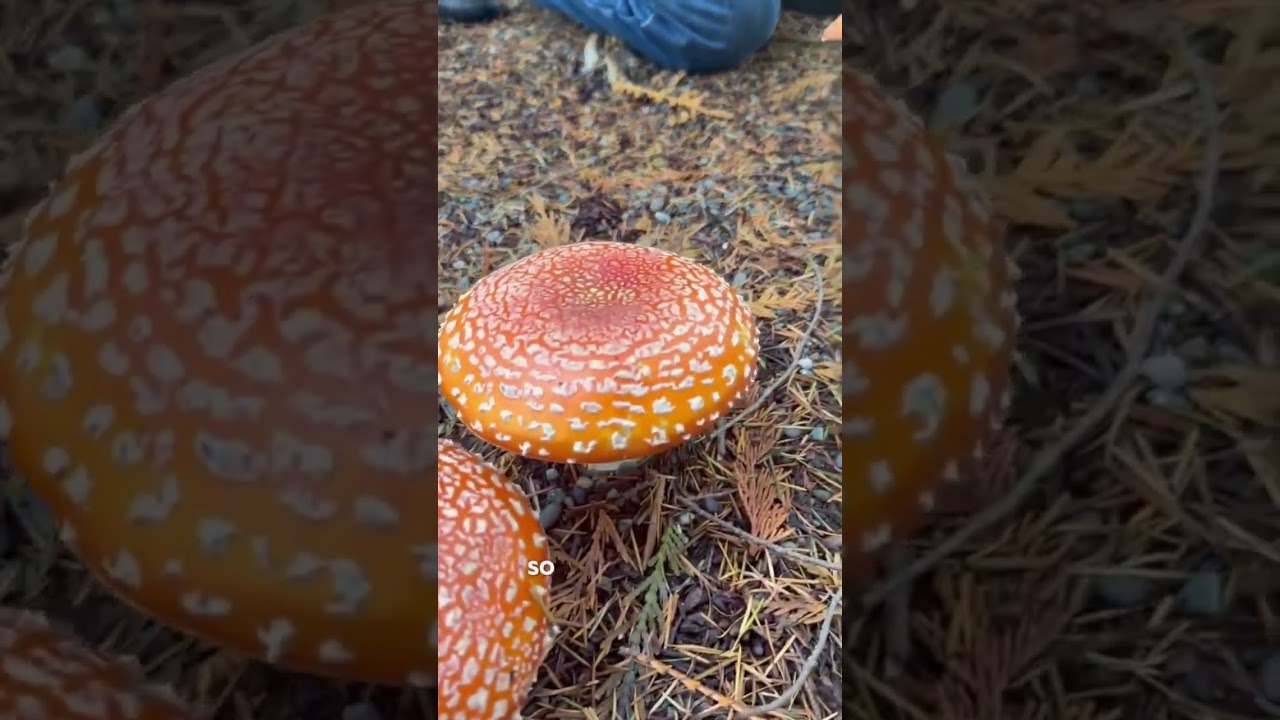
Transcript

[0:01] hi folks my name is Paul stamitz I'm

[0:02] here at Starship FP fungi perfectti and

[0:05] I'm surrounded by these two walls of my

[0:08] mushrooms also known as Hen of the Woods

[0:10] Hen of the Woods because it looks up the

[0:11] like the flu up feathers of the hen but

[0:13] what does my talki mean well it's a

[0:15] Japanese term it means dancing mushrooms

[0:17] and Legend has it that a group of wood

[0:20] cutters men were coming down the trail

[0:21] after hard day's work and they

[0:23] encountered a group of nuns at the

[0:25] junction of two trails that came

[0:27] together and at that exact moment they

[0:29] discovered these wonderful mushrooms and

[0:31] they started dancing with joy so they

[0:33] named them myi mushrooms now myi

[0:36] mushrooms are not only edible in choice

[0:38] and they support the immune system but

[0:40] they also help modulate blood sugar

[0:43] levels in healthy individuals within the

[0:45] normal limits so but myi mushrooms have

[0:48] other attributes that very few people

[0:50] see I'm going to show you a secret that

[0:51] us cultivators know about uh and these

[0:54] are what we call mitake brains uh

[0:57] they're young mitake primordia and uh

[1:00] they're edible in choice and when you

[1:02] slice these it's solid

[1:06] flesh and uh and it has sort of like a

[1:10] cerebellum of a brain uh and these are

[1:13] just Uber delicious um and something us

[1:15] cultivators cherish for ourselves and

[1:18] our families and friends so I hope you

[1:20] come to enjoy my Taki as much as we do

[1:22] it's one of my favorite of all edible

[1:24] mushrooms thank you

[1:30] but

Paul Stamets
AuteurPaul Stamets

Mycologist and advocate who has dedicated his life to studying mushrooms and their transformative potential to heal people and restore the planet through medicine, agriculture, and…

Voir le profilSite web
Explorer les thèmes
Maitake-mushroomsMedicinal-fungiImmune-systemBlood-sugarMushroom-cultivation

Des questions ?

Questions fréquemment posées

Maitake mushrooms (Grifola frondosa) contain bioactive compounds that support and activate immune function, making them valuable for overall wellness. They are recognized in both traditional medicine and contemporary research for their immunomodulatory properties.
Yes, maitake mushrooms help modulate blood sugar levels in healthy individuals, keeping them within normal physiological ranges. This dual action—supporting both immunity and metabolic balance—makes maitake a unique functional food.
Maitake brains are young maitake primordia—the earliest developmental stage of the fruiting mushroom—prized by cultivators for their dense, solid flesh and brain-like appearance when sliced. They are rarely sold commercially; cultivators typically harvest and reserve them for personal use and close circles.
Yes, maitake and Hen-of-the-Woods (Grifola frondosa) are the same mushroom. Maitake is the Japanese name meaning 'dancing mushrooms,' while Hen-of-the-Woods is the English name referring to its feathery appearance.
According to Japanese legend, wood cutters discovered maitake mushrooms at the junction of two trails and encountered nuns at that same moment. The joy they experienced together led them to dance, and the mushroom was subsequently named maitake, or 'dancing mushroom,' to commemorate that celebration.
Yes, maitake mushrooms can be cultivated at home using spawn and growing medium, though they require careful environmental control and timing to achieve successful fruiting. Fungi Perfecti and other mycological suppliers offer cultivation kits and resources for home growers.
Fresh maitake mushrooms can be sautéed with garlic and butter, roasted to concentrate their earthy flavors, added to soups and broths, or prepared as a medicinal tea. Their dense texture and umami-rich profile make them versatile in both savory and wellness-focused preparations.

Continuer la lecture

More from Paul

Voir tout
Amanita Muscaria: History, Identification & Safety of Fly Agaric
Featured

Amanita Muscaria: History, Identification & Safety of Fly Agaric

Amanita muscaria, the fly agaric, has ancient roots in pest control and cultural mythology. Despite its striking beauty, this mushroom poses…

1 min read
Lactarius Deliciosus: Identifying & Foraging the Saffron Cap
Featured

Lactarius Deliciosus: Identifying & Foraging the Saffron Cap

The saffron milk cap (Lactarius deliciosus) is an easy-to-identify edible mushroom with striking green staining and orange milk. Learn how t…

1 min read
How Sitting Still Proves You're Already Awakening
Featured

How Sitting Still Proves You're Already Awakening

Most people can't sit quietly without discomfort, but if you can, you're already further along spiritually than you realize. Eckhart Tolle e…

1 min read
The Missing Piece: How Real Thinking Creates Real Results
Featured

The Missing Piece: How Real Thinking Creates Real Results

Most vision boards fail because people skip the actual thinking. Eckhart Tolle reveals the rhythm that unlocks insight and the two distinct …

1 min read

Continue d’explorer

Poursuis ton chemin

Plus de sagesse et de rassemblements dans tout l’annuaire BrightStar.

Plus d’articles

Parcours toute la bibliothèque d’enseignements, d’entretiens et de guides.

Retour à tous les articles →

Enseignants et artistes

Découvre les lignées, les musiciens et les guides du monde conscient.

Explorer les artistes →

Trouver un événement

Kirtan, retraites, bains sonores, breathwork, festivals — bientôt près de chez toi.

Parcourir les événements →