
EveryEvent San Diego

Parcourir tous les Events

Find every event in San Diego

events

Concerts & Live Music
Festivals
Sports & Recreation
Food & Drink
Arts & Culture
Community
Family & Kids
Nightlife
Comedy
Theater
Destinations populaires
BaliSedonaLos AngelesCosta RicaNew YorkSan FranciscoAustinMiamiJoshua TreeTulum
Voir toutes les catégoriesVoir toutes les destinations

Explorer toutes les fonctionnalités

Des outils puissants pour développer tes événements

Fonctionnalités de la plateforme

Tarification dynamique intelligente
Catégories de billets
Places assignées
Récupération des paniers abandonnés
Récupération des visiteurs
Dons & Prix variables
Système d'affiliation
Scanner de billets
Codes promo
Questions personnalisées
Partage de billets
Ventes additionnelles & Options
Analyses & Rapports
Séquences d'emails
Liste d'attente / Notifier / Rappeler
Explorer
Discovery HubArtists & PerformersVenuesKnowledge Base
Voir toutes les fonctionnalitésÀ propos
TarifsBlog
Language
Saved events
Parcourir tous les événements

events

Concerts & Live MusicFestivalsSports & RecreationFood & DrinkArts & CultureCommunityFamily & KidsNightlife

Destinations populaires

BaliSedonaLos AngelesCosta RicaNew YorkSan Francisco

Explorer

Discovery HubArtists & PerformersVenuesKnowledge Base

Fonctionnalités de la plateforme

Tarification dynamique intelligenteCatégories de billetsPlaces assignéesRécupération des paniers abandonnésRécupération des visiteursDons & Prix variablesSystème d'affiliationScanner de billetsCodes promoQuestions personnaliséesPartage de billetsVentes additionnelles & OptionsAnalyses & RapportsSéquences d'emailsListe d'attente / Notifier / Rappeler
Voir toutes les fonctionnalitésÀ propos
TarifsBlog
ConnexionS'inscrireOrganisateurs d'événements
  • Browse All Events
  • Concerts & Live Music
  • Festivals
  • Sports & Recreation
  • Food & Drink
  • Arts & Culture
  • Community
  • Family & Kids
  • Nightlife
  • Toutes les catégories →
  • Los Angeles
  • Tijuana
  • Palm Springs
  • Joshua Tree
  • Temecula
  • All Destinations →
  • For Promoters
  • For Artists
  • For Venues
  • For Festivals
  • For Event Spaces
  • For Nonprofits
  • For Bloggers
  • For Speakers
  • Brand Ambassador
  • Case Studies
  • Réseau de 350K+ acheteurs
  • Récupération des paniers abandonnés
  • Tarification dynamique intelligente
  • Catégories de billets
  • Événements récurrents
  • Places assignées
  • Système d'affiliation
  • Liste d'attente / Notifier
  • Scanner de billets
  • Widget intégrable
  • Diffusion d'événements
  • Messagerie
  • Intégrations
  • Rapports
  • Toutes les fonctionnalités →
  • À propos
  • L'écosystème
  • Blog
  • Glossaire
  • Inspiration
  • Centre d'aide
  • Contact
  • Documentation API
  • Ressources de marque
  • Carrières
  • Presse
  • Conditions d'utilisation
  • Politique de confidentialité

Events

  • Browse All Events
  • Concerts & Live Music
  • Festivals
  • Sports & Recreation
  • Food & Drink
  • Arts & Culture
  • Community
  • Family & Kids
  • Nightlife
  • Toutes les catégories →

Getaways

  • Los Angeles
  • Tijuana
  • Palm Springs
  • Joshua Tree
  • Temecula
  • All Destinations →

For Organizers

  • For Promoters
  • For Artists
  • For Venues
  • For Festivals
  • For Event Spaces
  • For Nonprofits
  • For Bloggers
  • For Speakers
  • Brand Ambassador
  • Case Studies

Fonctionnalités

  • Réseau de 350K+ acheteurs
  • Récupération des paniers abandonnés
  • Tarification dynamique intelligente
  • Catégories de billets
  • Événements récurrents
  • Places assignées
  • Système d'affiliation
  • Liste d'attente / Notifier
  • Scanner de billets
  • Widget intégrable
  • Diffusion d'événements
  • Messagerie
  • Intégrations
  • Rapports
  • Toutes les fonctionnalités →

Entreprise

  • À propos
  • L'écosystème
  • Blog
  • Glossaire
  • Inspiration
  • Centre d'aide
  • Contact
  • Documentation API
  • Ressources de marque
  • Carrières
  • Presse
  • Conditions d'utilisation
  • Politique de confidentialité
EveryEvent
© 2026 EveryEvent San Diego. Tous droits réservés.
Inspiration

Mantra for Connection: RadheShyam as Spiritual Anchor

Jai Uttal
Jai Uttal
Apr 3, 2020
7 min de lecture

In response to the pandemic-driven need for physical distance, Jai Uttal created "Stay Close - Radhe Shyam," a devotional mantra piece featuring dozens of kirtan artists and spiritual practitioners singing together virtually. The work addresses the paradox of isolation: while physical separation is necessary for safety, emotional and spiritual contraction can leave us more vulnerable. By singing "Radhe Shyam"—names of the divine beloved in Hindu and yogic tradition—participants create a shared experience that keeps hearts alive and connected across distance, demonstrating how mantra functions not as magical thinking but as a tool for maintaining collective resilience and remembrance of our interdependence.

Lecture · 6 sections

Why Mantra Matters During Crisis and Disconnection

The context of this work is crucial: recorded during the early weeks of the 2020 pandemic, "Stay Close - Radhe Shyam" was created in response to a moment when anxiety and fear seemed to ripple through the global population. Jai Uttal describes this period as a time when "Mother Earth has put all of her children on 'time-out,'" acknowledging both the biological reality of contagion and the psychological weight of enforced separation. In such moments, the natural human response is often contraction—withdrawing into isolation not just physically but emotionally and spiritually, building walls rather than bridges.

Uttal's creative response reveals a fundamental principle in bhakti practice: mantra works precisely because it creates a field of shared resonance. When an individual chants "Radhe Shyam" alone, they invoke the divine beloved—Radha and Krishna, or more abstractly, the divine feminine and masculine principles of love and consciousness. But when dozens of voices sing the same name simultaneously, even if separated by thousands of miles, something shifts in the collective field. This is not mysticism divorced from psychology; it is the recognition that sound, intention, and shared focus create real neurological and emotional states. The mantra becomes a reminder that divine connection transcends physical proximity.

What Does Radhe Shyam Mean in Bhakti Tradition?

Radha is understood in Hindu and yogic philosophy as the embodiment of divine love, often portrayed as the beloved consort of Krishna. Shyam (or Shyama) is a name for Krishna, referring to his dark or blue complexion, but more deeply, to his role as the supreme lover and the divine principle that responds to love. Together, "Radhe Shyam" is not merely a poetic invocation but a mantra that encapsulates the entire devotional path: the devotee's longing (Radha's eternal search) and the divine's responsive love (Shyam's grace).

By singing this mantra, participants are not asking for something external. Rather, they are aligning their consciousness with the qualities these names represent: unconditional love, presence, responsiveness, and the recognition that separation from the divine is ultimately illusory. During a time when physical separation was imposed and anxiety about invisibility of danger was acute, singing Radhe Shyam served as a counter-narrative: a declaration that we remain connected to something greater than circumstance, and to each other through that greater presence.

How Collective Kirtan Builds Resilience Across Distance

The production itself—featuring dozens of renowned kirtan artists including Krishna Das, Deva Premal, Tina Malia, and many others—demonstrates the infrastructure of modern bhakti practice. In pre-digital eras, kirtan (devotional chanting) required physical gathering in temples, ashrams, or homes. The pandemic forced a reimagining: how do you create the collective field of a kirtan when people cannot gather?

Uttal's answer was to film each participant separately, in their own space, often with their own families, singing the same mantra. When edited together, these individual instances of devotion weave into a fabric of global participation. A listener hears not one authoritative voice but a chorus of sincere voices—some trained in classical Indian vocal traditions, others in Western pop or world music styles—all offering the same invocation. This diversity is essential: it demonstrates that the mantra does not require a specific accent, training level, or cultural background. The name "Radhe Shyam" belongs to everyone who sings it with intention.

This approach also addresses a specific psychological need during crisis. Loneliness and isolation are not merely uncomfortable; they are correlated with increased anxiety, depression, and even immune dysfunction. By hearing dozens of other people singing—by witnessing their commitment to a shared spiritual practice—listeners experience a form of psychological resonance. They are reminded that others are also seeking connection, also invoking the divine, also refusing to contract entirely into fear. The video becomes a mirror and a medicine simultaneously.

The Paradox of Closeness and Distance

Uttal's core insight in the video description is deceptively simple but profound: "We're being urged, with what seems to be good reason, to keep a physical distance from each other. This has been challenging on so many levels. During times like these, it becomes very easy to contract and withdraw into our shells. However, now, more than ever, is the time for us to STAY CLOSE."

This is not a call to ignore public health guidance. Rather, it is a recognition that physical distance does not necessitate spiritual or emotional distance. In fact, the two can coexist, and intentionally maintaining inner and relational closeness during physical separation is a form of resistance to the totality of isolation. By singing "Radhe Shyam" together—even in separate rooms across the world—participants maintain what might be called the "subtle body" of community: the invisible threads of attention, intention, and shared practice that hold a sangha (spiritual community) together.

The practice also inverts a common misunderstanding about spirituality. Some assume that spiritual practice is about transcending earthly concerns or withdrawing from the world. But bhakti—the path of love and devotion—is inherently relational. It is about deepening connection: to the divine, to other practitioners, to the natural world. A bhakti response to crisis is not passivity but active maintenance of the heart's capacity to love and remain open. During a time when the world seemed fractured and contaminated, singing "Radhe Shyam" was an act of faith that love and connection were still possible, still necessary, still real.

Practical Application: Mantra as Daily Practice

For those encountering this work, the invitation is practical, not merely inspirational. Jai Uttal frames the mantra as something "we can all sing together," suggesting both a communal possibility and an individual one. A person might listen to the recording and sing along, thereby joining the circle of practitioners even retroactively. Or they might memorize the phrase "Radhe Shyam" and return to it throughout their day—as a reset button when anxiety arises, as a touchstone of remembrance when disconnection looms, as an anchor when the news cycle or personal circumstance threatens to overwhelm.

In Sanskrit mantra traditions, repetition (japa) is considered essential. The mantra is not merely understood intellectually but internalized through the vibration of the voice, the rhythm of the breath, and the focus of the mind. Over time, the mantra becomes less something you do and more something that does you—it calls you back to presence, to love, to the recognition of connection. "Radhe Shyam" is short enough to be repeated easily, melodic enough to be sung, and profound enough to sustain deep practice over months or years.

Where to Go From Here

If this introduction to "Radhe Shyam" resonates, consider exploring Jai Uttal's broader body of work in kirtan and world music fusion. His House of Bhakti community continues to offer recordings, events, and teachings on how to integrate bhakti practice into contemporary life. You might also investigate other kirtan artists featured in this piece—Krishna Das, Deva Premal, and Tina Malia are prolific creators whose work deepens various dimensions of devotional practice.

More broadly, the question Uttal raises—how to stay connected during disconnection, how to keep the heart open during contraction—remains relevant far beyond the pandemic context. Whenever you face isolation, loss, fear, or grief, the mantra "Radhe Shyam" offers a simple, immediate tool: return to the divine beloved, return to love, return to the recognition that you are never truly alone. The practice requires nothing but your voice and your intention, making it available to anyone, anywhere, at any time.

Jai Uttal
AuteurJai Uttal

American kirtan singer, multi-instrumentalist, and pioneer of devotional sound in the West — one of the central figures, alongside Krishna Das, Snatam Kaur, and Deva Premal, in the…

Voir le profilSite web
Explorer les thèmes
Mantra-practiceKirtanBhakti-yogaConnection-isolationRadhe-shyam

Des questions ?

Questions fréquemment posées

Radhe Shyam invokes Radha (divine love and longing) and Shyam/Krishna (the divine beloved and responsive grace). Together, the mantra represents the devotional path of love, connection to the divine, and the recognition that separation is illusory. It encapsulates both the devotee's heart-seeking and the divine's responsive presence.
Mantra creates both neurological and psychological effects: the repetition of sound focuses the mind, counteracting anxious thought patterns, while group or collective chanting—even virtually—reminds practitioners of shared presence and connection. Singing "Radhe Shyam" specifically invokes the principle of divine love, which psychologically strengthens resilience and opens the heart rather than allowing it to contract into fear.
The mantra works both individually and collectively. Singing or repeating "Radhe Shyam" alone throughout your day anchors you in remembrance and presence. Group chanting or listening to the collective recording amplifies the field of resonance, but the core practice—returning to the mantra and its meaning—is available to anyone, anywhere, at any time.
Bhakti (the path of devotion and love) emphasizes relationship and connection—to the divine, to other beings, to creation itself. Rather than transcendence or escape from the world, bhakti deepens engagement with life through the lens of love and reverence. Bhakti practice recognizes the divine as the beloved and the self as the lover, making it inherently relational rather than isolationist.
"Radhe Shyam" is short and melodic, making it easy to memorize from listening. You can repeat it silently during meditation, sing it aloud while walking or in the car, or return to it as a reset button whenever anxiety or disconnection arises. Over time, the mantra becomes internalized, calling you back to presence and to the remembrance of love and connection.
The recording brings together dozens of renowned kirtan and world music artists including Krishna Das, Deva Premal, Tina Malia, Daniel Paul, Deva Premal, Manose, and many others, along with Jai Uttal's family members. Each artist sang the mantra separately and was edited together to create a global chorus of devotion across distance.
Yes, Radha and Krishna are central figures in Hindu devotional literature and the Bhagavad Gita. The mantra draws from Sanskrit and bhakti yoga traditions, though the work itself—"Stay Close - Radhe Shyam"—was created as a contemporary response to crisis, making the mantra accessible to practitioners of any background or tradition.
Return to the mantra whenever contraction or fear arises: during anxious moments, before sleep, while moving the body, or in formal meditation. The practice is intentionally simple—no special equipment or knowledge required—allowing you to use "Radhe Shyam" as an immediate anchor to love and to the recognition that connection transcends circumstance.

Continuer la lecture

More from Jai

Voir tout
How the Bauls of Bengal Broke My Sky: A Musician's Search
Featured

How the Bauls of Bengal Broke My Sky: A Musician's Search

A chance encounter on a dirt path in West Bengal led to a musical awakening. Jai Uttal traces how the outcasts of Bengali culture transforme…

1 min read
Hanuman Chalisa for World Peace: Ancient Chant for Modern Times
Featured

Hanuman Chalisa for World Peace: Ancient Chant for Modern Times

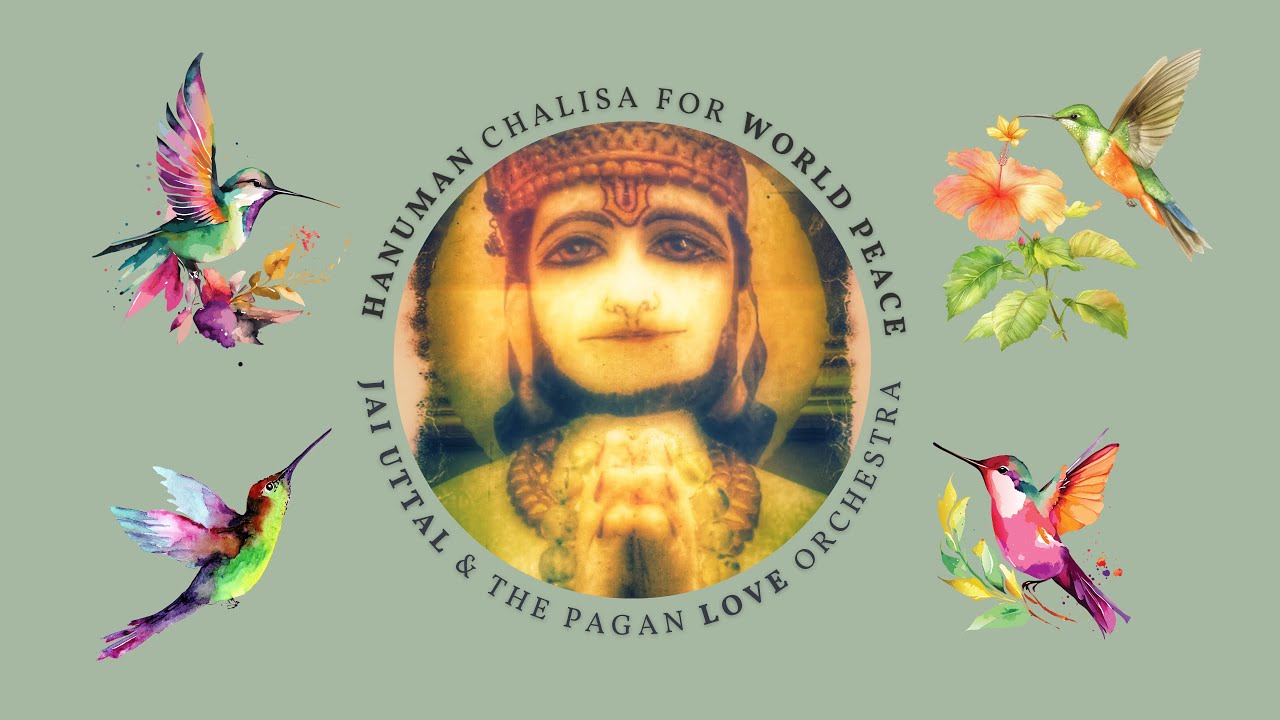
Jai Uttal leads a devotional rendering of the Hanuman Chalisa, a 40-verse Sanskrit hymn invoking strength, clarity, and peace through kirtan…

1 min read
Chanting Together: The Sacred Practice of Kirtan
Featured

Chanting Together: The Sacred Practice of Kirtan

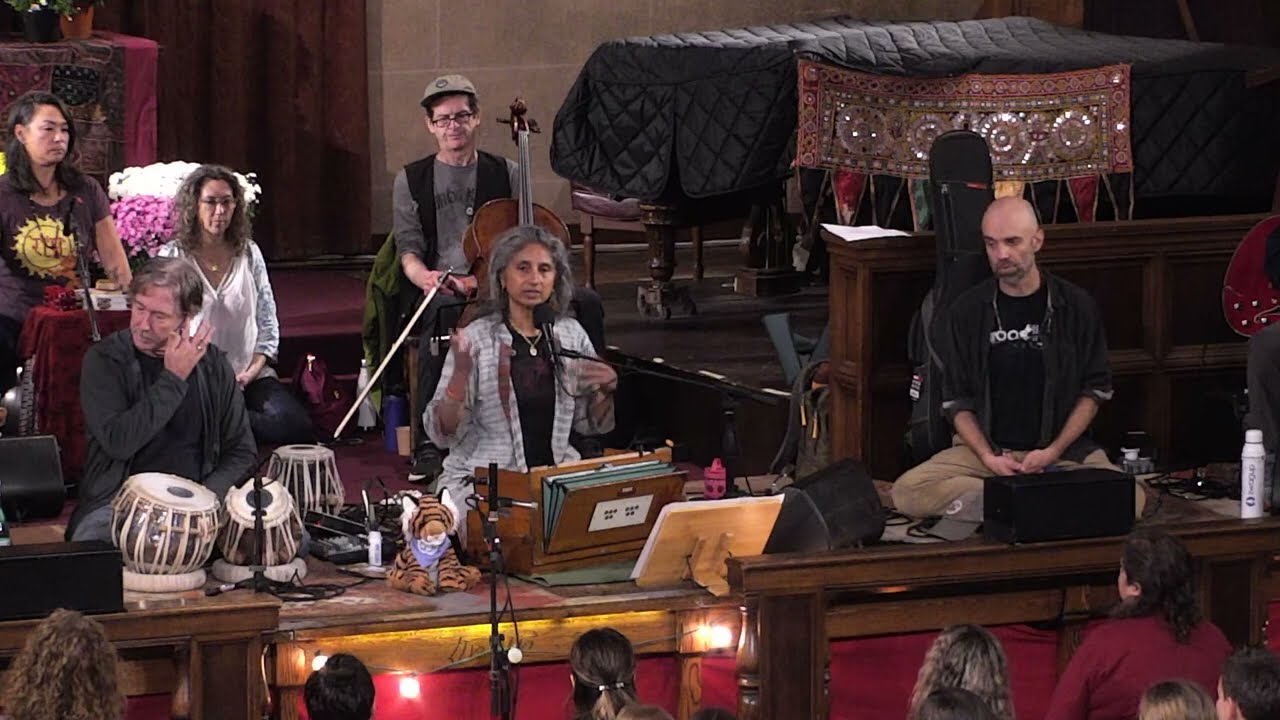
A Thursday night satsang showcases the transformative power of collective chanting, weaving Sanskrit invocations with musical ensemble and d…

1 min read
Krishna Das: From NYC to Neem Karoli Baba
Featured

Krishna Das: From NYC to Neem Karoli Baba

A Long Island kid named Jeffrey Kagel found a guru in the foothills of the Himalayas and came home with something no one in American music h…

1 min read

Continue d’explorer

Poursuis ton chemin

Plus de sagesse et de rassemblements dans tout l’annuaire BrightStar.

Plus d’articles

Parcours toute la bibliothèque d’enseignements, d’entretiens et de guides.

Retour à tous les articles →

Enseignants et artistes

Découvre les lignées, les musiciens et les guides du monde conscient.

Explorer les artistes →

Trouver un événement

Kirtan, retraites, bains sonores, breathwork, festivals — bientôt près de chez toi.

Parcourir les événements →