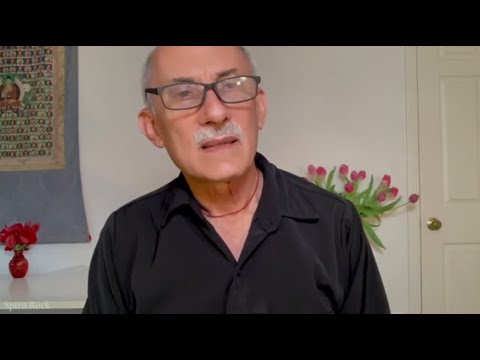
Jack Kornfield reflects on the winter solstice as a threshold moment in the year when darkness reaches its peak and the light begins to return. He situates this astronomical event within contemplative and spiritual traditions, examining how humans have marked the solstice across cultures as a time of gathering, rest, and reflection. Central to his teaching is an observation about modern culture: the capacity to come together without agenda, purpose, or productivity is becoming increasingly rare—yet this very emptiness, this doing-nothing, represents a profound spiritual practice. The solstice offers an invitation to pause the relentless momentum of contemporary life and touch something deeper than the constant output we are conditioned to maintain.
What is the winter solstice in spiritual and cultural traditions?
The winter solstice marks the astronomical moment when the Northern Hemisphere receives the least direct sunlight—typically around December 21st. Across human history, this turning point has held sacred significance in civilizations from ancient Rome to pre-Columbian Americas to Scandinavia. Kornfield's framing emphasizes that the solstice is not merely a calendar date but a threshold, a liminal moment when darkness reaches its deepest point and the year pivots toward returning light.
In many spiritual traditions, the solstice represents a time of death and rebirth: the old year dying, the new light being born. Winter solstice gatherings often involved ritual, ceremony, and collective witnessing of this cosmic turn. These were not casual social events but intentional congregations designed to acknowledge humanity's interdependence with natural cycles and to mark the passage of time with reverence rather than merely noting it on a calendar.
Kornfield suggests that understanding the solstice requires stepping outside the abstractions of modern timekeeping and reconnecting with the rhythmic reality of Earth's relationship to the sun—a reality that shaped human consciousness for millennia before electric lights and central heating insulated us from seasonal variation.
Why has modern culture lost the capacity for purposeless gathering?
One of Kornfield's central observations in this teaching is his statement: "To be able to come together and not do anything is an extraordinary thing in our culture and our time." This is not a romantic lament but a diagnosis of a specific condition in contemporary Western life. We gather constantly—in meetings, conferences, social events—yet these gatherings almost always have an explicit agenda. We optimize our time. We produce outcomes. We network. We are productive.
The possibility of gathering with no goal other than shared presence has become genuinely strange. Kornfield points to this as a loss not only of cultural practice but of spiritual capacity. In many contemplative traditions—Buddhist monasteries, ashrams, retreat centers—gathering together in silence and stillness is recognized as a complete activity in itself. It does not require justification by external results. The gathering is the point.
Modern productivity culture has inverted this understanding. Any activity without measurable output, any gathering without agenda, risks being labeled as a waste of time. Yet Kornfield suggests that this "wasting time" together—this being present without doing—is precisely what humans increasingly need and what many have forgotten how to do.
How does the solstice invite us to practice stillness?
The winter solstice, in Kornfield's teaching, functions as an invitation and a mirror. It arrives whether or not we acknowledge it. The sun reaches its lowest arc regardless of our schedules or intentions. This natural inevitability creates an opening for humans to step out of their constructed time (clock time, productivity time, achievement time) and touch cyclical, seasonal time—time that moves according to celestial mechanics rather than corporate calendars.
Gatherings organized around the solstice need not be elaborate. They might involve simply coming together—in stillness, in silence, or in quiet conversation—to mark the turning of the year. The power lies not in the complexity of the ritual but in the shared acknowledgment: we are here, together, witnessing something larger than ourselves. The Earth is completing one orbit. The sun is turning. And we, who depend entirely on that sun's warmth and light, pause to acknowledge it.
This practice of pausing—of gathering without agenda—is countercultural precisely because it refuses productivity. It insists that presence itself has value. Stillness itself is nourishing. Being together without output is not a luxury or indulgence but a reclamation of something fundamental to human well-being.
What does it mean to recognize mystery in the solstice?
Kornfield's title emphasizes "the mystery" of the winter solstice. This is deliberate. The solstice is not mysterious in the sense that we don't understand its mechanics—orbital astronomy is well-established. Rather, the mystery lies in the existential encounter with cyclical time, with darkness, with the turning of the year, and with the paradox of modern life: we have all this knowledge, all this technology, all this control over our environment, yet we have largely lost the practice of simply marking time with others.
The mystery also touches something deeper: the recognition that human consciousness is part of a much larger order. We are small creatures on a planet that orbits a star. We have learned to ignore this reality through constant artificial lighting and climate control. The solstice, if we pay attention to it, reinserts us into that cosmic context. It reminds us that we are part of a rhythmic unfolding that extends far beyond individual concern.
In contemplative traditions, mystery is not something to be solved but something to be inhabited. To sit with the solstice—to acknowledge its arrival, to gather with others in awareness of it—is to practice a form of receptivity rather than mastery. It is to admit, "I do not need to understand this completely or extract value from it in order for it to matter."
How can the solstice practice be integrated into daily life?
Kornfield's teaching implies that solstice practice need not be confined to a single day or elaborate ceremony. The invitation is to notice the solstice when it arrives, to let it interrupt the normal flow of schedules and obligations. This might mean:
- Gathering with friends or family in intentional stillness around the solstice date—not to achieve anything, but simply to be present together as the year turns
- Observing the movement of sunrise and sunset as they shift throughout winter—becoming aware of the sun's arc through the sky in a way that most modern indoor living obscures
- Creating a small ritual or practice that marks the turning: lighting a candle at dusk, sitting in silence at dawn, taking a walk in natural light at midday to consciously witness the sun's position
- Questioning the default assumption that all time must be productive; practicing the radical act of gathering without agenda, not just at solstice but as a regular practice
The solstice also provides an anchor for reflection. If one gathers at solstice, there is an opportunity to notice what has passed in the previous year, what is being released or let go of, and what seeds of intention might be planted in the returning light. This is not fortune-telling or magical thinking but simple human marking of time—something every culture has done until very recently.
Where to go from here
Kornfield's teaching on the solstice is an invitation to reconsider how we relate to time, seasons, and each other. The next winter solstice offers a specific opportunity: to pause the relentless momentum of productivity, to gather—whether alone or with others—in intentional stillness, and to acknowledge the turning of the year. This practice requires nothing more than attention and presence, yet in a culture deeply conditioned to optimize every moment, these are genuinely radical acts.
Those interested in deepening solstice practice might explore how other contemplative traditions mark seasonal thresholds. The practice of simply being together without agenda—what Kornfield highlights as extraordinary—can extend beyond the solstice into daily life. In meditation groups, in families, in communities, the capacity to gather in quiet presence is both a spiritual practice and a subversive refusal of the assumption that every moment must produce measurable value.
The solstice invites us to remember that we are creatures of a planet in motion around a star. That knowledge, held lightly and without needing to do anything with it, might be enough.