EveryEvent San Diego

Parcourir tous les Events

Find every event in San Diego

events

Concerts & Live Music
Festivals
Sports & Recreation
Food & Drink
Arts & Culture
Community
Family & Kids
Nightlife
Comedy
Theater
Destinations populaires
BaliSedonaLos AngelesCosta RicaNew YorkSan FranciscoAustinMiamiJoshua TreeTulum
Voir toutes les catégoriesVoir toutes les destinations

Explorer toutes les fonctionnalités

Des outils puissants pour développer tes événements

Fonctionnalités de la plateforme

Tarification dynamique intelligente
Catégories de billets
Places assignées
Récupération des paniers abandonnés
Récupération des visiteurs
Dons & Prix variables
Système d'affiliation
Scanner de billets
Codes promo
Questions personnalisées
Partage de billets
Ventes additionnelles & Options
Analyses & Rapports
Séquences d'emails
Liste d'attente / Notifier / Rappeler
Explorer
Discovery HubArtists & PerformersVenuesKnowledge Base
Voir toutes les fonctionnalitésÀ propos
TarifsBlog
Language
Saved events
Parcourir tous les événements

events

Concerts & Live MusicFestivalsSports & RecreationFood & DrinkArts & CultureCommunityFamily & KidsNightlife

Destinations populaires

BaliSedonaLos AngelesCosta RicaNew YorkSan Francisco

Explorer

Discovery HubArtists & PerformersVenuesKnowledge Base

Fonctionnalités de la plateforme

Tarification dynamique intelligenteCatégories de billetsPlaces assignéesRécupération des paniers abandonnésRécupération des visiteursDons & Prix variablesSystème d'affiliationScanner de billetsCodes promoQuestions personnaliséesPartage de billetsVentes additionnelles & OptionsAnalyses & RapportsSéquences d'emailsListe d'attente / Notifier / Rappeler
Voir toutes les fonctionnalitésÀ propos
TarifsBlog
ConnexionS'inscrireOrganisateurs d'événements
  • Browse All Events
  • Concerts & Live Music
  • Festivals
  • Sports & Recreation
  • Food & Drink
  • Arts & Culture
  • Community
  • Family & Kids
  • Nightlife
  • Toutes les catégories →
  • Los Angeles
  • Tijuana
  • Palm Springs
  • Joshua Tree
  • Temecula
  • All Destinations →
  • For Promoters
  • For Artists
  • For Venues
  • For Festivals
  • For Event Spaces
  • For Nonprofits
  • For Bloggers
  • For Speakers
  • Brand Ambassador
  • Case Studies
  • Réseau de 350K+ acheteurs
  • Récupération des paniers abandonnés
  • Tarification dynamique intelligente
  • Catégories de billets
  • Événements récurrents
  • Places assignées
  • Système d'affiliation
  • Liste d'attente / Notifier
  • Scanner de billets
  • Widget intégrable
  • Diffusion d'événements
  • Messagerie
  • Intégrations
  • Rapports
  • Toutes les fonctionnalités →
  • À propos
  • L'écosystème
  • Blog
  • Glossaire
  • Inspiration
  • Centre d'aide
  • Contact
  • Documentation API
  • Ressources de marque
  • Carrières
  • Presse
  • Conditions d'utilisation
  • Politique de confidentialité

Events

  • Browse All Events
  • Concerts & Live Music
  • Festivals
  • Sports & Recreation
  • Food & Drink
  • Arts & Culture
  • Community
  • Family & Kids
  • Nightlife
  • Toutes les catégories →

Getaways

  • Los Angeles
  • Tijuana
  • Palm Springs
  • Joshua Tree
  • Temecula
  • All Destinations →

For Organizers

  • For Promoters
  • For Artists
  • For Venues
  • For Festivals
  • For Event Spaces
  • For Nonprofits
  • For Bloggers
  • For Speakers
  • Brand Ambassador
  • Case Studies

Fonctionnalités

  • Réseau de 350K+ acheteurs
  • Récupération des paniers abandonnés
  • Tarification dynamique intelligente
  • Catégories de billets
  • Événements récurrents
  • Places assignées
  • Système d'affiliation
  • Liste d'attente / Notifier
  • Scanner de billets
  • Widget intégrable
  • Diffusion d'événements
  • Messagerie
  • Intégrations
  • Rapports
  • Toutes les fonctionnalités →

Entreprise

  • À propos
  • L'écosystème
  • Blog
  • Glossaire
  • Inspiration
  • Centre d'aide
  • Contact
  • Documentation API
  • Ressources de marque
  • Carrières
  • Presse
  • Conditions d'utilisation
  • Politique de confidentialité
EveryEvent
© 2026 EveryEvent San Diego. Tous droits réservés.
Inspiration

Wood Chip Fermentationfor Mycelium Expansion

Paul Stamets
Paul Stamets
Mar 6, 2016
6 min de lecture
À regarder · 4

Submerged fermentation is a simple cultivation technique where wood chips or straw are submerged in water for roughly two weeks to create an anaerobic (oxygen-free) environment. This process kills competing anaerobic bacteria, and when the drained chips are exposed to air, the aerobic mycelium colonizes the substrate so aggressively that it appears to "run like crazy." The method works at both the naturalized wild patch scale and in inoculated laboratory spawn applications, with typical fruiting occurring in fall after spring inoculation.

Lecture · 8 sections

What Is Submerged Fermentation in Mushroom Cultivation?

Submerged fermentation, as explained by Paul Stamets in this 2016 technique video, is a counterintuitive yet elegant method rooted in the principle that "good ideas recommend themselves." The technique involves placing wood chips or straw—the substrate that will host mycelium—into water and keeping them submerged for approximately two weeks. During this period, the substrate becomes largely anaerobic, meaning oxygen is depleted from the environment. This anaerobic condition is not an accident; it is the core mechanism that makes the method work.

The brilliance of the approach lies in understanding what thrives and what fails under different oxygen conditions. While many mycologists might assume mushroom cultivation requires constant aeration, this technique demonstrates the opposite: creating a temporary anaerobic state actually prepares the substrate more effectively for mycelium colonization than more conventional methods.

How Does Oxygen Act as a Sterilizer?

After the wood chips or straw have been submerged for two weeks, they are drained from the barrels and spread out to the open air. This transition from anaerobic to aerobic conditions is where the fermentation method becomes particularly powerful. As oxygen re-enters the system, it functions as a natural sterilizer.

During the anaerobic phase, anaerobic bacteria (bacteria that thrive without oxygen) colonize the substrate. However, when oxygen is introduced by spreading the wood chips into the open air, these anaerobic competitors cannot survive. Oxygen, for them, is toxic. This natural die-off removes competing microbial populations that would otherwise compete with mycelium for nutrients and space on the substrate.

This is the critical insight: by deliberately creating conditions hostile to aerobic competition, and then exposing the substrate to oxygen, the cultivator eliminates threats to the mycelium before it even arrives. The substrate becomes primed and ready for colonization.

Why Does Mycelium Colonize Aggressively After Fermentation?

When living, aerobic mycelium (mycelium that requires oxygen to grow) makes contact with the fermented, drained, air-exposed wood chips, it encounters a substrate that is free of competing anaerobic bacteria and ready for rapid expansion. In this aerobic environment, mycelium "runs like crazy," as Stamets describes it. The mycelium colonizes the substrate so rapidly and thoroughly that visible growth becomes obvious over days or weeks rather than months.

This aggressive colonization is not due to enhanced nutritional content in the substrate; rather, it is the absence of competition. The mycelium encounters minimal microbial resistance and can devote metabolic energy entirely to growth and reproduction rather than defending against or competing with other microorganisms.

What Are the Practical Steps for Submerged Fermentation?

The process begins with wood chips or straw—the choice depends on the mushroom species and local availability. These materials are placed in barrels or large containers and covered with water for approximately two weeks. During this time, the cultivator should avoid introducing oxygen; the goal is to maintain anaerobic conditions.

After two weeks, the barrels are drained. The drained wood chips or straw are then spread out in the open air to a depth of approximately two inches. To accelerate the drying and aeration process, raking or turning the chips mid-drying is recommended. This ensures even air exposure and allows the fermented substrate to reach the proper moisture and oxygen state for inoculation.

Once the substrate is air-dried for about two hours and reaches the desired condition, it is ready for inoculation with mycelium spawn. The spawn can be laboratory-grown culture or wild mycelium from naturalized patches, depending on the cultivator's goals and local regulations.

What Are the Expansion Ratios and Timeline?

For expanding mycelium—whether establishing a new naturalized wild mushroom patch or inoculating prepared substrate—recommended expansion ratios range from 1:10 to 1:50. This means one volume of mycelium spawn is mixed with ten to fifty volumes of the fermented wood chips. Lower ratios (1:10) may be appropriate for laboratory-controlled settings or species requiring less colonization time, while higher ratios (1:50) are suitable for outdoor naturalized patches where slower, more stable colonization is desired.

The timeline for fruiting depends on local climate and the specific mushroom species, but spring inoculation typically results in fall fruiting. This seasonal window allows the mycelium months to establish itself in the substrate before environmental triggers (cooling temperatures, increased moisture) signal the fruiting phase.

Is There a Historical Precedent for This Method?

While Stamets developed this submerged fermentation technique independently through his own experimentation and practice, he has since learned that similar methods have been used in Asian mushroom cultivation for many years. This is a reminder that effective cultivation practices often emerge in different cultures independently, driven by the same ecological and microbiological principles. The method's resurgence in Western mycological practice is partly due to Stamets' documentation and promotion of the technique.

What Safety Precautions Should Be Observed?

Because the fermented wood chips represent a "microbial soup"—a complex mixture of bacteria, fungi, and other microorganisms—proper hygiene is essential. Wearing gloves during the entire fermentation and inoculation process is highly recommended. Even after wearing gloves, thorough hand washing is necessary afterward. For individuals with cuts on their hands or compromised immune systems, extra care should be taken, as exposure to this microbial mixture carries health risks.

The same precautions apply when handling the inoculated substrate and later, the fruiting mushrooms. Although the mycelium itself is beneficial when properly colonized, the intermediate stages involve microorganisms that may be harmful if introduced to open wounds or immunocompromised individuals.

Where to Go from Here

The submerged fermentation method is documented in detail in Stamets' book Mycelium Running!, which provides expanded theory, additional techniques, and species-specific guidance. Cultivators interested in expanding naturalized mycelium patches or scaling inoculation operations can use this method as a foundation and adapt it to their local climate, available substrates, and target mushroom species. The principle—using temporary anaerobic conditions to eliminate competition, then leveraging aerobic mycelium's vigor in a cleaned substrate—applies across many cultivation contexts and represents a convergence of simplicity, ecology, and practical results.
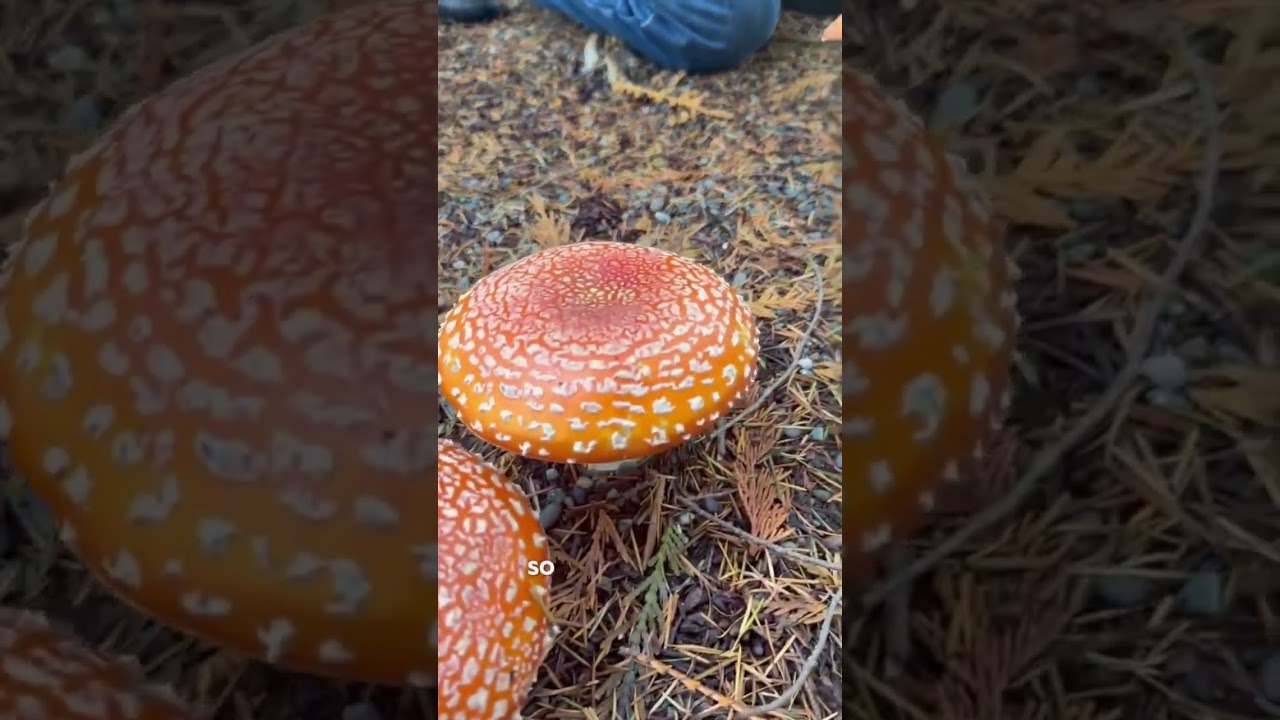
Transcript

[0:01] the art of cultivation sometimes uh

[0:03] relies on the simplest of techniques and

[0:05] uh this makes uh mushroom growing and

[0:07] mushroom melium cultivation a lot easier

[0:10] um this is a submerge fermentation

[0:12] method I have a phrase that uh good

[0:15] ideas uh recommend themselves and uh

[0:18] although I discovered this independently

[0:19] on my own I have learned that this is

[0:21] also a practice in Asia submerged

[0:23] fermentation where wood chips or straw

[0:26] are placed into uh water and submerged

[0:29] for a period of about 2 weeks it largely

[0:31] goes anerobic with bacteria and then

[0:34] upon draining the barrels of wood chips

[0:37] or straw then um spreading these wood

[0:40] chips out to the open air oxygen becomes

[0:42] a sterilizer killing the anti robes uh

[0:45] and then when melum which is aerobic

[0:47] makes contact with those Anor robes in

[0:49] this aerobic

[0:51] environment um they run like crazy so we

[0:53] have great melum running anyhow stay

[0:56] tuned

Paul Stamets
AuteurPaul Stamets

Mycologist and advocate who has dedicated his life to studying mushrooms and their transformative potential to heal people and restore the planet through medicine, agriculture, and…

Voir le profilSite web
Explorer les thèmes
Mushroom-cultivationMycelium-propagationFermentation-techniqueAnaerobic-conditionsFungi-growing

Des questions ?

Questions fréquemment posées

During the two-week submersion in water, the substrate becomes anaerobic (oxygen-free), allowing anaerobic bacteria to colonize while excluding aerobic competitors. When the substrate is then drained and exposed to air, oxygen acts as a sterilizer, killing the anaerobic bacteria while creating an ideal environment for aerobic mycelium to colonize aggressively.
Recommended expansion ratios range from 1:10 to 1:50, with one volume of spawn to ten to fifty volumes of fermented substrate. Lower ratios (1:10) suit controlled laboratory settings, while higher ratios (1:50) work better for outdoor naturalized patches requiring slower colonization.
Fruiting typically occurs in the fall following spring inoculation, giving the mycelium several months to establish itself in the substrate before environmental triggers signal the fruiting phase.
Raking the wood chips mid-drying accelerates the process and ensures even air exposure across all the substrate, helping it reach the proper moisture and oxygen levels for effective inoculation in about two hours.
While Paul Stamets developed the technique independently, similar submerged fermentation methods have been used in Asian mushroom cultivation for many years, suggesting the approach aligns with fundamental ecological and microbiological principles applicable across cultures.
Wear gloves throughout the fermentation and inoculation process, and thoroughly wash your hands afterward. People with cuts or compromised immune systems should take extra care, as the fermented substrate is a complex microbial mixture that can pose health risks if it enters open wounds.

Continuer la lecture

More from Paul

Voir tout
Amanita Muscaria: History, Identification & Safety of Fly Agaric
Featured

Amanita Muscaria: History, Identification & Safety of Fly Agaric

Amanita muscaria, the fly agaric, has ancient roots in pest control and cultural mythology. Despite its striking beauty, this mushroom poses…

1 min read
Lactarius Deliciosus: Identifying & Foraging the Saffron Cap
Featured

Lactarius Deliciosus: Identifying & Foraging the Saffron Cap

The saffron milk cap (Lactarius deliciosus) is an easy-to-identify edible mushroom with striking green staining and orange milk. Learn how t…

1 min read
How Sitting Still Proves You're Already Awakening
Featured

How Sitting Still Proves You're Already Awakening

Most people can't sit quietly without discomfort, but if you can, you're already further along spiritually than you realize. Eckhart Tolle e…

1 min read
The Missing Piece: How Real Thinking Creates Real Results
Featured

The Missing Piece: How Real Thinking Creates Real Results

Most vision boards fail because people skip the actual thinking. Eckhart Tolle reveals the rhythm that unlocks insight and the two distinct …

1 min read

Continue d’explorer

Poursuis ton chemin

Plus de sagesse et de rassemblements dans tout l’annuaire BrightStar.

Plus d’articles

Parcours toute la bibliothèque d’enseignements, d’entretiens et de guides.

Retour à tous les articles →

Enseignants et artistes

Découvre les lignées, les musiciens et les guides du monde conscient.

Explorer les artistes →

Trouver un événement

Kirtan, retraites, bains sonores, breathwork, festivals — bientôt près de chez toi.

Parcourir les événements →