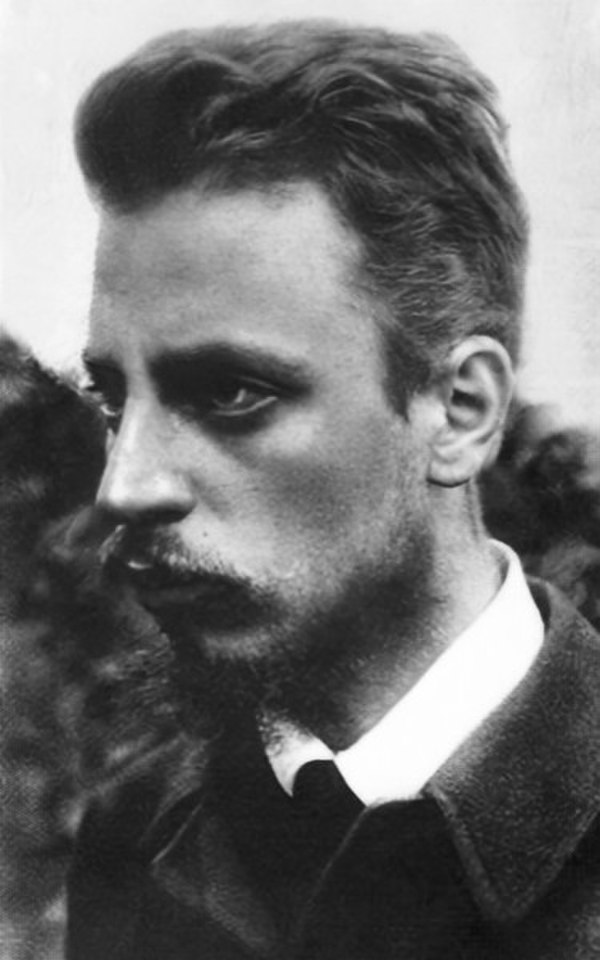
Awakening to the Earth Within
Rainer Maria Rilke's poignant inquiry, "Earth, isn't this what you want: an invisible re-arising in us?" invites us to contemplate the profound relationship between our inner lives and the natural world. This question resonates deeply, suggesting that the earth yearns for a transformation within us, a rebirth that transcends the visible and tangible. It beckons us to explore the depths of our being, urging us to recognize the interconnectedness of existence and the latent potential for renewal that lies within each of us.
In a time marked by disconnection from nature and ourselves, Rilke's words serve as a gentle reminder of the transformative power of introspection and the sacredness of the earth. The phrase "invisible re-arising" evokes a sense of mystery and depth, hinting at the subtle yet profound shifts that can occur when we engage with our inner landscapes. This call to transformation is not merely a personal journey; it is an invitation to align ourselves with the rhythms of the earth, fostering a deeper understanding of our place within the cosmos.
The image / the metaphor
At the heart of Rilke's quote lies a rich tapestry of imagery that evokes both the earth and the inner self. The term "invisible re-arising" suggests a process that is not immediately apparent, yet profoundly significant. It conjures images of seeds buried in the soil, waiting for the right conditions to sprout, or the quiet emergence of spring after a long winter. The verbs "want" and "re-arising" imply a dynamic relationship between the earth and humanity, as if the earth itself is a sentient being, yearning for our awakening and transformation.
Diving deeper into the metaphor, we can see that Rilke is not merely speaking of a physical rebirth but rather an interior awakening. This "invisible re-arising" signifies a shift in consciousness, a movement from the superficial to the profound. It invites us to consider what it means to cultivate a deeper awareness of our own existence and the world around us. In this sense, the earth becomes a mirror reflecting our inner states, urging us to engage in a transformative process that aligns our inner lives with the natural rhythms of the universe.
In the speaker's tradition
Rainer Maria Rilke's work is deeply rooted in the tradition of mysticism, where the exploration of the self and the divine intertwine. Concepts such as kenosis—the self-emptying of one’s own will—resonate with the idea of an "invisible re-arising." In this context, Rilke’s invitation to transformation reflects a mystical understanding that true awakening requires a surrendering of the ego and an embrace of the deeper currents of existence. This aligns with the notion of sunyata in Buddhist philosophy, which speaks to the emptiness that allows for new possibilities to emerge.
Moreover, Rilke's exploration of transformation can be likened to the concept of bhakti, or devotion, found in various spiritual traditions. Just as bhakti emphasizes a deep, loving connection with the divine, Rilke’s call to the earth suggests that our transformation is intrinsically linked to our relationship with the world around us. In his "Duino Elegies," Rilke articulates this connection, expressing a longing for a deeper communion with existence itself, which ultimately leads to a profound awakening within.
Living the teaching
Consider a modern scenario where Rilke's teaching resonates: a person feeling overwhelmed by the demands of daily life, disconnected from nature and their own inner self. In this state, the call for an "invisible re-arising" becomes a powerful invitation to pause and reflect. By taking time to engage with the natural world—perhaps through a walk in the woods or tending to a garden—this individual can begin to cultivate a deeper awareness of their own inner landscape. Such moments of connection can spark a transformation, allowing them to rediscover their sense of purpose and belonging.
In the realm of relationships, Rilke's quote can also serve as a guiding principle. Imagine a couple navigating a difficult period, feeling distant and disconnected. By embracing the idea of an "invisible re-arising," they might choose to engage in open, honest conversations that allow for vulnerability and growth. This process of transformation, rooted in a deep understanding of one another's inner worlds, can lead to a renewed sense of intimacy and connection, echoing Rilke's call for awakening both within and between individuals.
A reflection
As we contemplate Rilke's profound question, we are invited to reflect on our own lives: What invisible re-arising is waiting to unfold within us? In what ways can we cultivate a deeper connection with the earth and our own inner selves? This contemplation encourages us to explore the spaces within us that yearn for transformation, reminding us that the journey of awakening is both personal and universal, echoing the timeless rhythms of the earth.

Join the BrightStar Community
Stay connected with daily inspiration, event announcements, and community wisdom