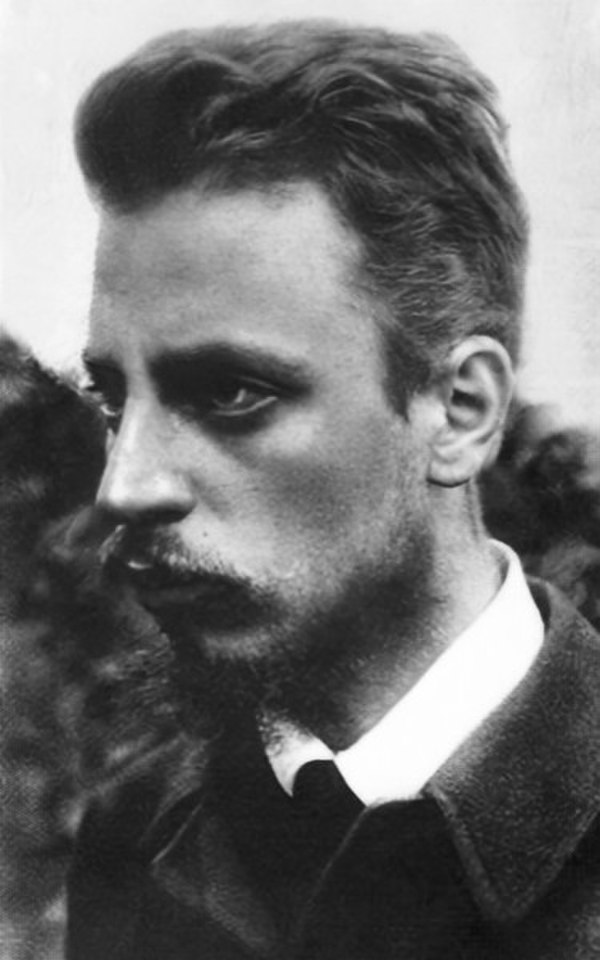
The Journey of Experience: Rilke's Call to Witness Life
Rainer Maria Rilke's assertion, "For the sake of a few lines, one must see many cities, men and things," invites us to consider the profound necessity of experience in the creation of art and understanding. In essence, Rilke suggests that the richness of our inner lives is directly proportional to the breadth of our external experiences. This statement resonates deeply in a world often preoccupied with the superficial, urging us to engage fully with the myriad facets of life that shape our perceptions and expressions.
To delve deeper, Rilke's words evoke a sense of urgency and commitment to the act of gathering experiences. The phrase "for the sake of a few lines" implies that the distilled essence of art—be it poetry, prose, or any form of creative expression—requires a foundation built on the diverse tapestry of life. Each city, each person, and each encounter contributes to a reservoir of inspiration, suggesting that true artistry is not born in isolation but rather in the vibrant interplay of existence itself.
The image / the metaphor
At first glance, Rilke's quote conjures vivid imagery of travel and exploration. The mention of "many cities" evokes a sense of movement and adventure, while "men and things" suggests a wide array of human experiences and material encounters. The verbs "see" and "must" carry a weight of necessity, indicating that this act of witnessing is not merely optional but essential for the creative spirit. The felt sense of the quote is one of urgency, a call to immerse oneself in the world to gather the raw materials of life.
Diving deeper into the metaphor, we can interpret "cities" as symbols of diverse cultures and perspectives, each offering unique insights and lessons. "Men" represents the myriad relationships and interactions that shape our understanding of humanity, while "things" can be seen as the objects and experiences that fill our lives with meaning. Together, these elements form a holistic view of existence, suggesting that to truly grasp the essence of life and art, one must engage with the world in all its complexity and richness.
In the speaker's tradition
Rainer Maria Rilke's work is deeply rooted in the tradition of mysticism, where the exploration of inner and outer realities is paramount. Concepts such as kenosis, the self-emptying of one's own will to make room for divine inspiration, resonate with Rilke's call to experience. The act of gathering experiences can be seen as a form of bhakti, or devotion, where the seeker immerses themselves in the world as a way to connect with the divine. This journey reflects the mystical understanding that the outer world is a reflection of the inner self, and through engagement, one can attain deeper insights.
In Rilke's own writings, particularly in the "Letters to a Young Poet," he emphasizes the importance of solitude and introspection, yet he also acknowledges that true understanding comes from the interplay between the self and the world. This duality mirrors the Buddhist concept of sunyata, or emptiness, where the self is both distinct and interconnected with all things. Rilke's insistence on experiencing life fully aligns with the notion that to understand the nature of existence, one must embrace both the personal and the universal.
Living the teaching
Consider a modern scenario where this teaching resonates: an artist struggling to find inspiration might feel trapped in a cycle of self-doubt and isolation. Rilke's quote serves as a reminder that stepping outside one's comfort zone—visiting new places, meeting new people, or simply observing the world with fresh eyes—can reignite the creative spark. By engaging with the vibrancy of life, the artist can gather the experiences that will ultimately inform and enrich their work, transforming their struggles into a wellspring of creativity.
In a different application, think of a relationship that has grown stagnant. Rilke's insight encourages individuals to seek new experiences together, whether through travel, shared hobbies, or deep conversations that explore each other's inner worlds. By actively engaging with one another and the world around them, partners can cultivate a deeper understanding and appreciation for each other, allowing their connection to flourish. This practice of gathering experiences together not only strengthens the bond but also enriches their individual lives.
A reflection
As we reflect on Rilke's profound statement, we might ask ourselves: "What experiences am I currently avoiding that could enrich my understanding of life and art?" This contemplative question invites us to examine our own lives and consider the ways in which we might be limiting our engagement with the world. By embracing the richness of experience, we open ourselves to new insights and possibilities, allowing our creative expressions to flourish in ways we may not have previously imagined.


Join the BrightStar Community
Stay connected with daily inspiration, event announcements, and community wisdom