The Homeland of the Sayable: Rilke's Invitation to Presence
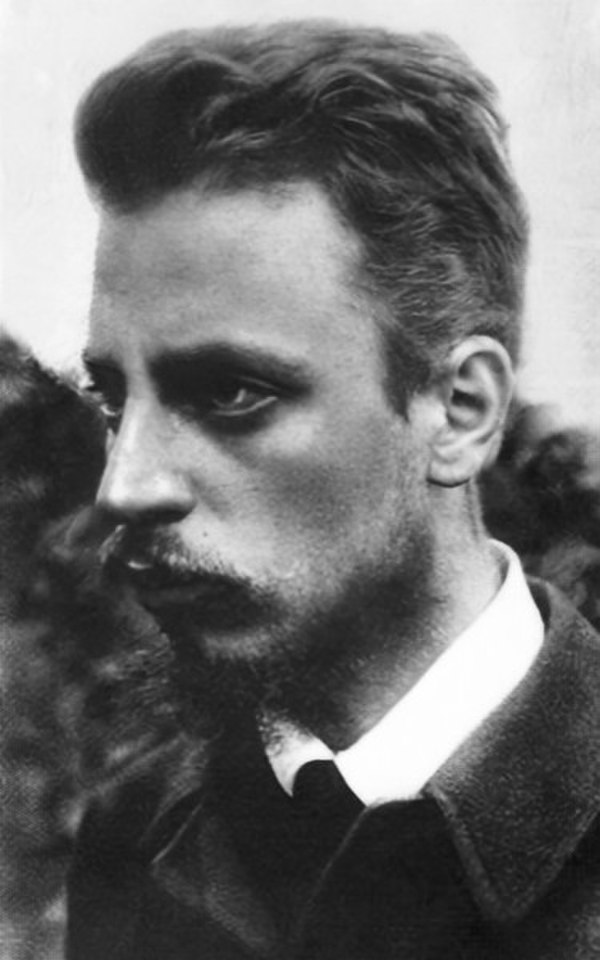
Rainer Maria Rilke's assertion, "Here is the time for the sayable, here is its homeland," invites us to explore the profound relationship between language and existence. In this statement, Rilke suggests that there exists a sacred space where words find their true meaning, a realm where the ineffable can be articulated. This matters deeply in our contemporary world, where the noise of distraction often drowns out the essence of authentic communication and connection.
As we delve into Rilke's words, we are beckoned to consider the significance of presence in our speech and the environment that nurtures it. The phrase implies a temporal and spatial quality to language, suggesting that there are moments and places where our words resonate with clarity and depth. In an age where superficial exchanges dominate, Rilke's call to recognize and honor the "sayable" challenges us to cultivate a deeper awareness of how we express ourselves and relate to the world around us.
The image / the metaphor
At first glance, Rilke's quote evokes a vivid imagery of a landscape where language is not merely a tool but a living entity. The term "sayable" conjures a sense of potential, as if words are waiting to be birthed into the world, while "homeland" suggests a nurturing ground where these words can thrive. This duality of time and place emphasizes the importance of context in communication; it is not enough to simply speak; one must also be attuned to the environment that allows for meaningful expression.
Diving deeper into the metaphor, we can see that Rilke is not merely referring to the act of speaking but to the essence of being present in our communication. The "sayable" becomes a bridge between the inner world of thoughts and feelings and the outer world of shared experience. This connection is vital, as it implies that true communication arises from a place of authenticity and presence, where the speaker is fully engaged with both their own inner landscape and the receptive space of the listener.
In the speaker's tradition
Rainer Maria Rilke's work is deeply rooted in the mystical tradition, where the interplay between the seen and the unseen is a central theme. Concepts such as "kenosis," the idea of self-emptying to allow for divine presence, resonate with Rilke's exploration of language. In this context, the "sayable" can be seen as an expression of the soul's longing to articulate its experiences, while the "homeland" represents the sacred space where this articulation can occur, free from the constraints of ego and superficiality.
In Rilke's "Duino Elegies," we find a rich tapestry of existential inquiry that parallels the teachings found in various mystical texts. For instance, the Buddhist concept of "sunyata," or emptiness, invites us to recognize the fluidity of language and the importance of being present in the moment. Just as Rilke emphasizes the significance of the "sayable," so too do these traditions encourage us to engage with our experiences authentically, allowing our words to emerge from a place of deep awareness and connection.
Living the teaching
Consider a modern scenario where this teaching resonates: a conversation between friends who have not seen each other in years. In this moment, the air is thick with unspoken emotions, memories, and the weight of time. As they share their stories, the "sayable" emerges not just from their words but from the shared presence that envelops them. This is a moment where language transcends mere communication; it becomes a vessel for connection, healing, and understanding.
In a different application, think of a challenging moment in a relationship where misunderstandings have created distance. Here, Rilke's invitation to recognize the "sayable" can serve as a guiding principle. By approaching the conversation with a commitment to presence and authenticity, both individuals can create a "homeland" for their words—a space where vulnerability is welcomed, and true feelings can be expressed. This practice not only fosters deeper intimacy but also honors the essence of each person's experience, allowing for a richer dialogue that transcends surface-level exchanges.
A reflection
As we contemplate Rilke's profound statement, we are invited to reflect on our own relationship with language and presence. In what ways do we create a "homeland" for the "sayable" in our lives? Consider the spaces and moments where your words feel most authentic and resonant. How can you cultivate more of these experiences, both for yourself and in your interactions with others?



Join the BrightStar Community
Stay connected with daily inspiration, event announcements, and community wisdom