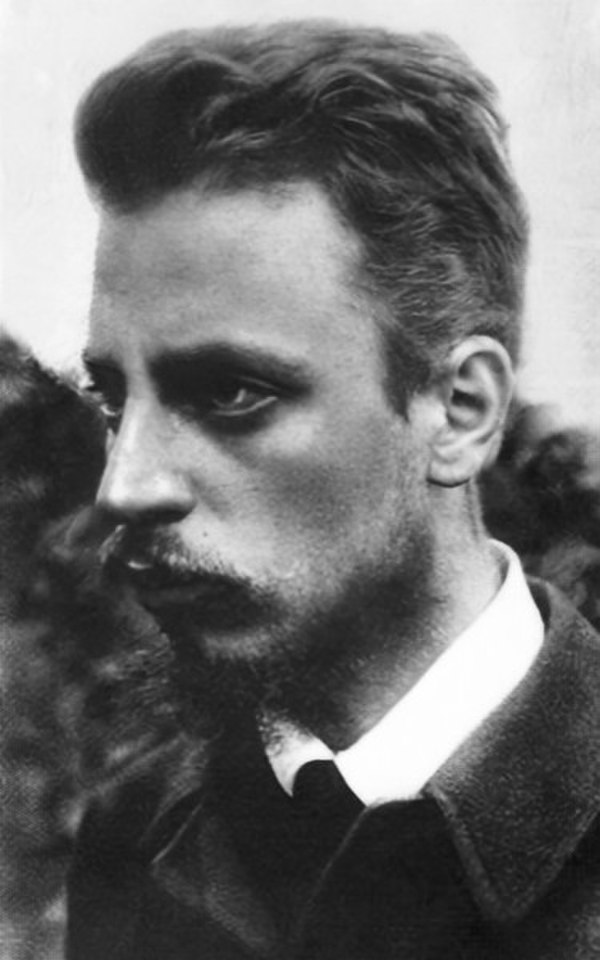
The Endless Quest for Self: Rilke's Mystical Inquiry
In the poignant words of Rainer Maria Rilke, "I have been circling for a thousand years, and I still don't know if I am a falcon, a storm, or a great song." This evocative statement encapsulates the profound struggle of self-discovery and the quest for identity that resonates deeply within the human experience. Rilke's exploration of identity is not merely a personal reflection; it is a universal inquiry that invites us to confront the complexities of our existence and the mysteries that lie within. The stakes of this inquiry are high, as they touch upon our very essence and the nature of our being.
Rilke's words evoke a sense of timelessness, suggesting that the search for self is an eternal journey, one that transcends the confines of time and space. The imagery of circling implies a repetitive, almost cyclical process of exploration, where each iteration brings us closer to understanding yet leaves us in a state of uncertainty. This tension between the desire for clarity and the acceptance of ambiguity is a hallmark of the mystical tradition, where the journey itself becomes as significant as the destination. In this light, Rilke's quote serves as a mirror reflecting our own struggles with identity, inviting us to embrace the questions rather than seek definitive answers.
The image / the metaphor
At the heart of Rilke's quote lies a rich tapestry of imagery that evokes a sense of movement and transformation. The act of "circling" suggests a dance of exploration, a spiraling journey that encompasses both the external world and the inner landscape of the self. The choice of the falcon, the storm, and the great song as potential identities speaks to the multifaceted nature of existence. Each image carries its own connotations: the falcon embodies freedom and vision, the storm represents chaos and power, while the great song symbolizes harmony and creativity. Together, they create a vivid tableau that invites contemplation on the various aspects of our being.
Diving deeper into the metaphor, we can see that Rilke is not merely pondering the nature of identity but also the fluidity of it. The falcon, storm, and song are not fixed entities; they are dynamic forces that reflect the ever-changing nature of life itself. This fluidity suggests that identity is not a singular, static concept but rather a constellation of experiences, emotions, and aspirations. Rilke's circling implies that the search for self is an ongoing process, one that requires patience and openness to the myriad possibilities that life presents. In this sense, the quote becomes a meditation on the beauty of uncertainty and the grace found in the journey of self-discovery.
In the speaker's tradition
Rainer Maria Rilke's work is deeply rooted in the mystical tradition, where the exploration of identity often intertwines with spiritual concepts such as dharma, kenosis, and fana. The idea of circling for a thousand years resonates with the notion of dharma, which emphasizes the importance of one's path and purpose in life. In this context, Rilke's search for identity can be seen as a quest for understanding one's unique role in the cosmos, a journey that is both personal and universal. The concept of kenosis, or self-emptying, also finds relevance here, as Rilke's inquiry invites us to let go of preconceived notions of self in order to embrace a more expansive understanding of who we are.
Furthermore, Rilke's exploration of identity can be likened to the Sufi concept of fana, which speaks to the dissolution of the self in the presence of the divine. Just as the Sufi seeker strives to transcend the ego and merge with the greater reality, Rilke's circling suggests a longing to move beyond the limitations of individual identity. This quest for a deeper connection to the cosmos is echoed in Rilke's poetry, particularly in his "Book of Hours," where he grapples with the divine and the human experience. In this light, Rilke's words become a profound meditation on the interplay between the self and the universe, inviting us to reflect on our own spiritual journeys.
Living the teaching
In our modern lives, the quest for identity often manifests in the form of career choices, relationships, and personal aspirations. Consider a young professional who feels trapped in a job that does not resonate with their true self. This individual may find themselves circling through various roles, seeking fulfillment and clarity. Rilke's quote serves as a reminder that this process of exploration is not only valid but essential. It encourages us to embrace the uncertainty of our journey, recognizing that each experience, whether fulfilling or frustrating, contributes to our understanding of who we are.
Similarly, in the realm of relationships, Rilke's inquiry into identity can illuminate the complexities of connection. Imagine a couple navigating the challenges of their partnership, each person grappling with their own sense of self while striving to understand the other. Rilke's metaphor of circling can inspire them to approach their relationship with curiosity and openness, allowing for the ebb and flow of identity within the partnership. By acknowledging that both individuals are in a constant state of becoming, they can cultivate a deeper sense of empathy and connection, ultimately enriching their shared journey.
A reflection
As we contemplate Rilke's profound words, we are invited to engage with the mystery of our own identities. What does it mean to be in a state of circling, to embrace the ambiguity of our existence? In this moment of reflection, let us ask ourselves: How can I honor the questions of my identity without rushing to find definitive answers? This inquiry may lead us to a deeper understanding of ourselves and the world around us, illuminating the path of our own unique journey.
Join the BrightStar Community
Stay connected with daily inspiration, event announcements, and community wisdom