Stepping Beyond the Threshold: Embracing the Unknown
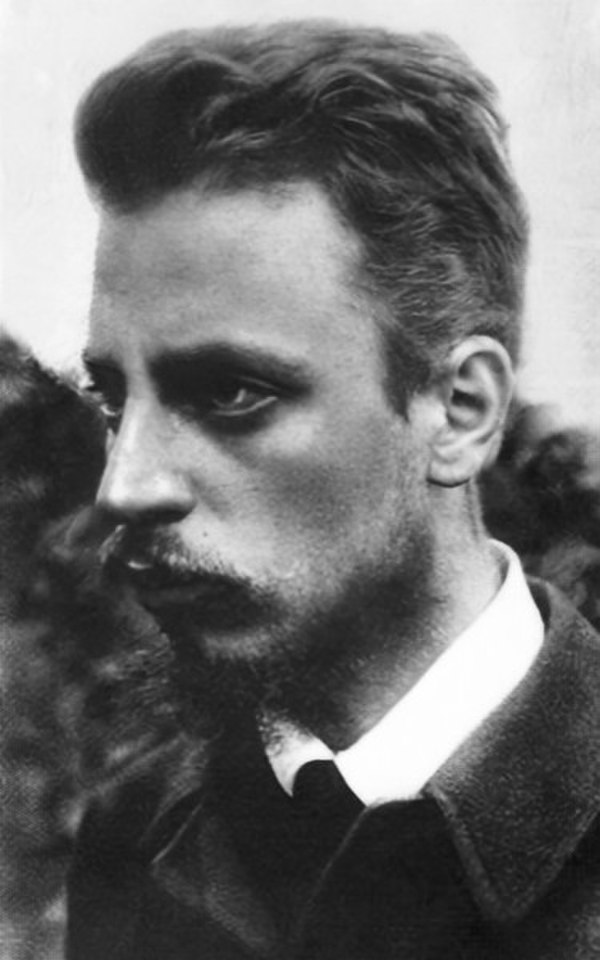
Rainer Maria Rilke invites us into a profound moment of transition with his evocative words: “Whoever you are: in the evening step out of your room, where you know everything; yours is the house, the last before the far-off.” This quote beckons us to leave the comfort of our familiar spaces and venture into the vast unknown that lies beyond. It speaks to the universal human experience of confronting uncertainty, urging us to embrace the mystery that life presents, rather than retreating into the safety of what we already know.
In this invitation, Rilke encapsulates a pivotal moment of departure, one that resonates deeply within the human spirit. The evening, often associated with reflection and transition, serves as a metaphorical threshold between the known and the unknown. By stepping out of our rooms, we are called to confront the vastness of existence, to acknowledge that beyond our personal confines lies a world rich with possibility and wonder. This act of stepping out is not merely physical; it is a spiritual awakening, a call to engage with life in its fullest, most authentic form.
The image / the metaphor
Rilke's imagery is strikingly vivid, painting a scene that evokes both comfort and trepidation. The “room” symbolizes our personal sanctuaries, the places where we construct our identities and beliefs. It is within these walls that we feel secure, where we can control our narratives and shield ourselves from the chaos of the outside world. Yet, the invitation to step out suggests a relinquishing of that control, a willingness to embrace the uncertainty that awaits beyond the threshold. The phrase “the last before the far-off” hints at a finality, a moment of choice that precedes a journey into the unknown.
Delving deeper into the metaphor, we find that Rilke is not merely urging us to leave our physical spaces but to transcend the mental and emotional confines we often impose upon ourselves. The act of stepping out becomes a powerful symbol of transformation, a movement from the familiar into the realm of potentiality. It is a reminder that true growth often requires us to confront discomfort and uncertainty, to trust in the unfolding of our paths even when the destination remains unseen. In this light, the evening becomes a sacred time for introspection and courage, a moment to honor both our fears and our aspirations.
In the speaker's tradition
Rainer Maria Rilke's work is deeply rooted in the mystic tradition, where the journey into the unknown is often seen as a path to spiritual enlightenment. Concepts such as kenosis, the self-emptying of one’s own will to make room for divine presence, resonate with Rilke's call to step beyond the familiar. In this context, the act of stepping out of one’s room can be viewed as a form of surrender, an invitation to let go of the ego and embrace a deeper connection with the universe. This aligns with the mystical understanding that true knowledge often lies beyond the confines of the intellect, in the realm of experience and intuition.
Rilke’s poetry often echoes the sentiments found in other spiritual texts, such as the teachings of the Sufi mystics, who emphasize the importance of traversing the inner landscapes of the soul. For instance, the concept of fana, or the annihilation of the self in the presence of the divine, parallels Rilke’s invitation to step into the unknown. Just as the Sufi seeks to dissolve the boundaries of the self to experience unity with the divine, Rilke encourages us to dissolve our fears and limitations to engage fully with the world around us. This shared understanding across traditions highlights the universal nature of Rilke's message.
Living the teaching
Consider a modern scenario where this teaching resonates: a person standing at the crossroads of a career change. The comfort of a stable job may feel like a safe room, filled with the known and predictable. Yet, the desire for growth and fulfillment beckons them to step out into the uncertainty of pursuing a passion. This moment embodies Rilke's invitation; it is a call to leave behind the security of the familiar and embrace the potential of the unknown. The act of stepping out may be daunting, but it is also where the possibility of transformation lies.
In relationships, this teaching can manifest during moments of conflict or emotional distance. One partner may feel the urge to retreat into their own room, to protect themselves from vulnerability. However, Rilke’s words encourage both partners to step out of their emotional confines, to engage with the discomfort of their feelings and the complexities of their connection. By doing so, they open themselves to deeper understanding and intimacy, allowing the relationship to evolve beyond its previous limitations. This practice of stepping out becomes a pathway to healing and growth, both individually and collectively.
A reflection
As we contemplate Rilke's invitation, we might ask ourselves: What are the rooms I inhabit that keep me from stepping into the unknown? This question invites us to reflect on the areas of our lives where we may be clinging to comfort at the expense of growth. It challenges us to consider what it means to embrace uncertainty and to trust in the unfolding of our journeys. In this reflection, we find the essence of Rilke’s teaching: that stepping beyond the threshold is not just an act of courage, but a profound opportunity for transformation and connection with the world around us.



Join the BrightStar Community
Stay connected with daily inspiration, event announcements, and community wisdom