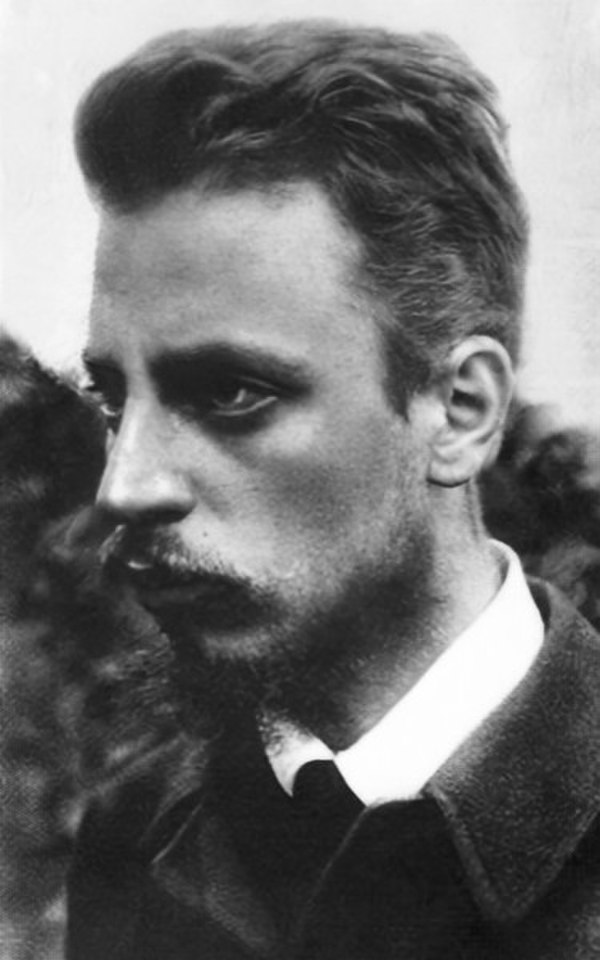
The Dawn of Possibility: Rilke's Vision of Awakening
In Rainer Maria Rilke's evocative assertion, "You are the future, the great Sunrise to come over the plains of eternity. You are the cock-crow when night's time has passed," we encounter a profound invitation to recognize our inherent potential and the transformative power of awakening. This quote speaks to the essence of our being, suggesting that within each of us lies the promise of a new dawn, a moment of clarity that transcends the darkness of uncertainty. The stakes are high; to embrace this vision is to acknowledge our role in the unfolding narrative of existence, where each individual contributes to the collective awakening of consciousness.
Rilke's words resonate deeply within the context of mysticism, where the interplay between light and darkness serves as a metaphor for spiritual evolution. The imagery of the sunrise evokes a sense of hope and renewal, while the reference to the cock-crow symbolizes the moment of awakening that heralds a new beginning. This duality invites us to reflect on our own journeys, urging us to recognize the potential for transformation that lies within us, waiting to be realized. In a world often shrouded in shadows, Rilke's message serves as a beacon, illuminating the path toward a more profound understanding of ourselves and our place in the cosmos.
The image / the metaphor
At the heart of Rilke's quote lies a rich tapestry of imagery that invites contemplation. The "great Sunrise" conjures visions of warmth, light, and the promise of a new day, while the "plains of eternity" suggest an expansive, timeless landscape where possibilities abound. The verbs chosen—"are" and "crow"—imbue the statement with a sense of immediacy and presence, urging us to recognize that this awakening is not a distant dream but a current reality waiting to be embraced. The felt sense of this imagery evokes a deep yearning for transformation, a desire to step into the light and leave behind the shadows of doubt and fear.
Diving deeper into the metaphor, we can see that the sunrise represents not only the arrival of light but also the cyclical nature of existence. Just as the sun rises after the darkest night, so too can we rise from our own periods of despair and confusion. The cock-crow serves as a reminder that awakening is often heralded by a call to action, a moment when we must choose to step into our true selves. This metaphor invites us to consider our own moments of awakening, those instances when we have felt the stirrings of possibility within us, urging us to rise and embrace our potential.
In the speaker's tradition
Rainer Maria Rilke's work is deeply rooted in the tradition of mysticism, where the exploration of the self and the divine intertwine. Concepts such as dharma, which refers to one's path or duty, and kenosis, the idea of self-emptying to make space for the divine, resonate with the themes present in this quote. Rilke's emphasis on awakening aligns with the notion of bhakti, or devotion, where the individual seeks a deeper connection with the divine through love and surrender. In this context, the "great Sunrise" can be seen as the realization of one's true nature, a moment when the individual aligns with their higher purpose and the greater cosmos.
In Rilke's "Book of Hours," we find a rich exploration of these themes, particularly in the way he articulates the relationship between the self and the divine. His poetry often reflects a longing for connection and understanding, echoing the sentiments found in other mystical traditions. For instance, the Sufi concept of fana, or the annihilation of the self in the presence of the divine, parallels Rilke's call to awaken to our true nature. Both traditions emphasize the importance of transcending the ego to embrace a more profound reality, one that is illuminated by the light of awakening.
Living the teaching
Consider a modern scenario where Rilke's teaching might resonate: a young professional feeling lost in the monotony of daily life. This individual may find themselves caught in a cycle of routine, questioning their purpose and longing for a sense of fulfillment. In this context, Rilke's message serves as a powerful reminder that they possess the potential for transformation. By recognizing themselves as the "great Sunrise," they can begin to shift their perspective, embracing the idea that they hold the power to create change in their lives. This awakening may manifest as a newfound passion for their work, a commitment to personal growth, or a deeper connection with their community.
In relationships, Rilke's teaching can also provide profound insights. Imagine a couple navigating a difficult period, where misunderstandings and resentment have clouded their connection. By embracing the idea of being the "cock-crow" that signals a new beginning, they can choose to communicate openly and honestly, breaking free from the darkness of their current situation. This act of vulnerability can serve as a catalyst for healing, allowing them to rediscover the love and intimacy that initially brought them together. In both scenarios, the essence of Rilke's quote invites us to embrace our potential for awakening, encouraging us to step into the light and transform our lives.
A reflection
As we contemplate Rilke's profound words, we are invited to consider our own journeys of awakening. What does it mean for you to be the "great Sunrise" in your life? In what areas do you feel called to rise above the darkness and embrace the light of possibility? Allow these questions to guide your reflection, inviting you to explore the depths of your own potential and the transformative power that lies within.
Join the BrightStar Community
Stay connected with daily inspiration, event announcements, and community wisdom