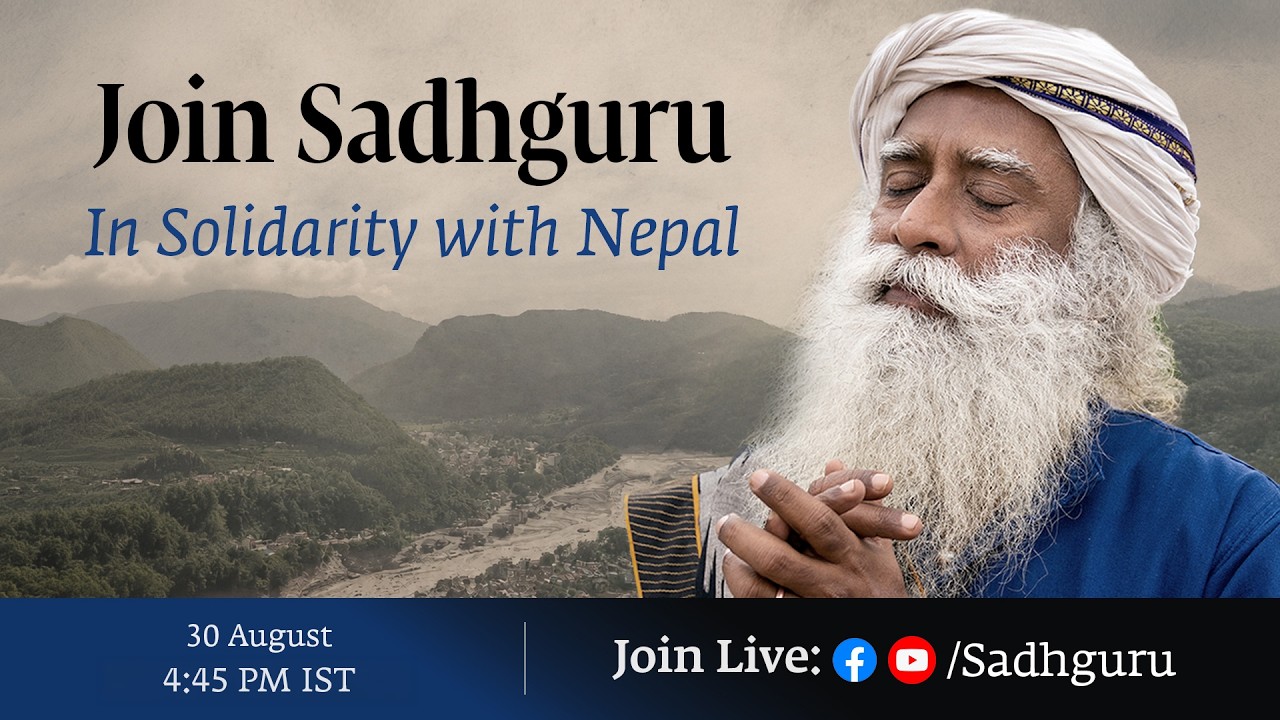
In this conversation, a spiritual master and yogi discusses the nature of yoga not as a historical artifact or exotic practice, but as a living contemporary science directly applicable to the challenges and consciousness of modern life. The discussion bridges mysticism and pragmatism, examining how yoga functions as a systematic approach to human wellbeing, consciousness, and the relationship between individual experience and the cosmos. The speaker emphasizes that yoga's relevance lies not in tradition for its own sake, but in its capacity to address real human problems and potential in the present moment.
What is yoga beyond the physical practice?
Yoga is commonly misunderstood as a system of physical postures or stretching—a fitness trend that has been reduced to aesthetics and flexibility. In reality, yoga operates as a comprehensive science of consciousness and inner engineering. The physical dimension (asana) is only one small component of a much larger framework designed to optimize how a human being functions. The deeper layers of yoga include pranayama (breath management), meditation, and various philosophical understandings about the nature of mind, body, and existence itself.
This science emerged not from religious dogma but from empirical exploration. Ancient yogis spent thousands of years conducting systematic investigations into human consciousness and physiology. They developed methods to directly perceive and work with the subtle energy systems within the body—what is often called the chakra system or nadis (energy channels). These were not metaphorical concepts but observable phenomena that practitioners could access through disciplined practice. The fact that modern science has not yet mapped these dimensions with its current instruments does not invalidate their existence; rather, it reflects the limitations of the measurement tools available.
How does yoga address contemporary human suffering?
Modern life presents distinct challenges: chronic stress, fragmented attention, disconnection from the body, and a pervasive sense of meaninglessness despite material abundance. Yoga offers practical mechanisms to address these root issues. By working directly with the nervous system through breath practices, the body through asanas, and the mind through meditation, yoga creates conditions for genuine wellbeing rather than temporary relief or distraction.
The pragmatic dimension of yoga lies in its results-oriented approach. If a person practices specific techniques correctly, they experience measurable shifts in their physiology, emotional state, and mental clarity—not because of belief, but because of how the human organism responds to these inputs. This is why yoga is best understood as a science: it operates on cause and effect, not faith. A practitioner does not need to accept any spiritual or religious framework to benefit from yoga's practical methods. An atheist can practice pranayama and experience its calming effects on the nervous system just as readily as a believer.
What does it mean for yoga to be a contemporary science?
Calling yoga a "contemporary science" means recognizing that it remains vitally relevant to the conditions humans face right now, in the twenty-first century. The mechanisms of human consciousness have not fundamentally changed since ancient times, even though the external environment has transformed radically. A modern person still experiences fear, desire, suffering, and the search for meaning—the same fundamental drives that motivated yogic practitioners thousands of years ago. Yoga's techniques address these enduring aspects of human nature.
Contemporary relevance also means that yoga need not be presented as an exotic or mystical practice imported from distant traditions. It can be understood through the lens of modern neuroscience, psychology, and physiology. Research has begun to validate many yogic claims: meditation reshapes brain structure, pranayama regulates the autonomic nervous system, and consistent practice produces measurable improvements in mental health and resilience. This does not diminish yoga's depth; rather, it demonstrates that ancient wisdom and modern understanding are converging on similar truths about how human beings can optimize their functioning.
How does the mystic dimension relate to everyday pragmatism?
The tension between mysticism and pragmatism is often presented as irreconcilable, but in yoga they are two aspects of the same system. Mysticism in this context refers to direct experiential knowledge—knowing something not through intellectual understanding or belief, but through lived experience. When a practitioner sits in meditation and directly perceives the silence of the mind, or feels the flow of energy in their body during pranayama, they are having a mystical experience. This experience is not opposed to science; it is the empirical foundation of yoga's science.
Pragmatism means that these mystical experiences translate into tangible benefits. A person meditates not as an end in itself but because meditation produces genuine improvements in their capacity to work, relate to others, and experience peace. The mystic experiences depth and wonder; the pragmatist experiences the functional results. Both are true simultaneously. A master of yoga operates fluidly between these dimensions—maintaining the depth and awe of genuine spiritual understanding while also being grounded in practical results and the real problems people face.
What role does the body play in consciousness?
Western thought has long treated the body as either an obstacle to consciousness (a burden to be transcended) or as a machine separate from mind. Yoga understands the body and consciousness as intimately interwoven. The body is not a prison; it is a sophisticated instrument through which consciousness experiences and acts in the world. Every thought, emotion, and state of awareness has a corresponding physical manifestation. Conversely, working directly with the body—through posture, breathing, or movement—creates shifts in consciousness.
This is why yoga begins with the physical. Asanas are not merely flexibility exercises; they are precise configurations designed to balance the energy systems within the body and create the conditions for deeper inner work. When the physical body is aligned and the energy systems are harmonized, the mind becomes naturally clearer and more receptive. This is not a metaphorical effect but a direct physical one. The yogic practitioner learns to perceive and work with subtle dimensions of embodied experience that ordinary awareness typically overlooks.
How can yoga help people navigate uncertainty and change?
One of yoga's central insights is that human suffering arises not from external circumstances but from the way the mind relates to circumstances. A person can be surrounded by comfort yet be deeply anxious; another can face hardship yet remain at peace. The difference lies in the inner terrain—the mind's reactivity, the nervous system's baseline state, and the depth of a person's connection to something larger than their individual anxieties.
Yoga provides tools to stabilize the mind and nervous system, creating a foundation of steadiness from which to face uncertainty. Meditation trains attention so that a person can observe their thoughts and reactions rather than being unconsciously swept along by them. Pranayama brings the nervous system into a more balanced state, reducing the reactive patterns that drive anxiety and poor decision-making. Over time, regular practice creates what might be called resilience, but understood more deeply as a fundamental shift in how a person relates to the nature of existence itself.
This is not about positive thinking or denial of difficulty. Rather, it is about developing the capacity to maintain clarity and presence even when circumstances are challenging. A practitioner does not become indifferent; they become capable of responding from a deeper place of understanding rather than reacting from fear or conditioning.
What is the relationship between individual and cosmos in yoga?
Yoga operates from the understanding that the individual is not separate from the larger cosmos but is an expression of it. The same forces, energies, and principles that structure the universe operate within the human body and consciousness. This is not poetry or philosophy; it is understood as literal truth in the yogic sciences. When a practitioner deepens their practice, they begin to experience the dissolution of the boundary between inner and outer—not as an abstract concept but as a living reality.
This perspective fundamentally shifts how a person relates to existence. If the individual is not separate from the whole, then individual suffering can be understood in a vaster context, and individual actions ripple outward with consequences beyond the personal sphere. This recognition creates both humility and responsibility—an understanding that how one lives matters not just for oneself but for the texture of the larger whole.
Where to go from here
The practical next step is direct engagement with yoga's methods rather than intellectual understanding alone. This might begin with a simple daily practice—even fifteen minutes of conscious breathing or a basic meditation technique can create tangible shifts. Many teachers and platforms now offer online access to pranayama, asana, and meditation practices designed for modern practitioners with limited time.
For those seeking deeper understanding, longer programs that systematically introduce yoga's philosophy and techniques alongside direct practice offer comprehensive frameworks. The key is consistency and genuine engagement rather than accumulation of knowledge. Yoga reveals itself through practice, not through reading or thinking about it. The invitation is to become a scientist yourself—to apply these techniques and observe the direct results in your own experience, nervous system, and consciousness.