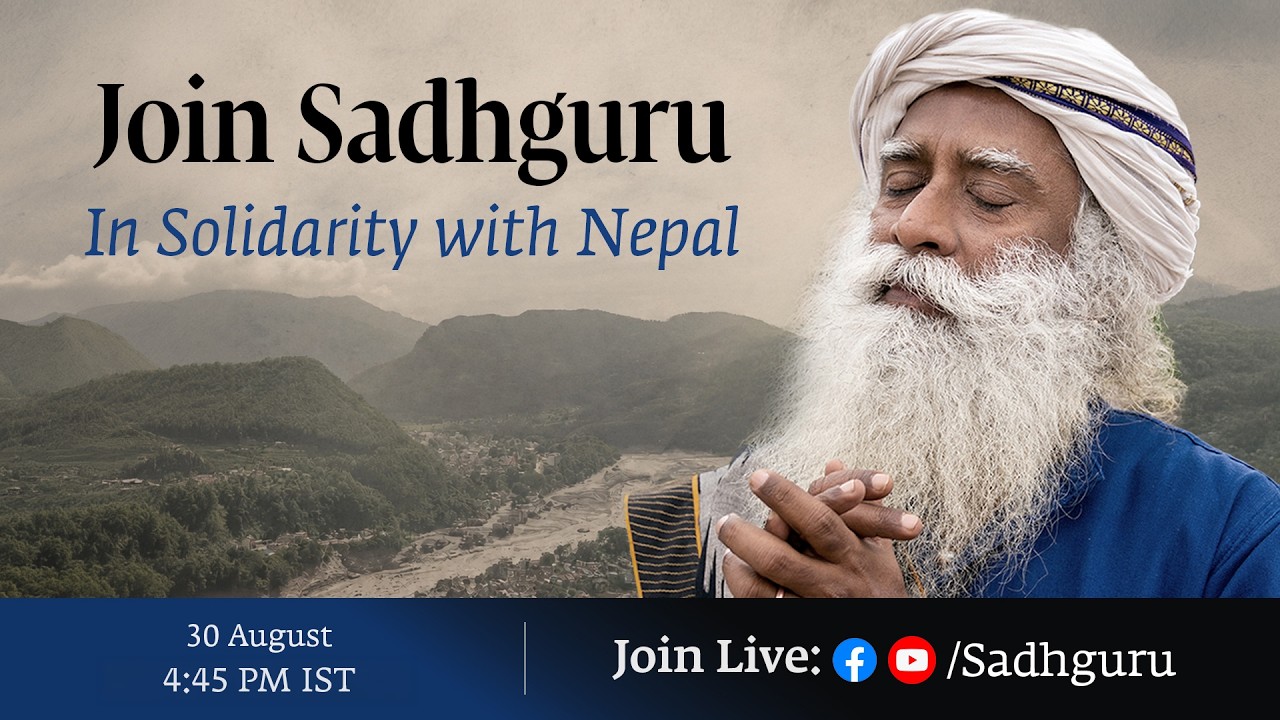
Sadhguru presents yoga not as outdated esoteric philosophy but as a living, contemporary science with direct application to modern life. Drawing from his profound experience of the Self, he articulates how the inner mechanics of yoga remain vitally relevant to our times, offering practical pathways to explore deeper dimensions of existence. His work emphasizes that the science of yoga—rooted in ancient understanding but expressed through pragmatic language—serves as a bridge between mystical insight and actionable life guidance, fundamentally reframing how modern people can engage with spiritual practice.
What Is Yoga Beyond the Physical Practice?
The most persistent misconception about yoga in the modern world is that it is primarily a system of postures and stretching. Sadhguru's core insight reframes yoga entirely: it is an inner science—a systematic methodology for understanding and working with the mechanics of consciousness itself. This science is not confined to meditation halls or ancient texts; it is, as Sadhguru emphasizes, "absolutely relevant and applicable to our lives today."
The distinction matters profoundly. When yoga is reduced to physical practice alone, its deeper dimensions remain inaccessible. True yoga, in Sadhguru's framing, addresses the fundamental question: how does one navigate existence with greater awareness, stability, and depth? This navigation requires understanding the machinery of the human system—not metaphorically, but as a precise, learnable technology.
Sadhguru's background as a yogi who achieved profound states of self-realization grounds his teaching in direct experience rather than intellectual theory. His insights are described as "an outcome of his profound experience of the Self," meaning they emerge from lived realization, not secondhand interpretation. This distinction between teaching from experience versus teaching from text is essential to understanding why his approach resonates across cultures and educational backgrounds.
How Do the Mechanics of Life Work?
Central to Sadhguru's teaching is the premise that life operates according to specific mechanisms—patterns and principles that can be understood and worked with skillfully. Rather than treating existence as mysterious or governed by fate, he proposes that the dimensions of life (physical, mental, emotional, energetic, and beyond) function according to discoverable laws.
This mechanistic view might sound reductive, but it is actually liberating. If life operates according to mechanisms, then understanding those mechanisms creates the possibility of conscious participation. You are no longer a passive victim of circumstance; you become capable of working with reality as it is rather than struggling against it.
The practical implication: spiritual practice becomes engineering rather than hoping. A person who understands the mechanics of their nervous system, their emotional patterns, and their energetic being can make precise adjustments—just as an engineer adjusts a machine. This is why yoga, in Sadhguru's hands, is not mystical poetry but pragmatic science.
Why Is Inner Science Relevant to Contemporary Life?
One of the core tensions in modern spirituality is the perceived distance between ancient wisdom and contemporary concerns. How does a 5,000-year-old science speak to someone juggling career demands, digital overwhelm, and existential uncertainty?
Sadhguru's answer: the mechanics of human consciousness have not changed. A human being today experiences stress, distraction, and existential confusion for the same fundamental reasons a human in ancient times did—because they have not developed the inner awareness to work with their own system. The tools have always been available; they simply need to be presented in language and context that modern practitioners can access.
This is why he emphasizes that yoga is "a contemporary science, vitally relevant to our times." The science itself is timeless, but its application must speak to present conditions. A person overwhelmed by anxiety today is experiencing the same dysregulation of nervous energy that a yogi 3,000 years ago might have addressed through pranayama (breath work). The mechanism is identical; the presentation can be modern.
What Does It Mean to Explore Deeper Dimensions of Life?
When Sadhguru speaks of "exploring the deeper dimensions of life," he is pointing toward dimensions beyond the surface concerns of daily survival and social achievement. Most people, he suggests, live their entire lives operating from a shallow bandwidth of their own being—reactive, habitual, externally dependent for meaning.
The deeper dimensions include: the capacity for sustained inner joy independent of circumstance; the dissolution of psychological fragmentation (the sense of being divided against oneself); direct perception of consciousness itself; and the ability to access wisdom that transcends acquired knowledge. These are not metaphorical benefits but describable, verifiable states that practitioners can develop through systematic practice.
The significance here is that these dimensions are not reserved for monks in caves or genetic lottery winners. They are, according to Sadhguru's teaching, available to anyone willing to engage in the work. This democratization of inner science—the assertion that these capacities are learnable skills rather than special gifts—makes his work distinctly pragmatic.
What Is the Role of Direct Experience in Spiritual Teaching?
Sadhguru's credentials as a teacher rest fundamentally on his own realization. He does not approach yoga as a scholar interpreting texts but as someone who has directly experienced the states and dimensions the science addresses. This distinction—between teaching from experience and teaching from study—is crucial.
When a teacher speaks from direct experience, they can distinguish between genuine states and intellectual fantasy. They can guide others not through maps alone but through actual knowledge of the territory. This is why his teaching carries authority without requiring belief—practitioners can test the methods themselves and verify the results.
The invitation implicit in his work is clear: do not accept his words as truth, but engage with the practices and discover for yourself. This empirical approach aligns yoga squarely with science as methodology, not as doctrine.
How Does Profundity Meet Pragmatism?
Sadhguru is described as an "arresting blend of profundity and pragmatism." This combination is rare and valuable. Profundity without pragmatism becomes abstract philosophy that fails to touch life. Pragmatism without profundity becomes shallow self-help. The two together create teaching that addresses both the deepest questions and the daily realities of human existence.
This blend shows up in how he frames yoga. Rather than asking "What is the nature of God?" (a profound but potentially distant question), he might ask "Why do you suffer when you don't get what you want?" (equally profound but immediately relevant). The pragmatism grounds the teaching in lived experience; the profundity ensures that surface-level answers are transcended.
What Is the Vision of a Conscious World?
Sadhguru's stated aspiration is unambiguous: "A world full of love light & laughter - its time has come. Let us make it happen." This is not sentimental idealism but a logical consequence of his teaching. If the mechanisms of consciousness can be understood and worked with, then people can move from reactivity and suffering toward genuine well-being. Multiply that transformation across populations, and cultural shifts become possible.
A "conscious world" in this framing is not one where everyone agrees or where conflict disappears, but one where people function from greater awareness, making choices from clarity rather than compulsion. The practical foundation for such a world is the inner transformation of individuals, scaled across communities.
His life and work, then, serve as both reminder and invitation: yoga is not a hobby or wellness trend but a precise science for human flourishing that remains actively relevant today.
Where to Go From Here
If this teaching resonates, the next step is engagement with practice. Sadhguru offers multiple entry points: the Isha Kriya, a guided meditation available online; the Inner Engineering program, which provides systematic introduction to yoga practices; and the five-minute practices designed for integration into daily life. The emphasis across all offerings is direct experience—coming to know these dimensions through your own exploration rather than intellectual understanding alone. The science of yoga reveals itself through consistent, sincere practice, not through conceptual study alone.