What Does It Mean to Pray for Love?
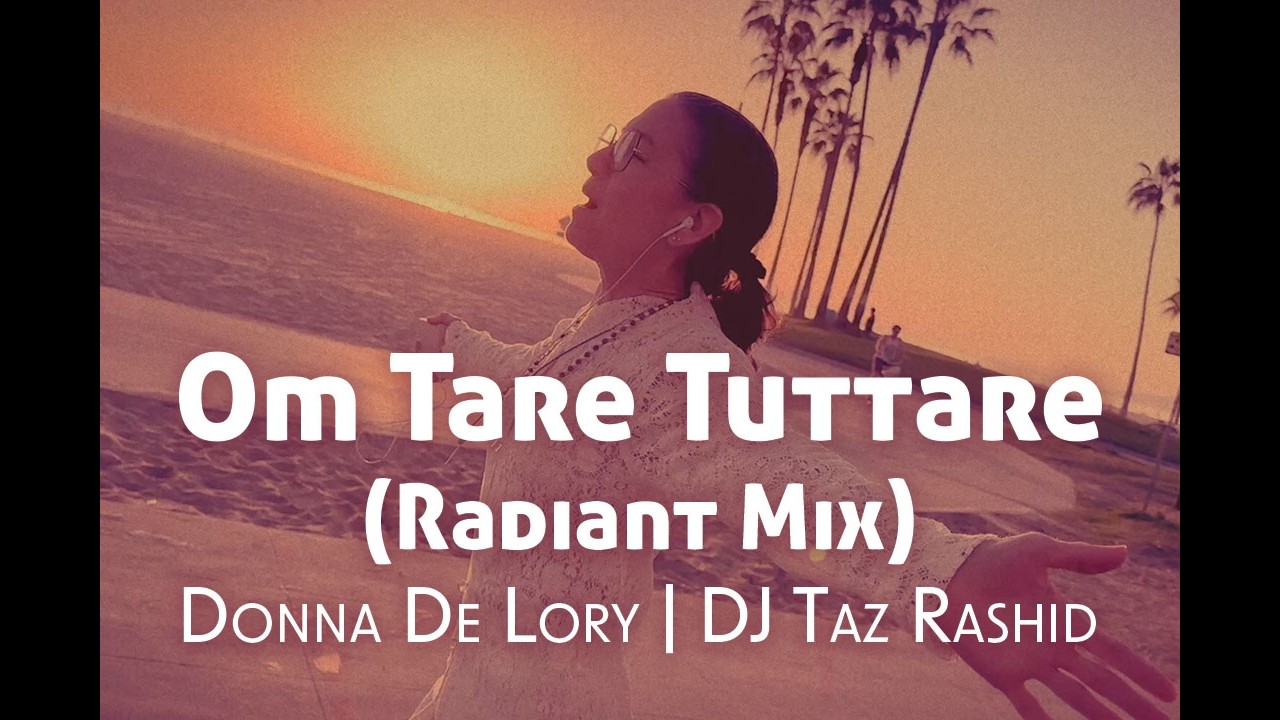
At the heart of Donna De Lory's composition lies a paradoxical act: praying for love while simultaneously addressing pain. The opening invocation—"praying for love to take my tears"—frames prayer not as denial of suffering but as an alchemical process. Rather than suppressing or avoiding emotional experience, De Lory suggests that love itself has the capacity to metabolize, hold, and transform human grief. This is not metaphorical abstraction but a direct spiritual claim: that the act of prayer, sung with intention and presence, can change the internal landscape of the person praying and extend outward to affect those who receive the prayer.
The progression from "take my tears" to "take my fears" establishes a movement from surface emotion (tears, which are visible and immediately felt) to the deeper root of those tears—the underlying fear. In spiritual and psychological frameworks, fear often precedes tears; it is the substrate from which grief emerges. By naming both, De Lory honors the full spectrum of human vulnerability while maintaining that love—invoked through prayer—has the power to receive and transmute both.
How Does Repetition Deepen Prayer in Sacred Music?
The song's structure relies heavily on rhythmic and melodic repetition, a technique foundational to many contemplative and devotional traditions. Rather than advancing a narrative arc, the repetition of "praying for love" creates what might be called a sonic mantra—a repeated phrase that, like a mantra in Hindu or Buddhist practice, is designed to attune the nervous system and consciousness to a particular frequency or intention. Each return to the phrase allows the listener to drop deeper into its meaning rather than moving away from it.
This approach stands in contrast to much Western popular music, which typically moves forward through verse, chorus, and bridge structures that introduce new lyrical or melodic information. Here, the "new information" is internal: the same words, repeated and re-sung, reveal new depths of meaning with each iteration. For the person praying—whether De Lory singing or a listener joining in—the repetition functions as a vehicle for emotional and spiritual processing. The body, attuned to the rhythm and the drumming, moves into a state where thinking quiets and direct experience opens.
What Is the Role of Physical Sound and Rhythm in Healing?
De Lory's composition emphasizes the beating of the drums as a spiritual anchor. At the midpoint of the piece, the invocation shifts slightly: "take the time to hear the beating of the drums." This explicit invitation to witness the drums' rhythm suggests that the heartbeat itself—the most fundamental percussion of the human body—is being called into awareness and alignment. The drums, both metaphorically and literally, represent the body's own wisdom and presence.
In many indigenous and shamanic traditions, drumming serves as a vehicle for journey and healing. The steady, repetitive beat can slow or regulate brainwave states, creating conditions conducive to trance, vision, or deep emotional release. De Lory's reference to the drums, paired with the repetitive chanting, invokes this tradition without requiring the listener to have prior knowledge of it. The invitation is sensory and immediate: listen to the beat, let it anchor you, let your body feel its rhythm.
The mention of "the i'll voice right here"—rendered phonetically as the human voice itself, the instrument of the prayer—further grounds the practice in the body. It is not a distant, abstract prayer to a god in the sky but a voice present and alive, here and now. This locates spiritual practice in embodied presence rather than in a realm separate from the body.
How Does Personal Prayer Extend to Collective Healing?
The composition moves from singular to collective intention with the phrase "everybody needs a good night kiss it's the one great thing that we can't resist." The shift from "my tears," "my fears," and "let me pray for me" to "everybody needs" marks a widening of the prayer's scope. What begins as personal emotional release becomes an acknowledgment of universal human need: the need for comfort, tenderness, connection—symbolized by the simple image of a goodnight kiss.
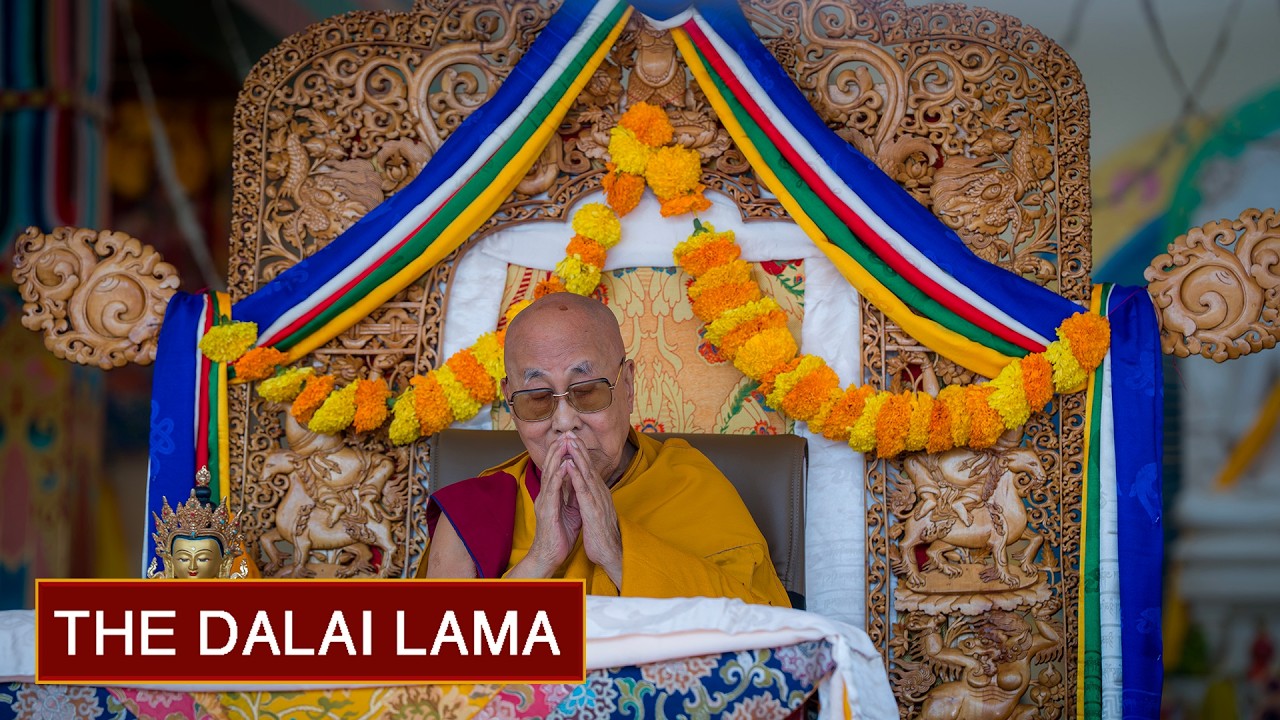
This movement reflects a principle found in many contemplative traditions: that the cultivation of love or healing in one's own heart is inseparable from the extension of that love outward. As the Dalai Lama has stated in various forms, one's own suffering connects us to all beings who suffer. By naming both personal and universal need, De Lory avoids spiritual bypassing—the temptation to move directly to "universal love" without grounding it in actual human experience—while simultaneously expanding beyond individual isolation.
The phrase "the one great thing that we can't resist" suggests that this comfort, this love, is both utterly simple and profoundly necessary. It is not something to be earned or struggled toward; it is what humans are designed to receive and give. The song, by invoking it repeatedly, reminds the listener that this capacity for love and connection is always already present, waiting to be recognized and activated.
What Is the Spiritual Function of Acknowledging Limitation in Prayer?
Late in the composition, the lyrical content becomes sparse, even fragmentary: "if," "cause I'm," "let," "me pray," "for me." These incomplete phrases or single words suggest a breaking down of language itself, or a movement beyond language into pure sound and intention. The repeated "foreign," which appears near the end, could be interpreted multiple ways: as an acknowledgment that some dimensions of experience are unknowable or "foreign" to ordinary consciousness, or as a sound-word that has moved beyond linguistic meaning into pure vocalization.
This disintegration of clear meaning toward the end is significant. Rather than ending with a neat resolution or a complete statement, the prayer dissolves into fragmentation and breath. This reflects a mature spiritual understanding: that prayer is not always about clarity or perfect articulation. Sometimes prayer is the acknowledgment of what cannot be said, the acceptance of mystery and limitation, the surrender of the need to have it all figured out.
Where to Go From Here
If "Praying for Love" resonates with you, consider exploring Donna De Lory's broader body of work in sacred music and devotional song. Her compositions often weave together accessibility (simple, singable melodies and lyrics) with spiritual depth, making them useful both as personal practice and as shared community ritual. To deepen your own engagement with the piece, you might use it as a meditation or prayer practice, repeating it daily for a period of time and noticing how your nervous system and emotional state shift. You could also explore other traditions of devotional singing—kirtan, qigong sound healing, or Gregorian chant—to understand how repetitive vocalization and prayer function across cultures. Finally, consider the ways in which your own tears and fears might be held and transformed through the invocation of love, whether through singing, spoken prayer, or silent meditation.
]]>