EveryEvent San Diego

Ver todos os Events

Find every event in San Diego

events

Concerts & Live Music
Festivals
Sports & Recreation
Food & Drink
Arts & Culture
Community
Family & Kids
Nightlife
Comedy
Theater
Destinos populares
BaliSedonaLos AngelesCosta RicaNew YorkSan FranciscoAustinMiamiJoshua TreeTulum
Ver todas as categoriasVer todos os destinos

Explorar todos os recursos

Ferramentas poderosas para expandir seus eventos

Recursos da plataforma

Precificação dinâmica inteligente
Categorias de ingressos
Lugares marcados
Recuperação de carrinho abandonado
Recuperação de visitantes
Doações e preço variável
Sistema de afiliados
Scanner de ingressos
Códigos de desconto
Perguntas personalizadas
Compartilhamento de ingressos
Upsells e adicionais
Análises e relatórios
Sequências de e-mail
Lista de espera / Notificar / Lembrar
Explorar
Discovery HubArtists & PerformersVenuesKnowledge Base
Ver todos os recursosSobre nós
PreçosBlog
Language
Saved events
Ver todos os eventos

events

Concerts & Live MusicFestivalsSports & RecreationFood & DrinkArts & CultureCommunityFamily & KidsNightlife

Destinos populares

BaliSedonaLos AngelesCosta RicaNew YorkSan Francisco

Explorar

Discovery HubArtists & PerformersVenuesKnowledge Base

Recursos da plataforma

Precificação dinâmica inteligenteCategorias de ingressosLugares marcadosRecuperação de carrinho abandonadoRecuperação de visitantesDoações e preço variávelSistema de afiliadosScanner de ingressosCódigos de descontoPerguntas personalizadasCompartilhamento de ingressosUpsells e adicionaisAnálises e relatóriosSequências de e-mailLista de espera / Notificar / Lembrar
Ver todos os recursosSobre nós
PreçosBlog
EntrarCadastrarOrganizadores de eventos
  • Browse All Events
  • Concerts & Live Music
  • Festivals
  • Sports & Recreation
  • Food & Drink
  • Arts & Culture
  • Community
  • Family & Kids
  • Nightlife
  • Todas as categorias →
  • Los Angeles
  • Tijuana
  • Palm Springs
  • Joshua Tree
  • Temecula
  • All Destinations →
  • For Promoters
  • For Artists
  • For Venues
  • For Festivals
  • For Event Spaces
  • For Nonprofits
  • For Bloggers
  • For Speakers
  • Brand Ambassador
  • Case Studies
  • Rede de 350K+ compradores
  • Recuperação de carrinho abandonado
  • Precificação dinâmica inteligente
  • Categorias de ingressos
  • Eventos recorrentes
  • Lugares marcados
  • Sistema de afiliados
  • Lista de espera / Notificar
  • Scanner de ingressos
  • Widget incorporável
  • Distribuição de eventos
  • Central de mensagens
  • Integrações
  • Relatórios
  • Todos os recursos →
  • Sobre
  • O ecossistema
  • Blog
  • Glossário
  • Inspiração
  • Central de ajuda
  • Contato
  • Documentação da API
  • Recursos da marca
  • Carreiras
  • Imprensa
  • Termos de Serviço
  • Política de Privacidade

Events

  • Browse All Events
  • Concerts & Live Music
  • Festivals
  • Sports & Recreation
  • Food & Drink
  • Arts & Culture
  • Community
  • Family & Kids
  • Nightlife
  • Todas as categorias →

Getaways

  • Los Angeles
  • Tijuana
  • Palm Springs
  • Joshua Tree
  • Temecula
  • All Destinations →

For Organizers

  • For Promoters
  • For Artists
  • For Venues
  • For Festivals
  • For Event Spaces
  • For Nonprofits
  • For Bloggers
  • For Speakers
  • Brand Ambassador
  • Case Studies

Recursos

  • Rede de 350K+ compradores
  • Recuperação de carrinho abandonado
  • Precificação dinâmica inteligente
  • Categorias de ingressos
  • Eventos recorrentes
  • Lugares marcados
  • Sistema de afiliados
  • Lista de espera / Notificar
  • Scanner de ingressos
  • Widget incorporável
  • Distribuição de eventos
  • Central de mensagens
  • Integrações
  • Relatórios
  • Todos os recursos →

Empresa

  • Sobre
  • O ecossistema
  • Blog
  • Glossário
  • Inspiração
  • Central de ajuda
  • Contato
  • Documentação da API
  • Recursos da marca
  • Carreiras
  • Imprensa
  • Termos de Serviço
  • Política de Privacidade
EveryEvent
© 2026 EveryEvent San Diego. Todos os direitos reservados.
Inspiration

Rumi's Love Poetry: A ValentineThrough Deepak Chopra's Musical Vision

Deepak Chopra
Deepak Chopra
Sep 22, 2022
7 min de leitura
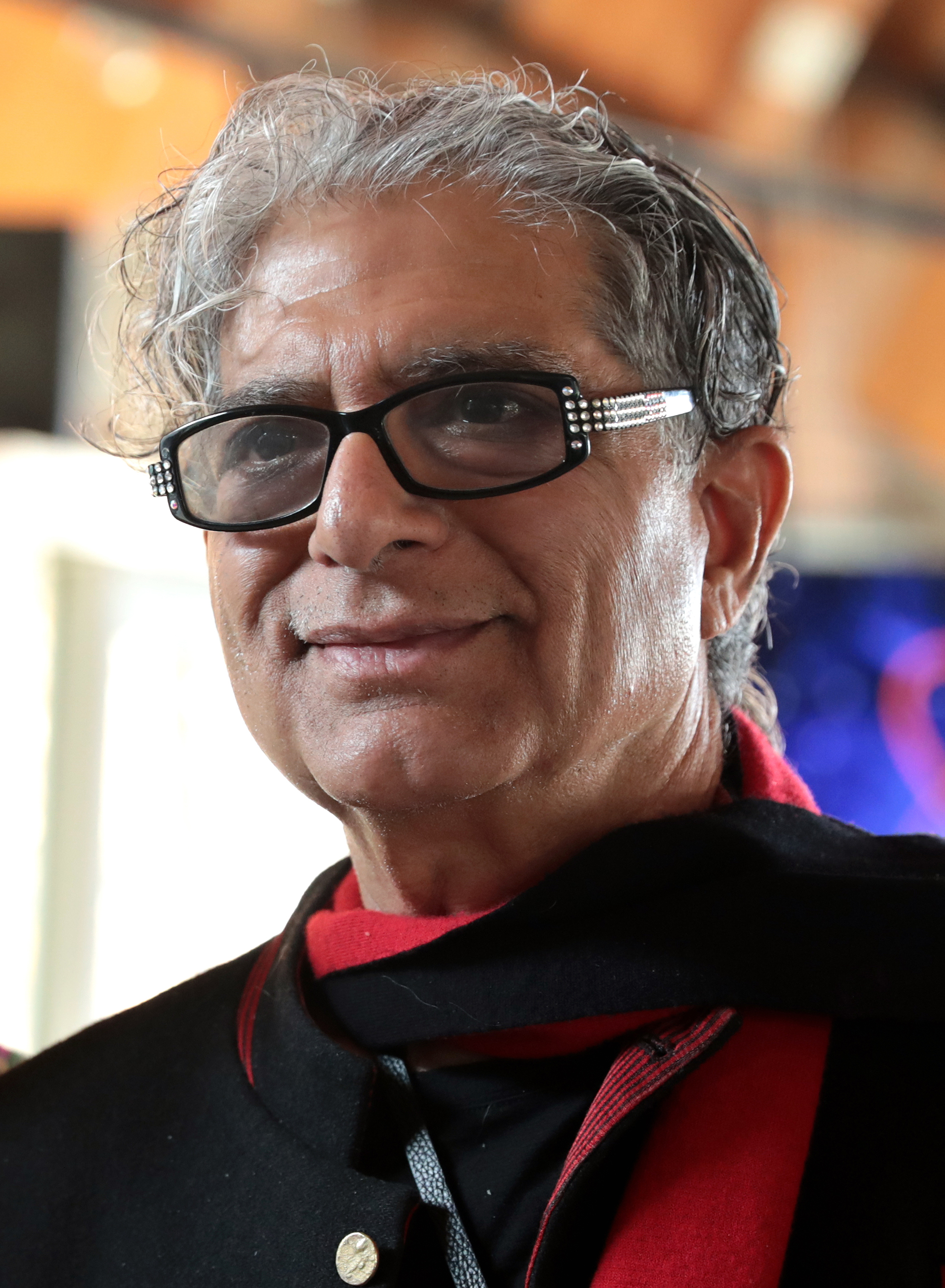
This musical piece is a contemporary valentine to Rumi's revolutionary approach to love poetry, presented through Deepak Chopra's lens of consciousness and spirituality. Rather than treating Rumi as a historical figure frozen in time, Chopra uses music composed with Adam Plack to activate the energy and yearning embedded in Rumi's verses—moving beyond romantic sentiment into the territory of divine love, longing for union with the infinite, and the transformation that occurs when the self dissolves into something greater. The work draws from "A Gift of Love," an album explicitly designed to translate Rumi's 13th-century Sufi wisdom into contemporary sound, making these ancient teachings accessible to modern listeners seeking understanding of love's deepest dimensions.

Leitura · 6 seções

Who Was Rumi and Why Does His Poetry Matter Today?

Jalal ad-Din Muhammad Rumi (1207–1273) was a Persian Sufi mystic and poet whose work has experienced extraordinary resurgence in the West over the past two decades. Yet much of what circulates in contemporary culture strips away the theological depth of his writing—reducing his ecstatic verses about union and surrender to greeting-card sentimentality. Deepak Chopra's approach to Rumi's work attempts to restore what gets lost in translation: the understanding that Rumi's "love" poems are fundamentally about the soul's longing for direct experience of the divine.

Rumi wrote during a period of profound personal transformation. After meeting his spiritual teacher Shams of Tabriz in 1244, his entire body of work shifted. What emerged was poetry that collapsed the boundary between human and divine love, using the language of romantic devotion to describe states of spiritual intoxication and mystical union. This wasn't metaphorical embellishment—it was literal description of his lived experience of dissolving the separate self and merging with infinite presence.

What Is the Connection Between Love and Spiritual Consciousness?

In Deepak Chopra's framework, love is not primarily an emotion—it is a state of consciousness, a way of perceiving reality that recognizes the fundamental interconnection of all things. Rumi's poetry, when approached this way, becomes a manual for consciousness rather than a collection of romantic verses. The "valentine" that Chopra offers to Rumi is recognition that these 800-year-old words are still directing readers toward the same truth: that love, in its deepest form, is the recognition of one's own infinite nature reflected in another.

The musical interpretation serves a specific function here. Where intellectual analysis might impose contemporary psychological language onto medieval Persian mysticism, music operates directly on the nervous system and the heart. A melody, a harmonic progression, a sustained note—these can evoke the very state of yearning and dissolution that Rumi's poems describe. The combination of Chopra's contemplative sensibility with composer Adam Plack's musical architecture creates a bridge between the reader's ordinary consciousness and the heightened awareness that Rumi's verses point toward.

How Does Music Translate Spiritual Poetry Into Experience?

One of the central challenges in presenting Rumi to modern audiences is the gap between intellectual understanding and direct experience. A person can read "Out beyond ideas of wrongdoing and rightdoing, there is a field. I'll meet you there" and appreciate its beauty without actually accessing the state of consciousness it describes. Music circumvents this limitation by working with the body's own frequency and resonance.

When Chopra chose to create a musical album around Rumi's love poems, the intention was not to create a background soundtrack for romance. Rather, the music functions as a portal—a vibrational match for the inner states that the poems invoke. This is consistent with ancient Vedic understanding, which Chopra frequently draws upon, that sound (nada) is a primary tool for shifting consciousness. The Vedas teach that the universe itself emerged from sound, from the primordial vibration Om, and that by attuning to specific frequencies, one can align with deeper truths.

What Makes Rumi's Vision of Love Radical for the 21st Century?

In a cultural moment when "love" is often commercialized, sentimentalized, or reduced to romantic partnership, Rumi's actual teachings pose a genuine challenge. His poetry consistently points away from personal love as the endpoint and toward love as the very fabric of existence. In his verse, the lover and the beloved are ultimately discovered to be one consciousness experiencing itself. The lover's pain is the pain of separation from wholeness; the lover's joy is the joy of returning to the undivided self.

This vision has profound implications. If love is not something you possess or achieve with another person but rather a fundamental quality of reality itself, then spiritual practice becomes a matter of removing obstacles to recognizing and embodying that love. Chopra's presentation of Rumi suggests that the contemporary spiritual seeker's task is not to acquire love from the external world but to unveil the love that is already present as the ground of being.

Moreover, Rumi's radical accessibility—he taught in vernacular Persian, not classical Arabic, and his poetry was meant to be heard, danced to, and felt rather than studied in academic settings—makes him particularly relevant to contemporary approaches to spirituality that emphasize direct experience over doctrinal belief. Chopra's musical interpretation honors this accessibility while bringing it into dialogue with modern consciousness studies.

How Do Sufi Teachings About Love Differ From Other Spiritual Traditions?

Sufism, the mystical dimension of Islam, has a particular approach to love that is worth understanding in context. While many religious traditions emphasize love as obedience, duty, or moral virtue, Sufism centers love (ishq in Arabic) as the very engine of spiritual transformation. For Sufi masters like Rumi, love is not a feeling that one cultivates; it is a fire that consumes the ego and reveals the truth underneath.

The Sufi path often speaks of "fana"—the annihilation of the self, or the dissolution of individual identity into divine unity. Rumi's most ecstatic verses describe this state using the language of drunkenness, intoxication, and overwhelming desire. This reflects the Sufi understanding that ordinary consciousness is a kind of sleep, and that awakening to divine reality naturally brings a state of ecstatic love because separation itself—the illusion that you are distinct from God or the divine principle—has been recognized as false.

Deepak Chopra's own teachings, drawing from Vedantic philosophy and Ayurveda, align closely with this Sufi vision, even though the cultural and religious sources are different. Both traditions point toward the dissolution of the separate self and the recognition of unity consciousness. Both use poetry, music, and embodied practice as primary tools. The "valentine to Rumi" is thus also a valentine to a vision of love that is increasingly recognized as universal—not tied to any single religion but present in the mystical core of multiple traditions.

Where to Go From Here

If you are drawn to Rumi's poetry and Deepak Chopra's interpretation of it, several paths forward are available. First, engage directly with Rumi's actual verse in translation—particularly complete collections rather than anthologies of famous lines. Notice how the poems function on multiple levels: as descriptions of human longing, as maps of mystical states, and as instructions for consciousness itself. Second, explore the musical album "A Gift of Love" in a meditative context—not as background music but as a practice. Sit with the music, allow it to affect your body and nervous system, and observe what states of consciousness or feeling arise. Third, investigate the Sufi path and its contemporary expressions through teachers who understand both the historical context and the living practice. Finally, consider the implications of Rumi's vision for your own understanding of love: not as an emotion to be managed but as a fundamental reality to be experienced and embodied. The valentine that Chopra extends to Rumi is ultimately an invitation for each of us to recognize and actualize the love that is our true nature.

]]>
Deepak Chopra
AutorDeepak Chopra

Indian-American physician and author who has, more than any other figure, brought Vedic spiritual teachings into the mainstream Western consciousness. A former chief of staff at Ne…

Ver perfilSite
Explorar temas
Rumi-poetrySufi-mysticismDivine-loveConsciousnessSpiritual-music

Tem perguntas?

Perguntas frequentes

Rumi's poetry uses romantic language to describe the soul's longing for union with the divine, not primarily to celebrate human partnership. His 'beloved' represents infinite consciousness, and his verses describe the dissolution of the separate self into that unity—what Sufi tradition calls fana, or annihilation of ego.
Music functions as a direct path to consciousness, operating on the nervous system and heart rather than through intellectual analysis. By setting Rumi's verses to music with composer Adam Plack, Chopra created a bridge between conceptual understanding and direct experience of the spiritual states the poems describe.
Sufism centers love (ishq) as the engine of spiritual transformation rather than as an emotion or moral virtue. In the Sufi path, love is a consuming fire that burns away the ego and reveals divine unity—what Rumi himself experienced after meeting his teacher Shams of Tabriz.
Fana is the dissolution of individual identity and ego-consciousness into direct experience of divine unity. Rumi's most ecstatic verses use language of drunkenness and intoxication to describe this state, where the illusion of separation from the infinite is recognized as false.
Engage with the poetry directly in complete collections rather than famous excerpts, notice how verses work on multiple levels of meaning, and use music and embodied practice—like sitting meditatively with Chopra's musical interpretations—to allow the words and sounds to affect your nervous system directly.
Rumi's radical accessibility—he taught in vernacular Persian rather than academic language and emphasized direct experience over doctrine—aligns with contemporary spirituality's emphasis on lived practice. His vision of love as the ground of being speaks directly to modern seekers questioning the nature of connection and consciousness.

Continuar lendo

More from Deepak

Ver Tudo
Acceptance: The Foundation of Inner Peace and Healing
Featured

Acceptance: The Foundation of Inner Peace and Healing

Deepak Chopra explores acceptance as a core principle of spiritual practice and emotional well-being. Learn why embracing what is transforms…

1 min read
Chakra Seed Mantras: Lam, Vam, Ram, Yan, Ham, Sham, Om
Featured

Chakra Seed Mantras: Lam, Vam, Ram, Yan, Ham, Sham, Om

Learn the seven chakra seed mantras and how to use them for balancing body, mind, and soul through guided vocal practice with Deepak Chopra.…

1 min read
How Sitting Still Proves You're Already Awakening
Featured

How Sitting Still Proves You're Already Awakening

Most people can't sit quietly without discomfort, but if you can, you're already further along spiritually than you realize. Eckhart Tolle e…

1 min read
The Missing Piece: How Real Thinking Creates Real Results
Featured

The Missing Piece: How Real Thinking Creates Real Results

Most vision boards fail because people skip the actual thinking. Eckhart Tolle reveals the rhythm that unlocks insight and the two distinct …

1 min read

Continue explorando

Continue sua jornada

Mais sabedoria e mais encontros de todo o diretório BrightStar.

Mais artigos

Explore a biblioteca completa de ensinamentos, entrevistas e guias.

Voltar a todos os artigos →

Professores e artistas

Conheça as linhagens, os músicos e os guias do mundo consciente.

Explorar artistas →

Encontre um evento

Kirtan, retiros, banhos de som, breathwork, festivais — acontecendo em breve.

Ver eventos →