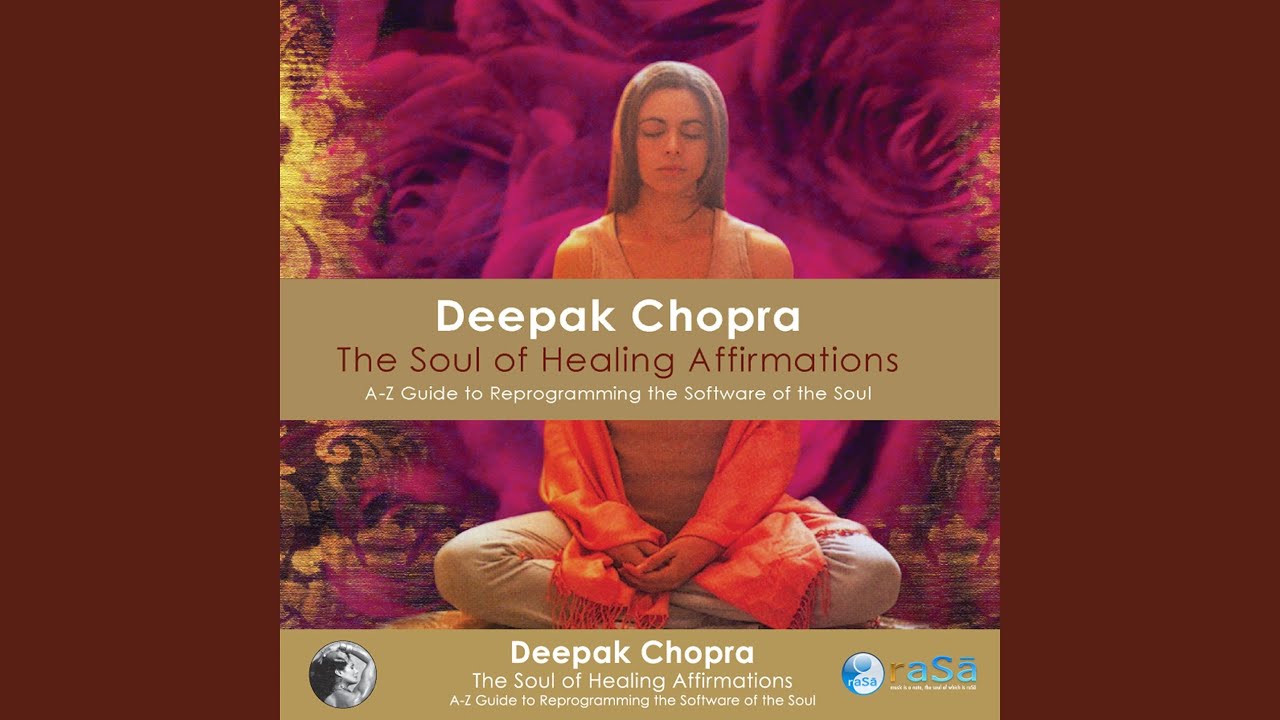
This brief affirmation-based reflection on giving presents it not as moral obligation or deprivation, but as a fundamental law of circulation—a mechanism by which energy, abundance, and healing move through consciousness itself. Giving activates the principle that stagnation breeds poverty while circulation breeds wealth, freedom, and well-being across all dimensions of life.
Why Is Giving More Than Just Generosity?
In the framework of consciousness-centered healing, giving transcends conventional notions of charity or self-sacrifice. Deepak Chopra positions giving as a dynamic principle rooted in the physics of circulation. Energy—whether material, emotional, or spiritual—becomes toxic when it pools. A river remains fresh because it flows; a stagnant pond breeds disease. This same logic applies to abundance, attention, affection, and resources. When we give, we are not losing; we are engaging in the fundamental act of circulation that keeps the entire system alive.
The practice of giving is intrinsically linked to the recognition that the universe operates on principles of flow and exchange. Nothing in nature accumulates indefinitely—matter cycles, energy transforms, seasons rotate. Resistance to giving often stems from a scarcity mindset, a belief that resources are finite and that holding tightly ensures survival. Yet this belief itself becomes the mechanism of scarcity. When we clench our fists around what we have, we cut off the circulation that would otherwise replenish us.
How Does Giving Create Abundance?
The relationship between giving and abundance is not metaphorical; it operates through concrete psychological and spiritual mechanisms. When we give, we signal to ourselves and to the field of consciousness that we trust in sufficiency. This trust itself becomes a channel through which abundance flows. A person who hoards from fear broadcasts scarcity; a person who gives from abundance broadcasts sufficiency. The universe, or our own consciousness field, mirrors back what we broadcast.
This principle also operates through the law of reciprocity woven into the fabric of human connection. When we give without expectation, we establish a field of generosity around us. Others respond to this field. Doors open. Opportunities surface. People become willing to support us not because we have manipulated them, but because we have created an atmosphere of mutual benefit. Giving, then, becomes a form of intelligent self-interest—not the greedy kind, which isolates, but the enlightened kind, which recognizes that our well-being is inseparable from the well-being of others.
What Blocks Us From Practicing Giving?
The primary obstacle to giving is fear—fear of loss, fear of insufficiency, fear that what we give will be gone forever. This fear often has roots in early experience: a childhood of scarcity, loss, or emotional withdrawal can condition us to hoard. We learn to protect ourselves by accumulating, by saying no, by holding back. Over time, this protective mechanism becomes automatic. We no longer consciously choose to withhold; we simply cannot imagine giving freely.
Another block is the confusion of giving with depletion. Many spiritual practitioners, particularly those socialized to be selfless, conflate healthy giving with self-abandonment. They give until they are empty, then resent the act of giving itself. True giving, in the framework of consciousness and healing, is not self-abandonment. It flows from fullness, not emptiness. A cup that is full can pour; a cup that is empty cannot. The practice, then, begins with filling one's own cup first—through rest, nourishment, spiritual practice—so that giving becomes an overflow rather than a drainage.
What Are the Forms of Giving?
Giving extends far beyond material exchange. The most profound forms of giving often involve no money at all:
- Giving attention: In a world of fragmentation, the gift of full, undivided attention is increasingly rare and increasingly valuable. To truly listen to another person, to be present without agenda, is a powerful act of giving.
- Giving acknowledgment: To see someone, to recognize their effort and worth, to offer authentic praise—this heals. Many people carry wounds from not being truly seen. Giving this gift costs nothing but transforms.
- Giving time: In modern life, time is often more precious than money. To give time to those we love, to a cause, to learning, is a significant offering.
- Giving knowledge and skill: Teaching, mentoring, offering expertise—these are forms of giving that multiply when shared. A teacher gives knowledge and retains it; a miser guards secrets and loses the ability to grow.
- Giving compassion: The willingness to enter another's suffering without trying to fix it, to hold space for pain, is a form of giving that addresses the deepest human needs.
- Giving material resources: Money, objects, food, shelter—these remain important forms of giving, particularly when offered from a place of sufficiency rather than obligation.
How Does Giving Transform the Giver?
The spiritual paradox of giving is that it transforms the one who gives more than the one who receives. This is not because the giver becomes "depleted" in some saintly fashion, but because the act of giving rewires consciousness. Each time we give, we reinforce the neural and energetic pathways associated with trust, abundance, and connection. We literally become more generous people. Our nervous system shifts from a scarcity baseline to an abundance baseline. We become happier not because we have done good, but because we have aligned ourselves with the actual structure of reality—which is fundamentally abundant and fundamentally interconnected.
Giving also dissolves the illusion of separation. In the act of giving, the boundary between self and other becomes permeable. We recognize that what serves another ultimately serves us, and vice versa. This shift in perception is itself healing. Many forms of suffering originate in the illusion of isolation, of being separate from the whole. Giving practices directly address this root cause.
Where to Go From Here
To begin practicing giving more consciously, start small and specific. Choose one form of giving that resonates with you—perhaps attention, acknowledgment, or a simple material gift—and practice it intentionally for a week. Notice what arises: resistance, joy, fear, expansion. Do not judge. Simply observe how the practice affects both you and those around you.
Pair the practice with affirmation or reflection. Each time you give, internally acknowledge the circulation occurring: "I give freely, and abundance flows through me." Notice the sensations in your body. Over time, giving becomes less an act of will and more a natural expression of your nature. The blockages dissolve. Life itself becomes an expression of generous circulation.